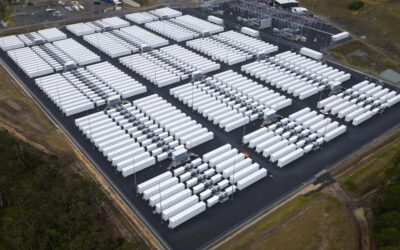
Global sustainable energy infrastructure investor Quinbrook Infrastructure Partners has announced its intention today (6 March) to deliver 8-hour duration battery energy storage systems (BESS) to the Australian market as part of a collaboration with CATL.
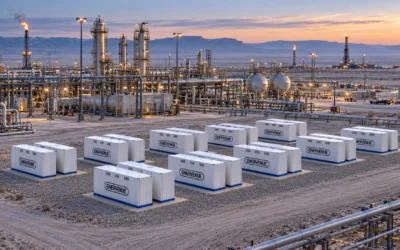
Quinbrook said it plans to deliver around 3GW of the new long-duration energy storage (LDES) technology, called EnerQB, across Australia, which amounts to 24GWh of energy storage capacity. This will serve existing partners alongside new commercial and industrial customers.
The LDES battery solution has been deemed a ‘natural evolution’ of Quinbrook’s energy storage projects featured in the US and UK markets, many of which utilise 4-hour duration systems.
The investor stated that increasing the storage duration for projects in high year-round solar regions, much like Australia, which, according to Geoscience Australia, boasts the highest solar radiation per square metre of any continent, helps improve cost competitiveness.
Try Premium for just $1
- Full premium access for the first month at only $1
- Converts to an annual rate after 30 days unless cancelled
- Cancel anytime during the trial period
Premium Benefits
- Expert industry analysis and interviews
- Digital access to PV Tech Power journal
- Exclusive event discounts
Or get the full Premium subscription right away
Or continue reading this article for free
The new long-duration battery solution, developed in collaboration with CATL, a lithium-ion (Li-ion) battery manufacturer based in China, is designed to shift more stored solar power efficiently. This technology enables industrial customers to power a manufacturing operation with two 8-hour shifts entirely using solar.
Quinbrook also claimed the solution could help delay substantial costs associated with upgrading the power grid and allow existing baseload plants to avoid increased expenses and accelerated wear on equipment resulting from fluctuating daily operations.
David Scaysbrook, co-founder and managing partner of Quinbrook, believes the technology is the “dam-busting” moment for Australia’s energy transition.
“Teaming solar, wind and other power sources with long-duration storage represents the future of sustainable and low carbon power systems, not just here but worldwide. Teaming solar, wind and other power sources with long-duration storage represents the future of sustainable and low carbon power systems, not just here but the world over,” Scaysbrook said.
Quinbrook plans to couple its Quintrace platform with the EnerQB storage solution to enable the real-time calculation of the carbon intensity of the grid charging options, which will better inform the optimisation of emissions impact and revenue.
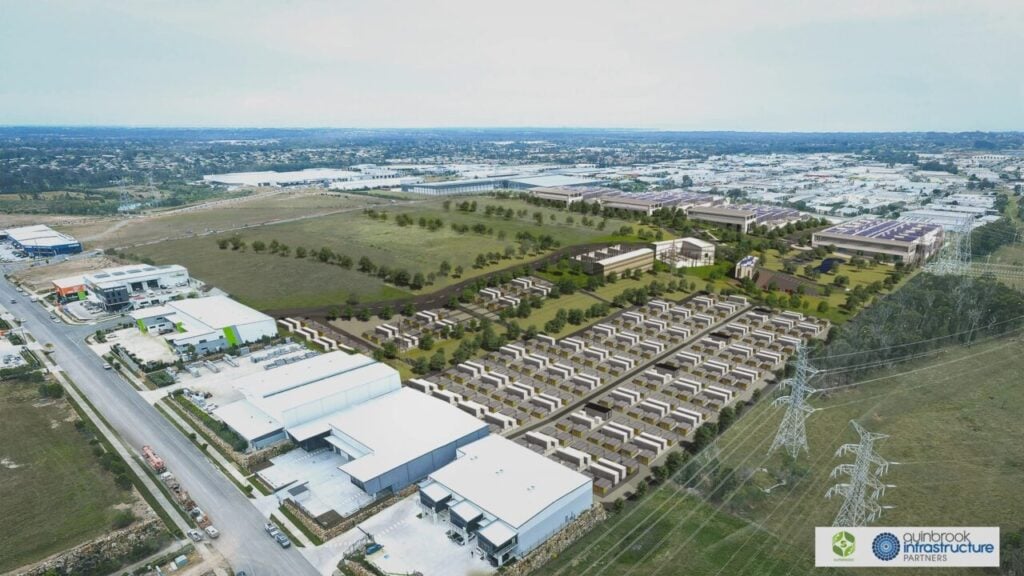
Quinbrook’s ‘Supernode’ to deploy EnerQB technology
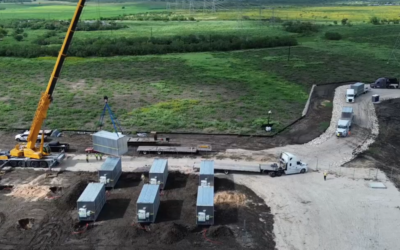
The initial sites selected to implement the new solution include Quinbrook’s ‘Supernode’ site in Brisbane. The site recently secured AU$722 million (US$452 million) in debt financing for the first two stages of the project. The first and second will introduce 520MW/1,856MWh of energy storage capacity, whilst a third stage will increase this figure to 760MW/3,096MW.
Quinbrook also has several locations near heavy industry in Gladstone and the planned Lansdown Eco-Industrial Precinct in Townsville that will see the EnerQB technology deployed.
“Expanding Supernode with this 8-hour solution will deliver critical support for the Queensland grid,” said Brian Restall, managing director and regional leader for Quinbrook in APAC.
An alternative to pumped hydro storage
Scaysbrook also claims that the technology could offer an alternative to pumped hydro energy storage (PHES), often requiring vast investment and time to construct fully.
“Most importantly, we have achieved a cost point and duration for this solution, which is truly game-changing compared to other technology options, including many pumped hydro projects. We believe we are on the cusp of a solution enabling our Future Made in Australia ambitions, which should encourage our existing energy-intensive industry and builders of new manufacturing that Australia is the place to be,” Scaysbrook said.
PHES is one of the more prominent forms of long-duration storage in Australia. Numerous large-scale projects are in development, including the 2.2GW PHES power station Snowy 2.0, currently under construction in New South Wales.
The New South Wales government has classified this site, along with the 3.6GWh Stratford Pumped Hydro and Solar project and the 2GWh Muswellbrook and 2.6GWh Lake Lyell pumped hydro storage projects, as Critical State Significant Infrastructure (CSSI).
On the other hand, Queensland has had a turbulent few months regarding its PHES sector. Within weeks of being elected in October 2024, the Liberal National Party (LNP) of Queensland, led by premier David Crisafulli, cancelled the world’s largest PHES site, the 5GW/120GWh Pioneer-Burdekin Pumped Hydro Project.
Despite this, projects are continuing to progress in Queensland and across Australia, but with question marks around costs and construction times, introducing an 8-hour duration BESS technology that can be rapidly deployed could grant a fresh alternative to pumped hydro.
Our publisher, Solar Media, will be hosting the Energy Storage Summit Australia 2025 in Sydney from 18-19 March. You can get 20% off your ticket by following the link here.