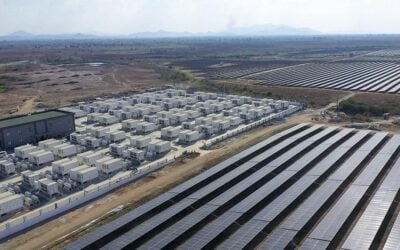
Utility Georgia Power has filed a request with the Georgia Public Service Commission (PSC) to approve an all-source capacity request for proposal (RFP) for 2,000MW – 6,000MW of new dispatchable capacity resources in the US state.
Announced 23 April, the utility is seeking to procure resources to meet projected capacity needs for 2032 through 2033. The requested resources include thermal generation, energy storage systems (ESS), and battery storage-plus-renewables.
According to Georgia Power, it “collaborated with Georgia PSC Staff and an independent evaluator to develop a competitive and fair RFP process that will enable Georgia Power to select the most reliable, economical and efficient proposals for dispatchable generation.”
If approved, the RFP would be issued and bids would be accepted in Q2 of 2026, with selected projects submitted to the Georgia PSC for certification in mid-2027.
Try Premium for just $1
- Full premium access for the first month at only $1
- Converts to an annual rate after 30 days unless cancelled
- Cancel anytime during the trial period
Premium Benefits
- Expert industry analysis and interviews
- Digital access to PV Tech Power journal
- Exclusive event discounts
Or get the full Premium subscription right away
Or continue reading this article for free
The utility also filed a separate request to certify an additional approximately 385MW of new supplemental solar resources as part of the Clean and Renewable Energy Subscription (CARES) 2023 programme.
The CARES programme allows commercial and industrial (C&I) customers to purchase a subscription for a share of a project’s renewable electricity generation. In September 2025, Georgia Power certified five solar power purchase agreements (PPAs) within its borders, for a combined capacity of just over 1GW.
Georgia Power claims that currently, 32 large-load customers have committed to receiving approximately 15,600MW of electric service with 21 projects under construction.
This RFP builds on the utility’s previous approval from the Public Interest Advocacy (PIA) staff of the PSC for 9,900MW of new generation resources, including more than 3GW of battery storage that the utility would own.
The company further claimed that following the PSC’s approval of updates to rules and regulations for Georgia Power in 2025, “potential large-load customers must now meet more stringent criteria, including providing financial commitments and demonstrating infrastructure readiness, to remain in the company’s long-term development pipeline.”
In February of this year, the US Department of Energy (DOE) closed a US$26.5 billion loan package with two wholly owned subsidiaries of utility Southern Company, in Georgia and Alabama.
Georgia Power, which is Southern Company’s Georgia-based subsidiary, did not share specifics for its loan from the DOE. However, in its 2025 integrated resource plan (IRP), the company considers multiple types of energy storage, including lithium-ion (Li-ion), CAES, and pumped hydro.
Both Georgia Power, and the state as a larger apparatus have also shown considerable interest in advancing BESS projects.