“Energy storage is certainly there to integrate intermittent resources like solar and wind and help enable our grid to get cleaner, but it’s also there for grid operators to improve the efficiency of the grid, to improve resilience. We are there for an efficient, affordable and sustainable grid.”
Kelly Speakes-Backman, CEO, the US national Energy Storage Association (ESA), 2019.
The latest volume of PV Tech Power, Solar Media’s quarterly technical journal for the downstream sector, is now available to download free of charge.
Try Premium for just $1
- Full premium access for the first month at only $1
- Converts to an annual rate after 30 days unless cancelled
- Cancel anytime during the trial period
Premium Benefits
- Expert industry analysis and interviews
- Digital access to PV Tech Power journal
- Exclusive event discounts
Or get the full Premium subscription right away
Or continue reading this article for free
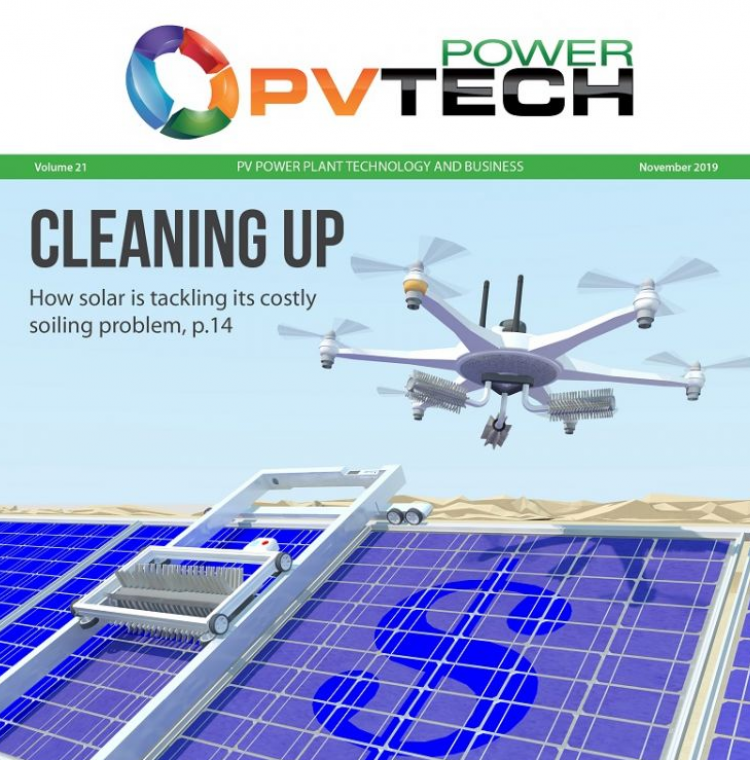
This edition’s cover story comes from the deserts of the Middle East, where researchers are getting to grips with the issue of soiling and what can be done to prevent it.
We also take an extensive look at how solar is making great strides in the Middle East, and SolarPower Europe provides a glimpse at how digitalisation is taking over the solar ecosystem.
As always, ‘Storage & Smart Power’, the dedicated section curated and created by Energy-Storage.news, also returns as part of the magazine. This quarter, we look at:
Contenders: Long-duration technologies and who’s behind them
Some of the promising long-duration energy storage technologies – and their champions. While lithium-ion batteries get most of the headlines, long-duration energy storage solutions are gaining ground. We’ve profiled some of established and emerging concepts in this increasingly important class of storage technologies.
Redox flow batteries for renewable energy storage
A team from CENELEST, a joint research venture between the Fraunhofer Institute for Chemical Technology and the University of New South Wales, charts the rise of redox flow batteries. A truly deep dive, the article is a thorough examination of various types of flow energy storage and what stands between them and greater success.
Taking charge: Energy Storage Association CEO Kelly Speakes-Backman
Despite making huge strides forward, the energy storage industry is far from done with its work in helping stakeholders across the value chain understand the technologies and the roles they can play in a renewable energy future. Former regional utilities’ commissioner Kelly Speakes-Backman is one of the people working to make that happen every day. With more than 180 member organisations, ESA is speaking up for a big wedge of stakeholders in the energy sector that see renewables and energy storage as a day-to-day business as well as an aspiration and social good.
Many thanks to all that downloaded the PV Tech Power Volume 20 including the Energy Storage Special Report 2019, which is also still available as a standalone PDF from the ‘Resources’ section of this site.
Download PV Tech Power 21 here (subscription details required).