Puerto Rico Electric Power Authority (PREPA) has sought approval for the launch of its next Request for Proposals (RfP) for renewable energy and energy storage resources.
It’s the second tranche of RfPs that PREPA intends to issue this year, after Tranche 1 was issued in February, seeking 1GW of renewables capacity and 500MW / 2,000MWh of energy storage. Tranche 2 would cover the procurement of at least 500MW of renewable generation capacity and at least 250MW of energy storage capacity with four-hours duration (1,000MWh).
PREPA is planning to present six tranches of procurement in total over three years, in line with its integrated resource plan (IRP), with a cumulative total of 3,750MW of renewables and 1,500MW of energy storage sought.
The Energy Bureau of the Puerto Rico Public Service Regulatory Commission will now consider the Tranche 2 RfP issuance for approval.
Try Premium for just $1
- Full premium access for the first month at only $1
- Converts to an annual rate after 30 days unless cancelled
- Cancel anytime during the trial period
Premium Benefits
- Expert industry analysis and interviews
- Digital access to PV Tech Power journal
- Exclusive event discounts
Or get the full Premium subscription right away
Or continue reading this article for free
The electricity authority will contract with renewables project developers through power purchase and operating agreements (PPOAs) and with energy storage through energy storage services agreements (ESSA). In the case of colocated renewables and storage projects, these will be contracted for separately.
Utility-scale resources excluding virtual power plants (VPPs) must be at least 20MW and contract and supply durations of up to 25 years will be considered. VPPs need to be 5MW or more, aggregated from multiple sites, with no more than 1MW interconnected to the grid at any one connection point. Commercial operation must start within 24 months of contracts being signed.
As with renewables and storage resources in other US territories, the investment tax credit (ITC) will apply to renewable energy projects and to energy storage colocated with renewable generation.
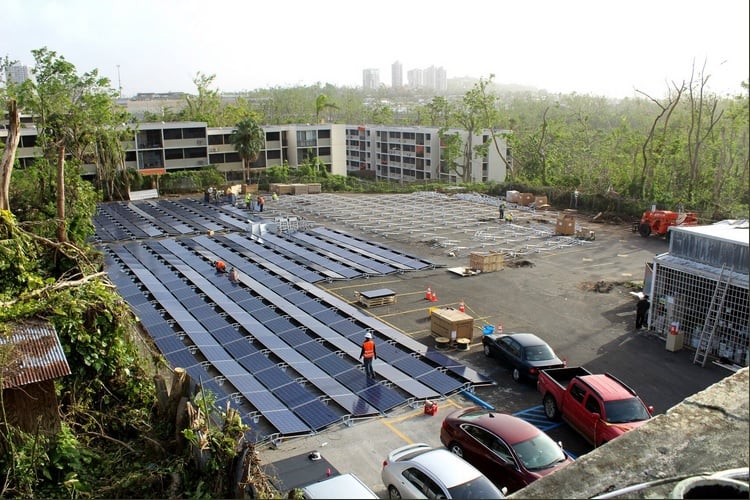
PREPA noted that even before the devastation wrought on the island and its electricity network in particular by the 2017 Hurricanes Irma and Maria, the energy infrastructure of Puerto Rico was already “inherently deficient”.
The isolated, island-based electricity system has imposed “significant challenges with respect to system stability and reliability,” it said, and Puerto Rico’s electric system is sensitive to load variations and frequency fluctuations that can trigger under frequency load shedding within seconds of generation outages occurring or transmission system contingencies being activated.
PREPA’s RfP is intended to be issued at the end of this month.