Following a report on Friday that Hawaiian Electric has contracted PPAs with 75MW of solar projects including battery storage with developer Clearway, the utility has put before regulators proposals for five other grid-scale projects.
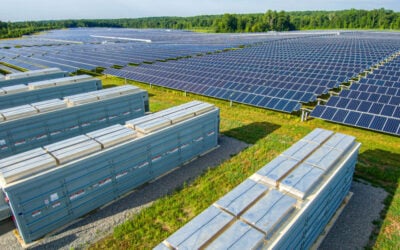
Energy-Storage.news reported last week that Clearway has been awarded two grid-scale solar-plus-storage projects on the island of Oahu, one of 39MW PV generation capacity linked to 156MWh of energy storage (the Mililani 1 Solar plant) and another of 36MW PV and 144MWh energy storage (Waiawa Solar project).
In total, Hawaiian Electric Company group companies have submitted to the regulator, Hawaiian Public Utilities Commission, seven projects of this type. There will be one more project on Oahu, two on the main Hawaii Island and two on the island of Maui. If all approved the projects will add 262MW of PV capacity to the islands’ networks, as well as 1,048MWh of energy storage.
Each project will have four hours of energy storage duration, currently thought to be the upper limit which can be effectively provided by lithium-ion batteries. The battery systems will help reduce the usage of fossil fuels in Hawaii, particularly at times of peak demand and other times when solar production is low.
Try Premium for just $1
- Full premium access for the first month at only $1
- Converts to an annual rate after 30 days unless cancelled
- Cancel anytime during the trial period
Premium Benefits
- Expert industry analysis and interviews
- Digital access to PV Tech Power journal
- Exclusive event discounts
Or get the full Premium subscription right away
Or continue reading this article for free
As has often been stated on this site, as a series of islands within a modern economy, energy use in Hawaii has historically been linked with the expensive import of polluting diesel fuel. This has led to some of the highest rates of rooftop solar deployment, as well as supplying a solid business case for using batteries to create dispatchable solar power plants.
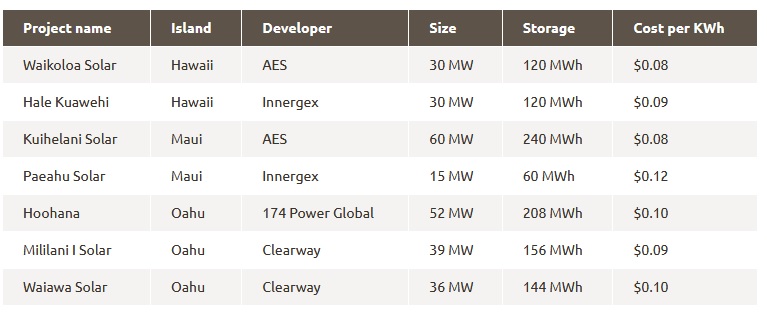
While fossil fuel generation in the state comes in at a price of around US$0.15 per kilowatt-hour, two of the proposed projects hit prices of US$0.08 per kilowatt-hour, with even the most expensive, Paeahu Solar on Maui by Canadian developer Innergex coming in at an expected US$0.12 per kWh. It is also worth noting that Paeahu Solar is the smallest project on the list by some way at 15MW / 60MWh, implying that scale plays some part in setting prices.
Every few months the prolific deployment of solar in Hawaii appears to set new benchmarks for low-cost energy from solar-plus-storage projects. In late June Energy-Storage.news reported that Hawaii electric cooperative KIUC will pay less than US$0.11 per kWh for power from a new solar-plus-storage facility on Kaua’i. In August, a 4.88MW solar PV project with a 3MW / 15MWh battery energy storage system on Molokai, one of the smaller islands, reached prices of US$0.17 per kWh, again still competitive on that island with fossil fuel costs.
“The prices reflect the contractual flexibility that enables the utility to dispatch energy from each facility to meet the needs of the grid,” Hawaiian Electric said in a statement.
“All of the projects will provide stable, long-term prices in place of the volatile prices of fossil fuels.”
Hawaiian Electric began the procurement process for the newest seven projects in February this year. The utility group said it is also separately proposing a 12.5MW solar project in West Oahu combined with 50MWh of energy storage, expected to be put forward to regulators in the coming weeks.
Hawaiian Electric said it has reduced fossil fuel use by 26% in the past 10 years, equating to 48 million fewer barrels of oil being imported annually into the utility’s service areas. The addition of the seven proposed projects would more than double the reductions in fossil fuel use, the utility said.