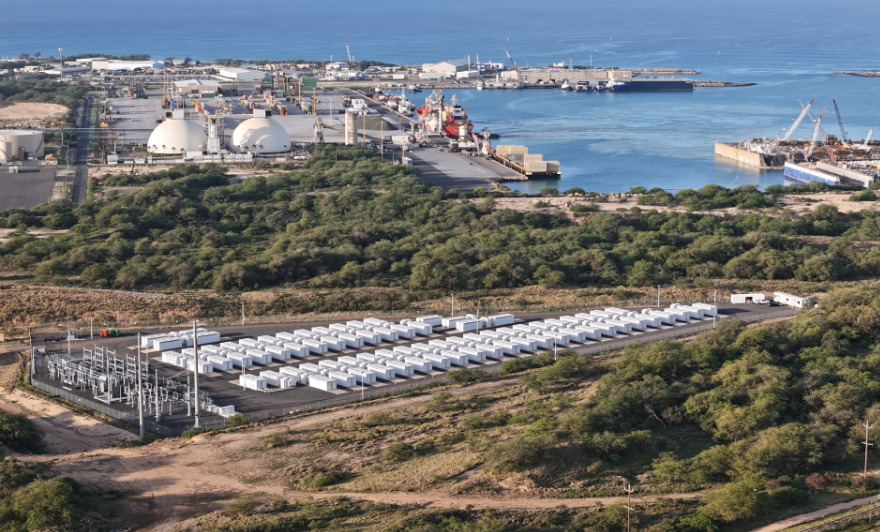
BESS developer and operator Plus Power has brought a 185MW/565MWh project online in Hawaii, the US, which it claimed is the “most advanced grid-scale BESS in the world”.
The Kapolei Energy Storage (KES) project on the island of Oahu was built to replace a coal plant owned by large utility AES which closed in November 2022 and previously powered a fifth of the island’s needs.
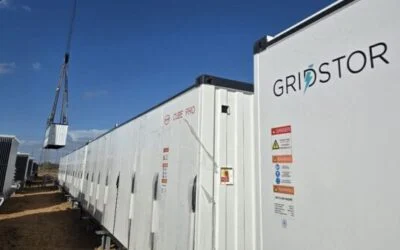
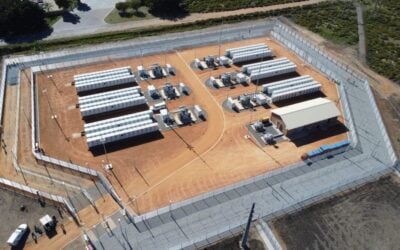
It comprises 158 Tesla Megapacks configured into 135MW/540MWh for capacity and energy use cases and another 50MW/25MWh of additional capacity for ‘fast frequency response’ to help keep the grid stable.
Brandon Keefe, Plus Power’s executive chairman claimed: “It is the first time a battery has been used by a major utility to balance the grid: providing fast frequency response, synthetic inertia, and black start. This project is a postcard from the future – batteries will soon be providing these services, at scale, on the mainland.”
Try Premium for just $1
- Full premium access for the first month at only $1
- Converts to an annual rate after 30 days unless cancelled
- Cancel anytime during the trial period
Premium Benefits
- Expert industry analysis and interviews
- Digital access to PV Tech Power journal
- Exclusive event discounts
Or get the full Premium subscription right away
Or continue reading this article for free
The announcement said it will be acting “…as an electrical “shock absorber” (a function) often served by combustion-powered peaker plants”.
Another major energy storage project which has been described as such a “shock absorber” is the 850MW/1680MWh Waratah Super Battery in Australia which is being deployed by system integrator Powin.
KES, Hawaii’s biggest energy storage project, was approved in May 2021 and financing for it was achieved by Plus Power six months later.
Customer-sited solar power has become so abundant that Hawaiian Electric, the main utility in Hawaii, needs to regularly curtail – i.e. pay owners to turn off – utility-scale solar and wind to keep the electricity system in balance.
The utility’s modelling has forecast that thanks to the KES project it will be able to reduce curtailment of renewables by 69% over the first five years of operation, integrate 10% more new utility-scale renewables than previously modelled, and allow for continued growth in customer-sited solar. It is also expected to reduce consumer electric bills by an average of US$0.28 per month over its 20-year contract life.
The utility has been busy progressing the US island state’s clean energy and energy storage development goals, starting negotiations with 2.1GWh of energy storage projects in December 2023 and in May unveiling a long-term renewables plan which included adding add more than 3.7GW of hybrid solar, energy storage and firm renewables by 2030.
Plus Power said that by June 2024 it will have some 1,325MW/3,500MWh of energy storage online across the US, including projects which were part of a US$1.8 billion fundraise it concluded in November, the largest seen in energy storage in 2023.
Energy-Storage.news’ publisher Solar Media will host the 5th Energy Storage Summit USA, 19-20 March 2024 in Austin, Texas. Featuring a packed programme of panels, presentations and fireside chats from industry leaders focusing on accelerating the market for energy storage across the country. For more information, go to the website.