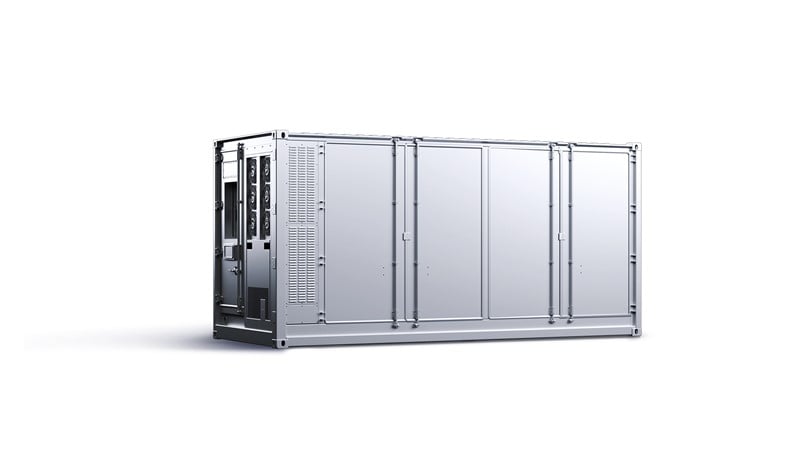
Lithium-ion battery manufacturer CATL has launched its latest grid-scale BESS product, with 6.25MWh per 20-foot container and zero degradation over the first five years, the company claimed.
The China-headquartered company announced the ‘Tener’ battery energy storage system (BESS) solution (Tianheng in Chinese) last week (9 April) with several claims of industry-leading technical specifications.
The foremost among them is that the lithium-ion (Li-ion) batteries inside will not suffer any degradation over the first five years, the company said.
This has been achieved thanks to biomimetic SEI (solid electrolyte interphase) and self-assembled electrolyte technologies, which CATL said has ‘cleared roadblocks for the movement of lithium ions’.
Try Premium for just $1
- Full premium access for the first month at only $1
- Converts to an annual rate after 30 days unless cancelled
- Cancel anytime during the trial period
Premium Benefits
- Expert industry analysis and interviews
- Digital access to PV Tech Power journal
- Exclusive event discounts
Or get the full Premium subscription right away
Or continue reading this article for free
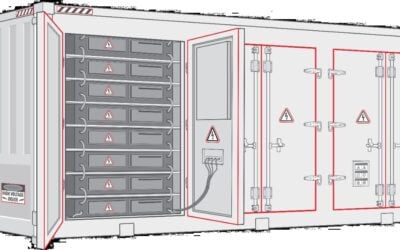
Tener also packs 6.25MWh of energy storage capacity into a 20-foot container, the highest Energy-Storage.news is aware of for a lithium-ion BESS unit, significantly above the 5MWh-per-unit that appears to have become the standard for BESS products from China.
The batteries inside use lithium iron phosphate (LFP) electrode chemistry and have an energy density of 430Wh/L, higher than the industry range of 140-330Wh/L.
CATL said the 6.25MWh figure reduced the product’s footprint by 30% at the unit level and 20% for the overall project, using the example of a 200MWh project.
Many companies have launched 20-foot products with 5MWh per unit in the last few years, including Sungrow, Trina Storage and Hithium.
CATL is the biggest manufacturer of lithium-ion battery cells in the world, and using in-house built cells (as Trina and Hithium do too) is key to designing systems with such high energy densities.
In the energy storage market, CATL is sometimes described as a system integrator but also – perhaps primarily – sells its BESS units to other system integrators who will package those into their turnkey BESS project and software solutions. One such deal was announced with US company FlexGen in 2022.
This is partially down to political barriers to applying energy management system (EMS) software made in China for projects in the US and elsewhere. That political pressure even led to physical CATL BESS units being disconnected and then ultimately decommissioned by US utility Duke Energy, albeit at a military base.
Energy-Storage.news’ publisher Solar Media will host the 2nd Energy Storage Summit Asia, 9-10 July 2024 in Singapore. The event will help give clarity on this nascent, yet quickly growing market, bringing together a community of credible independent generators, policymakers, banks, funds, off-takers and technology providers. For more information, go to the website.