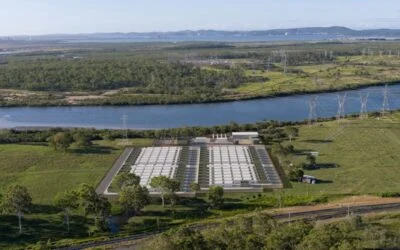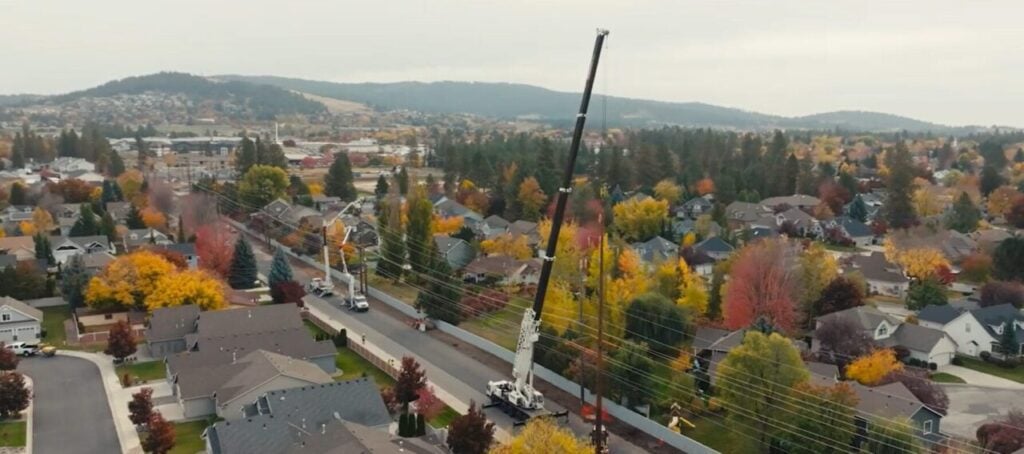
Utility company Avista has selected projects as part of its request for proposal (RFP) process to identify new resources, including a 100MW battery energy storage system (BESS), for the Pacific Northwest, US.
Avista’s 2025 Electric IRP, submitted on 31 December 2024, highlights the necessity for adding resources to ensure reliability, accommodate increasing customer energy demand, and support the utility’s clean energy objectives.
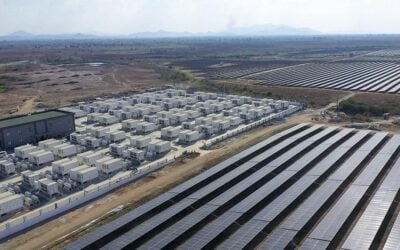
Avista will begin contract negotiations for a 100MW/400MWh BESS to be built and transferred to Avista in eastern Washington with a target date in 2028.
The utility did not provide any additional information about the BESS. Energy-Storage.news contacted Avista for more information, the utility stated that further details could not be provided at this time.
Try Premium for just $1
- Full premium access for the first month at only $1
- Converts to an annual rate after 30 days unless cancelled
- Cancel anytime during the trial period
Premium Benefits
- Expert industry analysis and interviews
- Digital access to PV Tech Power journal
- Exclusive event discounts
Or get the full Premium subscription right away
Or continue reading this article for free
Besides the BESS, the company will start contract negotiations for a self-build upgrade of Avista’s current natural gas combustion turbines in north Idaho, aiming to add 14MW of capacity without raising carbon emissions. This upgrade will be done in two phases, with the first in 2027 and the second in 2029.
A power purchase agreement (PPA) for about 200MW of wind energy from Montana, using Avista’s share of the Colstrip Transmission System, with an intended start in 2029.
Finally, around 40MW of demand response programmes will be added, targeting residential, commercial, and industrial customers within Avista’s service area starting in 2026.
Avista’s RFP invited proposals from bidders across various technology types, including demand response, to acquire extra energy and capacity that would help meet long-term resource adequacy and reliability requirements outlined in the 2025 Integrated Resource Plan (IRP).
The utility did model several energy storage options, including pumped hydro energy storage (PHES), lithium-ion (Li-ion), flow batteries, and iron oxide, in its 2025 IRP.
In April 2025, another utility serving parts of the Pacific Northwest, Berkshire Hathaway Energy-owned PacifiCorp, stated in its 2025 IRP that it was planning to install 3,073MW of iron-air battery storage by 2045.
The utility’s IRP included iron air battery data provided by Form Energy, which is looking to commercialise a proprietary battery technology based on ‘reversible rusting’.
Notably, Avista’s 2025 IRP notes that, “Due to recent peak load growth, the Company is in a short to even position over the next three years during both summer and winter peaks.”
The IRP continues, “Most of the 2030 shortfall is due to an assumed retirement of the 66MW Northeast Combustion Turbines (CTs) in Spokane, Washington.”
Avista’s 2025 all-source RFP was an effort to address upcoming resource shortfalls. The utility also highlighted that the RFP could help find cost-effective resources to meet future Washington Clean Energy Transformation Act (CETA) obligations or to capitalise on low-cost energy opportunities. In 2019, former Washington State Governor Jay Inslee signed CETA into law, requiring all utilities in Washington to deliver greenhouse gas emission-free electricity by 2045.
The Energy Storage Summit USA will be held from 24-25 March 2026, in Dallas, TX. It features keynote speeches and panel discussions on topics like FEOC challenges, power demand forecasting, and managing the BESS supply chain. ESN Premium subscribers can get an exclusive discount. For complete information, visit the Energy Storage Summit USA website.