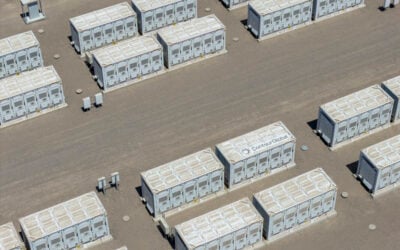
Developer On.Energy is deploying 39MWh of battery energy storage systems (BESS) at airports across Latin America (LATAM), Energy-Storage.news can reveal.
The Miami-based company is deploying the units at 11 undisclosed airports across Latin America. The energy storage systems will provide the airports with improved grid reliability in the event of blackouts, reduce their annual emissions and reduce their utility bills by up to 25%.
“When any airport in the world loses power, it causes a global chain reaction impacting millions of airport operators, airline staff, as well as vendors and passengers. Latin American airports are rapidly adopting BESS to support energy reliability, while also improving efficiency, reducing operational costs, and supporting national decarbonisation goals,” said Jose Manuel Diaz, On.Energy’s president for South and Central America.
The firm has offices in the US, Mexico and Peru. The 39MWh deployments add to five airport BESS systems that are already operational or in the final stages of commissioning.
Try Premium for just $1
- Full premium access for the first month at only $1
- Converts to an annual rate after 30 days unless cancelled
- Cancel anytime during the trial period
Premium Benefits
- Expert industry analysis and interviews
- Digital access to PV Tech Power journal
- Exclusive event discounts
Or get the full Premium subscription right away
Or continue reading this article for free
The projects are being deployed through a collaboration with Skysense, a Mexico-based developer of solar, storage and green hydrogen projects.
On.Energy raised US$100 million from UK fund SDCL Energy Efficiency Income Trust plc (SEEIT) in August for its US and Canada energy storage project deployments.
The firm has to date mostly delivered commercial & industrial-sited (C&I) BESS projects, with around 100MWh in operation or construction and a pipeline of 3.8GWh across the Americas.
Its country manager for Mexico David Fernandes discussed the Mexican market in an interview with Energy-Storage.news in January last year.
This article was updated after publication after the initial version incorrectly referred to a Sweden-based Skysense.