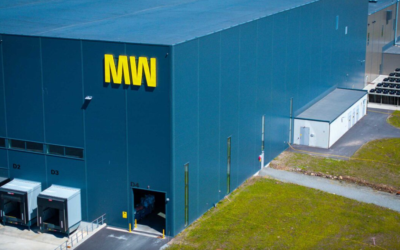
Commercial operations have begun at the Hydrovolt battery recycling plant in Norway, a joint venture (JV) between Norwegian materials processing company Hydro and Sweden-headquartered lithium battery manufacturing startup Northvolt.
The facility in Fredrikstad, southern Norway, has been under construction since February last year and its JV partners have invested NOK120 million (US$13.94 million) into the project while another NOK43.5 million was put in by Norwegian government enterprise Enova.
It is Europe’s largest electric vehicle battery (EV) recycling plant with the capacity to process approximately 10,900 tonnes (12,000 tons) of battery packs per year, equating to around 25,000 EV batteries. The batteries will be supplied by Batteriretur, a Norwegian company that collects batteries for recycling.
That is sufficient to recycle the entire end-of-life battery market in Norway, Hydrovolt said. CEO Frederik Andresen told Energy-Storage.news when construction started that, although it was EV-focused, the facility is also capable of recycling batteries from stationary energy storage systems (ESS).
Try Premium for just $1
- Full premium access for the first month at only $1
- Converts to an annual rate after 30 days unless cancelled
- Cancel anytime during the trial period
Premium Benefits
- Expert industry analysis and interviews
- Digital access to PV Tech Power journal
- Exclusive event discounts
Or get the full Premium subscription right away
Or continue reading this article for free
Hydrovolt has a long-term aim of increasing its recycling capacity in Europe to 63,500 tonnes of battery packs by 2025 and 272,000 tonnes by 2030.
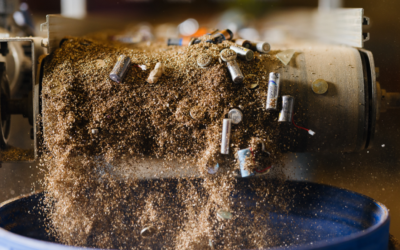
The Fredrikstad facility can recover and isolate some 95% of the materials in a batteries including plastics, copper, aluminium and black mass, a compound containing nickel, manganese, cobalt and lithium. The recovered aluminium will be delivered to Hydro for recirculation into commercial grade aluminium products.
The facility features a dust collection system to ensure the capture of material typically lost in mechanical recycling processes, one of several novel concepts the company said are being deployed.
Northvolt, founded in 2016, is one of a few startups launching large gigascale lithium-ion battery projects across Europe with significant backing, another being Norway-based FREYR.
Northvolt is the largest of these by money raised (US$2.7 billion) and planned pipeline (170GWh annual production capacity). It most recently announced the site for its third gigafactory, in Schleswig-Holstein, Germany, and acquired a site for a 100GWh cathode material production facility in Sweden.