Round-Up: Saft in Saudi, storage hits Capitol Hill and batteries roll into Switzerland

LinkedIn
Twitter
Reddit
Facebook
Email

Saft wins Saudi project deal

27 October 2015: Battery manufacturer Saft will install an energy storage system for a new innovation centre being built by major Saudi industrial SABIC. The company will provide 48 batteries with a peak power of 20kW and a capacity of 187kWh. They will be used to smooth the output of the building’s installed PV. Xavier Delacroix, GM at Saft’s Industrial battery Group said energy storage was vital “to help the Middle East region make the transition from its reliance on fossil fuels”.

Image credit: Saft
New storage caucus launched in US congress

27 October 2015: A new Battery Energy Storage Caucus has been launched by a Democrat and Republican US Representatives. Chris Collins (R-NY) and Mark Takano (D-CA) hope to brief Congress on the role of energy storage in reinforcing the US grid and making it “affordable, and sustainable”. “Energy storage is modernising the grid and enabling new economic possibilities, saving businesses and consumers money,” said Rep. Takano.

This article requires Premium SubscriptionBasic (FREE) Subscription

Try Premium for just $1

  • Full premium access for the first month at only $1
  • Converts to an annual rate after 30 days unless cancelled
  • Cancel anytime during the trial period

Premium Benefits

  • Expert industry analysis and interviews
  • Digital access to PV Tech Power journal
  • Exclusive event discounts

Or get the full Premium subscription right away

Or continue reading this article for free

Swiss college installs 500kWh PV-tied battery

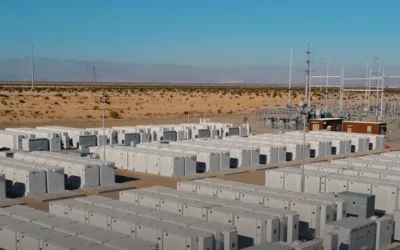
28 October 2015: Swiss battery producer Leclanche has installed a system at the Ecole Polytechnique Federale de Lausanne (EPFL). The 500kWh titanate lithium-ion battery was developed in conjunction with EPFL and is based on the college’s grounds. It is connected to a PV plant owned by utility Romande Energie with results from the install to be used as part of EPFL’s smart grid research.

Battery system at École polytechnique fédérale de Lausanne (EPFL) .
8 September 2026
Barcelona, Spain
Battery & Energy Storage Tech Europe (BESTE) is Europe’s industrial scaling platform for stationary and industrial battery applications — not EVs. Taking place 8–9 September 2026 at Fira de Barcelona, BESTE brings together utilities, IPPs, energy-intensive industries, data centres, ports, rail, maritime, defence and aerospace OEMs — all deploying or integrating battery storage at scale. Over 100 companies already confirmed — including EDP Renewables, Acciona, Endesa, Naturgy, Neoen, Galp, Basquevolt and Veolia — alongside 40+ expert speakers and international institutional support from BEPA, BVES, LDES and Volta Foundation. Where Europe’s battery & ES ecosystem turns projects into reality.
15 September 2026
San Diego, USA
You can expect to meet and network with all the key industry players again in 2025 from major US asset owners, operators, RTOs and ISOs, optimizers, software and analytics providers, technical consultancies, O&M technology providers and more.

Read Next

July 20, 2026
Residential renewable energy solutions company Palmetto recently launched its Palmetto Energy Backup Plan, a residential battery subscription aimed at making residential storage more accessible in 25 US states.
Sponsored
July 20, 2026
Hithium, an integrated energy storage solutions provider known for its leadership in long-duration energy storage, is now seeing strong momentum across its residential businesses and C&I. We discussed this with the company at the Smarter E Europe trade show in Germany last month.  
July 20, 2026
Australia’s NEM connected 9.1GW of new generation and energy storage to full output in FY26, more than double the result achieved in FY25.
July 19, 2026
Australian Prime Minister Anthony Albanese has said that large-scale data centres will be legally required to put at least as much energy into the grid as they draw from it, and that this supply must be renewable energy.
July 17, 2026
Battery energy storage systems (BESS) operating in California’s grid left approximately US$98 million on the table due to suboptimal bidding strategies, according to a new analysis from Gridmatic.