The US Department of Energy (DOE) has announced that it will provide assistance to “techno-economic” studies for two pumped storage hydropower plants, with a combined generation capacity close to 2GW.
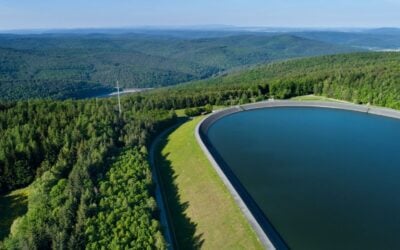
In a release yesterday, the DOE said that the value of pumped storage in electricity networks that are increasingly adapting to run on higher percentages of renewable energy is changing. In the past, pumped hydro, which runs water downhill between large reservoirs, generating power as the water passes through turbines and then pumping the water back uphill cheaply at off-peak times, was used to balance the electric system between periods of high and low demand.
Today, the DOE release said, plants can now be required to change operational modes several times in a day so that they can provide other services like frequency response or fast ramp capabilities to the grid. This is greatly linked to the increase in shares of variable renewable energy generation which require more balancing than fossil fuels.
The Department put out a Notice of Opportunity for Technical Assistance in April, offering to help pumped storage plant developers estimate the value of their proposed project(s) and evaluate what sort of revenue streams may be available to it under current market structures.
Try Premium for just $1
- Full premium access for the first month at only $1
- Converts to an annual rate after 30 days unless cancelled
- Cancel anytime during the trial period
Premium Benefits
- Expert industry analysis and interviews
- Digital access to PV Tech Power journal
- Exclusive event discounts
Or get the full Premium subscription right away
Or continue reading this article for free
The two selected projects will be Goldendale Energy Storage Project on the Oregon-Washington border and Banner Mountain Project in Wyoming. Goldendale has been proposed by GridAmerica Holdings, and will use 1,200MW of turbines and 1,552MW of pumped storage capacity. Specifically aimed at helping balance local wind power generation, the project will be situated at the northern terminus of intertie transmission lines on the Pacific AC and DC circuits.
The second project selected, Banner Mountain from Absaroka Energy in central Wyoming is also in an area with high wind power generation and lies along the route of a proposed 500kV transmission line, Energy Gateway West. It would have a total capacity of 400MW and significantly would be able to switch between three operating modes. It should be able to support the transmission network while helping integrate renewables. The US Federal Energy Regulatory Commission (FERC) issued preliminary permits for both projects during 2018.
Studies will be conducted by experts from DOE laboratories: Argonne National Laboratory, Idaho National Laboratory, NREL, Oak Ridge National Laboratory and Pacific Northwest National Laboratory. The studies are part of a wider multiyear research effort, the DOE said.
While at the top level American political life appears unable to accept the reality of climate change and the shifting economics of energy, the DOE itself appears prepared to support research and development of technologies and innovations, including a push to develop storage systems with 100 hours duration.