After securing a US$225 million financing facility, US solar developer 8minute Solar Energy has said the “vast majority” of projects in the company’s pipeline “are solar-plus-storage”.
At the beginning of June, our sister site PV Tech reported that 8minute had closed the letter of credit facility with five major banks. The financing facility is to be used to post securities for power purchase agreements (PPAs) and fund interconnection agreements for a portfolio of solar PV at 50 sites in California, Texas and other US states in the country’s southwest.
The US$225 million credit facility blends project finance and corporate debt and is backed by assets owned by 8minute Solar Energy and joint venture (JV) partners. Rabobank, KeyBank, HSBC and Nomura Holdings provided the financing with CIT acting as sole coordinating lead arranger. The deal came around a month after 8minute added 3GW to its existing pipeline, taking it to 18GW.
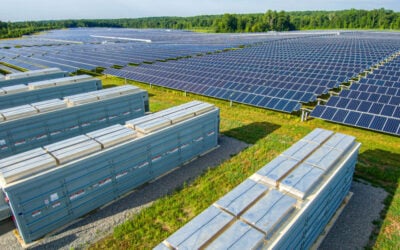
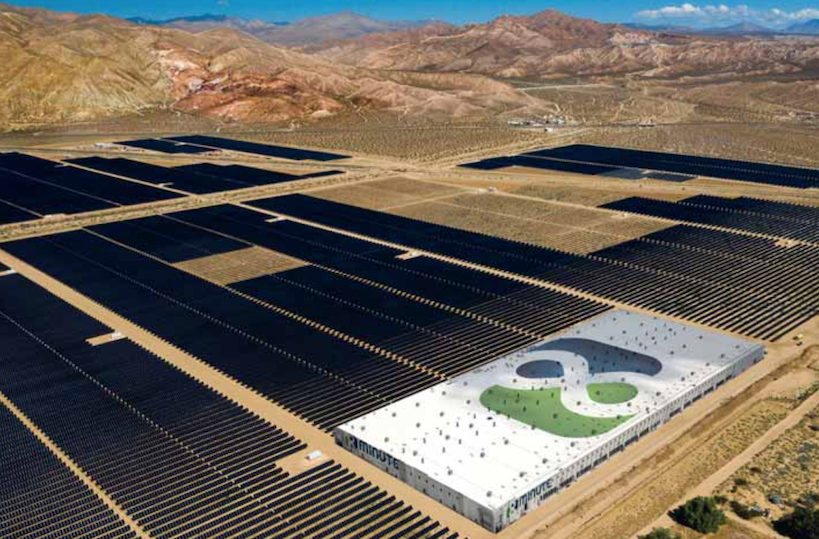
The company’s projects include the Eland Solar & Storage Center, which will comprise 400MWac of PV and 300MW / 1,200MWh of battery energy storage, currently under construction in California’s Mojave Desert. 8minute chief development officer Sean Kiernan has told Energy-Storage.news that the Eland project is “proof that solar-plus-storage can not only be a reliable, long-term replacement for fossil fuels, but also beat fossil fuels on cost”. Asset manager Capital Dynamics became the Eland facility’s long-term majority equity investor in January.
Try Premium for just $1
- Full premium access for the first month at only $1
- Converts to an annual rate after 30 days unless cancelled
- Cancel anytime during the trial period
Premium Benefits
- Expert industry analysis and interviews
- Digital access to PV Tech Power journal
- Exclusive event discounts
Or get the full Premium subscription right away
Or continue reading this article for free
A Guest Blog written for this site by experts at consultancy Apricum – The Cleantech Advisory in March, looked at how the project’s combined PPA has been brokered for just US$40 per MWh, definitively beating conventional gas peakers which have generation costs “easily reaching US$200 per MWh”. 8minute was also one of four prolific developers interviewed for our recent feature article, ‘A developers’ eye view on North America’.
“The vast majority of our development pipeline are solar-plus-storage projects, with more than 24GWh of energy storage under development,” 8minute Solar Energy’s Sean Kiernan said.
“Our team continues to design projects that seamlessly and efficiently generate, store and dispatch power when it’s needed the most. The industry should continue prioritising energy storage to better serve communities’ energy needs – day and night – and position solar as one of the dominant solutions to the climate crisis.”
Additional reporting by Liam Stoker.