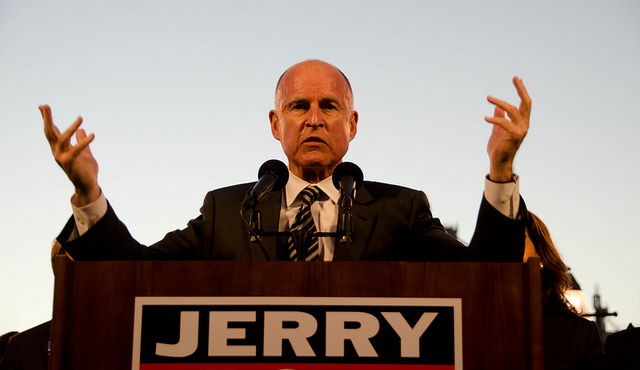
California’s Governor Jerry Brown has passed the state’s 2045 zero-carbon electricity target into law, offering a major boost to the energy storage sector in the process.
The goal, part of the SB100 bill, pushes the state’s Renewable Portfolio Standard (RPS) to 50% by 2025 and 60% by 2030 with a zero-carbon electricity grid in place by 2045.
In the letter accompanying the signed bill, Governor Brown offered some detail on how the 2045 target might be reached.
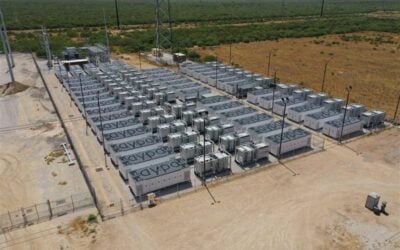
“To get to 100% clean energy in a manner that ensures reliability and reduces cost, we must use a variety of strategies. Energy storage, increased efficiency and adjusting energy use to the time of day when we have most power will all help with the transition,” he said adding that greater interconnectivity with the grids of neighbouring states could also contribute.
Try Premium for just $1
- Full premium access for the first month at only $1
- Converts to an annual rate after 30 days unless cancelled
- Cancel anytime during the trial period
Premium Benefits
- Expert industry analysis and interviews
- Digital access to PV Tech Power journal
- Exclusive event discounts
Or get the full Premium subscription right away
Or continue reading this article for free
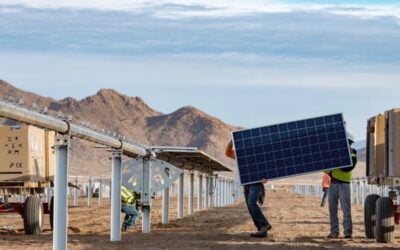
California had installed 22GW of solar as of the end of 2017 and more than 5.5GW if wind, according to the respective industry associations for those technologies. Meeting the reinforced RPS goals will require further deployment.
“The innovation of California within the energy sector is welcomed by the storage industry as we stand on the precipice of realizing our own goal of 35 GW of new storage deployed by 2025,” said Kelly Speakes-Backman, CEO of the Energy Storage Association in the US.
“As an enabling technology with a multitude of applications, the added flexibility that storage provides to the electric grid will prove crucial to achieving the goals of SB100 in a cost-effective manner while maintaining grid reliability. Storage resources can be deployed to optimize existing renewable energy resources and to integrate additional ones, serving as a multiplier of the greenhouse gas reductions made possible by ambitious clean energy policies like California’s,” she said.
“Important to ESA members, SB100 will also send a strong investment signal for long-duration storage technologies, further accelerating investment and deployment of reliable and cost-effective storage on the grid as a whole,” added Speakes-Backman.
The news follows on from the prospect of a state-wide energy storage rebate programme (SB700).