US$5 million will be made available for long-duration energy storage (LDES) projects via a competitive solicitation run by the New York State Energy Research and Development Authority (NYSERDA).
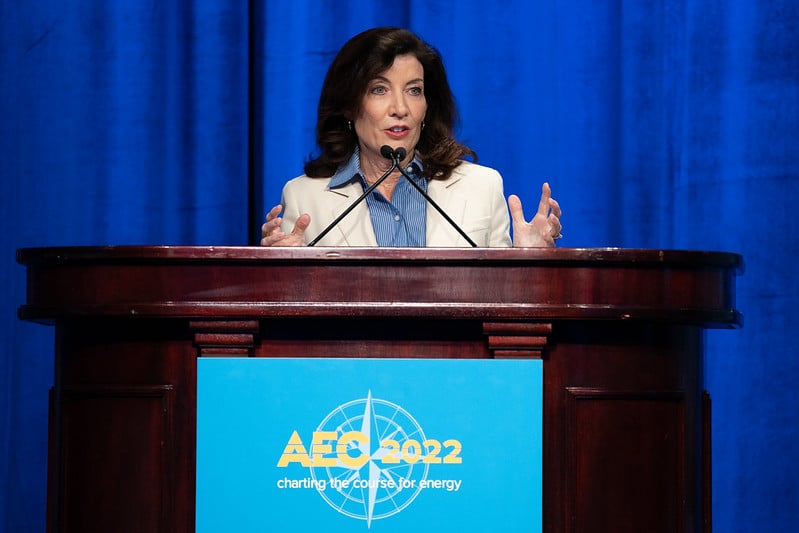
Governor Kathy Hochul announced the funding, which will be available from New York State’s Renewable Optimization and Energy Storage Innovation Program, yesterday (12 June).
The money will support the development and demonstration of scalable LDES solutions to help the state meet its clean energy and energy storage deployment goals, including a 6GW by 2030 energy storage target.
The competitive solicitation will support innovative and under-utilised LDES solutions, devices, software, controls, and other complementary technologies which are yet to be commercialised by funding demonstration projects. Hochul’s office said.
Try Premium for just $1
- Full premium access for the first month at only $1
- Converts to an annual rate after 30 days unless cancelled
- Cancel anytime during the trial period
Premium Benefits
- Expert industry analysis and interviews
- Digital access to PV Tech Power journal
- Exclusive event discounts
Or get the full Premium subscription right away
Or continue reading this article for free
Eligible projects will need to be between 10-100 hours in duration at rated power and, the announcement said: “should advance and field test electrical, chemical, mechanical, and thermal to electric long-duration storage solution technologies that will address cost, performance, and renewable integration challenges such as grid congestion, hosting capacity constraints, and lithium-ion siting limitations in New York City.”
Siting limitations for lithium-ion in a dense urban area like New York City could include fire safety concerns—which the state has sought to tackle through an interagency working group convened by Hochul—noise emissions and logistical challenges with containerised battery energy storage systems (BESS) becoming ever more energy-dense and therefore heavier.
Those with eligible projects have until 3 pm local time on 24 September, 2024, to submit their proposal.
It follows previous LDES funding solicitations of US$15 million allocated in 2023, the bulk to an iron-air battery project from Form Energy, and a US$16.6 million round for five projects in 2022.
NYSERDA president and CEO Doreen M. Harris said: “Investing in long duration energy storage solutions can help replace fossil fuel peaker plants while incentivising clean energy development that will tangibly improve air quality and mitigate the future impacts of climate change for traditionally overburdened communities.”
The NYSERDA Innovation Program is funded through the State’s 10-year, US$6 billion Clean Energy Fund.
See more recent news about the New York energy storage market here, including New York City’s largest BESS being deployed at a retiring gas plant, a 150MWh rollout by Eaton and Endurant and a like-for-like gas turbine replacement project on Staten Island.