The legislative body of Nebraska, US, has advanced a bill to clarify the role and expand the state’s use of battery energy storage systems (BESS).
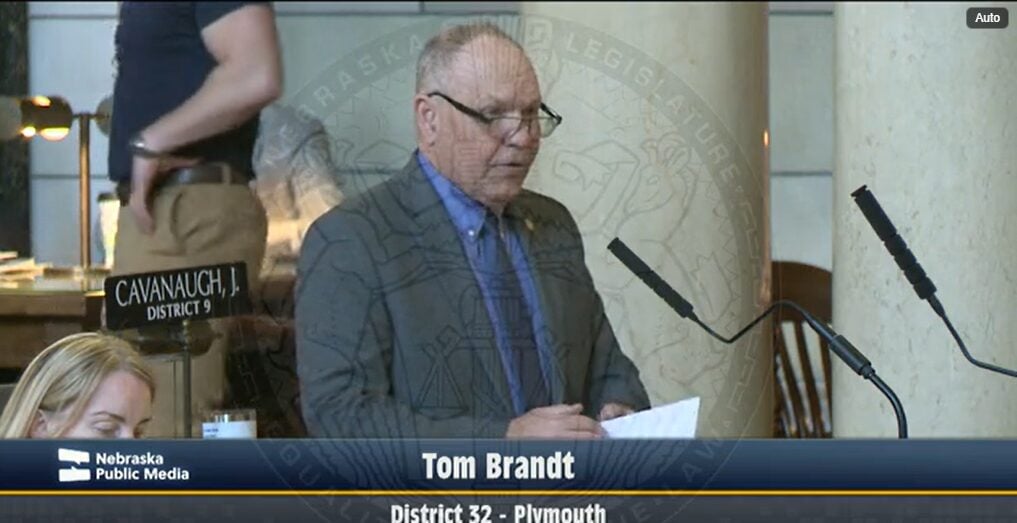
LB1010, titled “Adopt the Large Load Customer Regulation Act”, was introduced by Republican state senator Tom Brandt on 13 January and further advanced on 12 March. It addresses eminent domain concerning energy storage, along with the regulation and taxation of energy storage resources. It also includes amendments related to cryptocurrency mining operations and data centres.
The bill revises several state statutes, “to provide for eminent domain of electrical energy storage property; to provide for storage of electric energy under the Electric Cooperative Corporation Act; to define and redefine terms, change application, notice, filing, exemption, and violation provisions, and provide for certain energy storage resources relating to certain electric suppliers; to harmonise provisions; and to repeal the original sections.”
Notably, Nebraska stands alone as the only US state entirely served by publicly-owned utilities, such as municipal utilities, electric cooperatives, and public power districts.
Try Premium for just $1
- Full premium access for the first month at only $1
- Converts to an annual rate after 30 days unless cancelled
- Cancel anytime during the trial period
Premium Benefits
- Expert industry analysis and interviews
- Digital access to PV Tech Power journal
- Exclusive event discounts
Or get the full Premium subscription right away
Or continue reading this article for free
Local news outlet KETV Omaha reported that Brandt said the bill would allow private enterprise to build and operate large-scale BESS. It would also require data centres to disclose their electricity usage.
Brandt explained that the bill will establish a clearer framework for developing BESS projects in Nebraska, something that was not previously available or as well-defined.
In 2025, officials in Lincoln, Nebraska, suggested updating zoning regulations to permit large-scale BESS projects. Currently, Lancaster County’s zoning laws, where Lincoln is the county seat, do not include provisions for BESS technologies. The proposed amendments were introduced to the commission by Eolian, an energy storage developer based in Burlingame, California.
Under Eolian’s zoning update, use permits for BESS in Lancaster County will be issued at the planning commission’s discretion and will undergo review through public hearings involving officials and local residents.
According to the US Energy Information Administration (EIA), coal supplies the majority of Nebraska’s electricity. Three of the state’s ten largest power plants by capacity and four by actual generation are coal-fired.
In 2024, renewable resources accounted for 36% of Nebraska’s total electricity net generation. Wind energy is highly effective throughout the state, powering nearly 89% of its renewable generation in 2024.
Renewables project monitor Cleanview reports that as of March 2026, there are 5 utility-scale battery storage projects in Nebraska, with a total operating capacity of 6MW.
Currently, LB1010 is in the Enrollment and Review process of Nebraska’s lawmaking process. The bill has three more primary steps to go through, during which it can be further amended, before being sent to the governor.
The Energy Storage Summit USA 2026 is taking place today and tomorrow, 24-25 March 2026, in Dallas, TX. It features keynote speeches and panel discussions on topics like FEOC challenges, power demand forecasting, and managing the BESS supply chain. ESN Premium subscribers can get an exclusive discount on ticket prices. For complete information, visit the Energy Storage Summit USA website.