Electric vehicle (EV) batteries made by Mercedes-Benz will be given a new lease of life in stationary energy storage systems (ESS).
Swedish startup BatteryLoop said yesterday that it will use batteries supplied by the German luxury automaker’s Mercedes-Benz Energy business line for its range of ESS solutions, called BatteryLoop Energy Storage System (BLESS).
Longtime readers of Energy-Storage.news will be aware that Mercedes-Benz Energy entered the stationary storage market in 2016, marketing a range of solutions in Europe and the US.
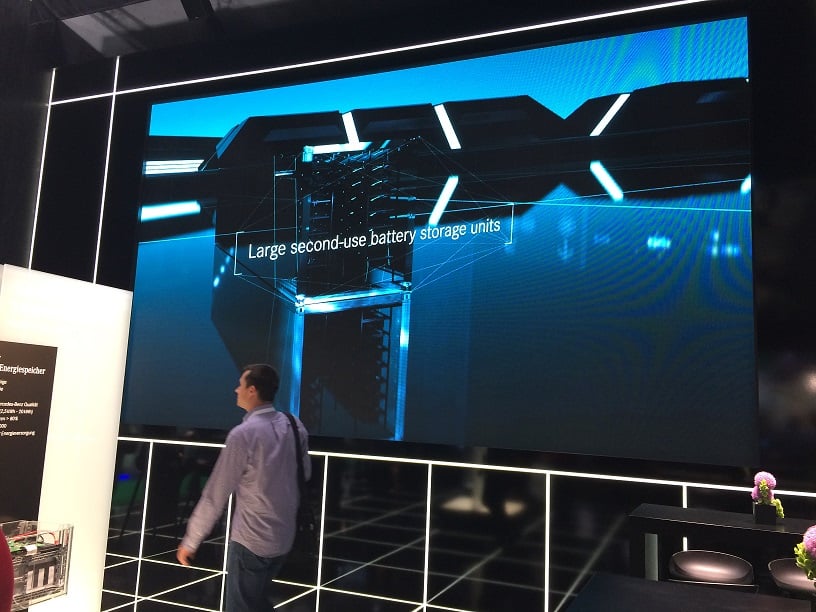
That interest appeared to fizzle out, despite Mercedes-Benz Energy hosting some of the biggest industry trade show stands this writer remembers ever seeing and much media attention being paid to the company’s branded battery systems that featured the iconic three-pointed star logo.
Try Premium for just $1
- Full premium access for the first month at only $1
- Converts to an annual rate after 30 days unless cancelled
- Cancel anytime during the trial period
Premium Benefits
- Expert industry analysis and interviews
- Digital access to PV Tech Power journal
- Exclusive event discounts
Or get the full Premium subscription right away
Or continue reading this article for free
It had been marketing ESS based on second life automotive batteries, while a factory producing EV batteries was also expected to supply devices for ESS. Reports then emerged in early 2018 that parent company Daimler had decided to exit the market for Mercedes-Benz branded systems, but that Mercedes-Benz Energy would remain focused on developing and constructing projects and storage systems based on second life EV batteries and spare parts as well as systems utilising new batteries.
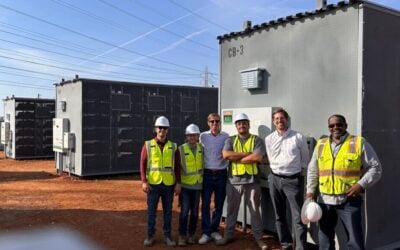
A frame agreement has been signed with BatteryLoop which will see the Swedish company — a subsidiary of Stena Metall Group, a recycler and processor of various materials — roll out as much as 40MWh of ESS within the next 18 months using Mercedes-Benz Energy modules.
The first project will be a 3MW/2MWh ESS installed at a site in Sweden which will help manage the electricity network and ease grid congestion.
BatteryLoop said it will secure “high volumes” of batteries, both new and second life, through the deal.
“With second-use batteries and a power-optimising system we can also, based on the Swedish environmental research institute lifecycle analysis, save 1,000-tonnes CO2 emissions per 3MW energy storage system from the production and at the same time generate the same benefits for the grid,” BatteryLoop CEO Rasmus Bergström said, adding that such systems can generate significant revenues for customers of between SEK7 million (US$0.75 million) to SEK10 million per year.
“With the company BatteryLoop we have got a partner that have showed deep knowledge in the ESS market, and we are convinced that our products will be an important role for the markets BatteryLoop have,” Mercedes-Benz Energy CEO Gordon Gassmann said.
“The market for large energy storage systems is increasing with the change to renewable energy production,” Bergström said.
Interest in second life batteries from EVs as a component for ESS has grown as they could represent a cheaper source of energy storage than all-new batteries while providing a circular solution for getting the most out of devices which might otherwise be discarded.
Mercedes-Benz is building large-scale battery gigafactories in Europe and the US which might serve as sources for the materials, as well as having launched a recycling subsidiary called LICULAR.
Rival luxury carmaker Jaguar Land Rover recently announced a similar tie-up for its used EV batteries with power application supplier Pramac. Enel just commissioned a 4MW ESS project at Melilla, a Spanish enclave on Morocco’s northeast coast using Nissan batteries and German energy company RWE inaugurated a 4.5MWh ESS using decommissioned Audi EV batteries at one of its facilities.
In a recent Guest Blog for this site, Matthew Lumsden, CEO of UK company Connected Energy, which specialises in second life projects, argued that while recycling is important, EV batteries need to be designed for reuse in second life as well.