MEAG and SMA Altenso partner on 354MWh Germany BESS with ‘next-gen’ inverters

LinkedIn
Twitter
Reddit
Facebook
Email

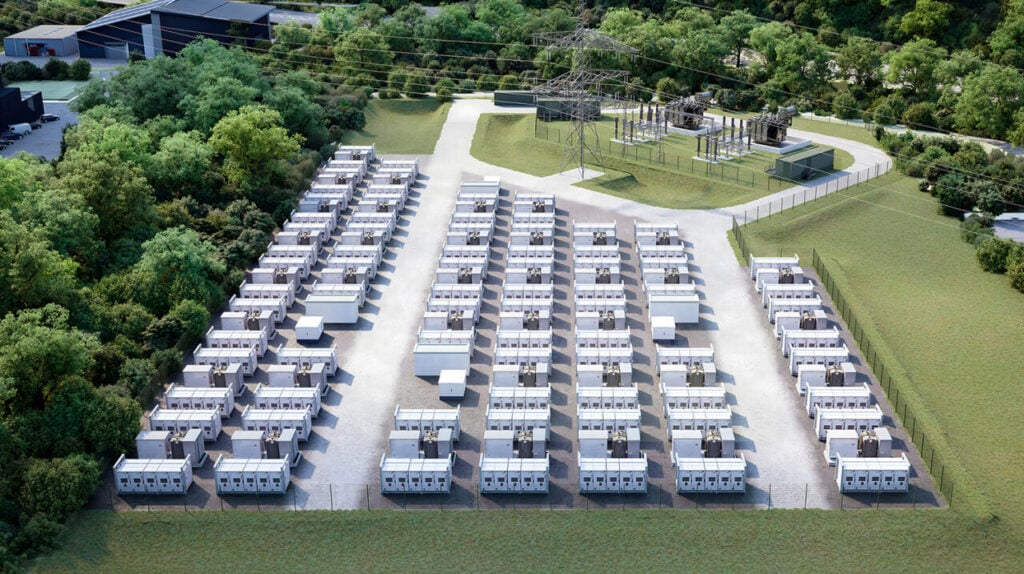
Asset manager MEAG and a subsidiary of inverter specialist SMA have partnered to deploy a 130MW/354MWh BESS in Germany, their second together and one which will deploy ‘next-generation’ inverters.

The 2.7-hour duration ready-to-build Hoexter battery energy storage system (BESS) project has a grid connection date of 2027, the companies said.

It is their second project they’ve worked on, following the 92.5MW/231MWh Metelen project. Both are in North Rhine-Westphalia, the most populous state in Germany.

Hoexter was developed in-house by SMA Solar Technology AG subsidary SMA Altenso, which does renewables project development, system integration and construction. SMA Altenso will deliver a turnkey solution for Hoexter of development, construction, and maintenance, as it is doing with Metelen.

This article requires Premium SubscriptionBasic (FREE) Subscription

Try Premium for just $1

  • Full premium access for the first month at only $1
  • Converts to an annual rate after 30 days unless cancelled
  • Cancel anytime during the trial period

Premium Benefits

  • Expert industry analysis and interviews
  • Digital access to PV Tech Power journal
  • Exclusive event discounts

Or get the full Premium subscription right away

Or continue reading this article for free

Optimiser Entrix will trade the Metelen project in Germany’s energy and ancillary service markets, an announcement that coincided with the inaugural Energy Storage Summit Germany 2025, held in June by our publisher Solar Media in Stuttgart. That project should come online before the end of the year.

“Battery energy storage systems are essential for bridging supply gaps during periods of low renewable generation and in facilitating the greater integration of renewable energy into the grid. With the projects in Hoexter and Metelen, we are laying the foundation for our battery storage platform in Europe.” said Dominik Damaschke, head of illiquid assets equity at MEAG.

The Hoexter project will be among the first to use SMA’s ‘next-generation’ SMA Sunny Central Storage UP-S inverters, which incorporate silicon carbide (SiC) MOSFET technology. That means outstanding energy conversion efficiency, low acoustic emissions, and advanced operational lifetime, SMA claimed.

Smaller projects launched in Germany by Bayernwerk, Green Flexibility

The news coincides with other companies launching construction on smaller grid-scale projects in Germany.

System integrator Intilion has been contracted by utility Baternwerk Natur to provide a 15MW/30MWh BESS for a project in Pfaffenhofen, Bavaria, southern Germany. The pair have already worked on projects together in Germany, as reported by Energy-Storage.news.

BESS developer-operator Green Flexibility meanwhile will build a 2.5-hour, 10MW/25MWh BESS in Krumbach, also in Bavaira, with an investment of around €10 million (US$11.6 million). It will be deployed in a ‘grid-neutral’ way, Green Flexibility said. Energy-Storage.news interviewed CEO Christoph Ostermann for ESN Premium earlier this year.
25 August 2026
Sydney, Australia
Building on our successful global portfolio of energy storage network events including our successful Energy Storage Summit Australia, combined with the exponential buildout of large-scale energy storage, we are delighted to return for the inaugural Battery Asset Management Summit Australia in Sydney (25-26 August 2026). The Battery Asset Management Summit has been received worldwide with huge optimism and has quickly established itself as leading event series for connecting asset owners with optimisers, software providers, and many more.
15 September 2026
San Diego, USA
You can expect to meet and network with all the key industry players again in 2025 from major US asset owners, operators, RTOs and ISOs, optimizers, software and analytics providers, technical consultancies, O&M technology providers and more.
15 September 2026
Berlin, Germany
Launching September 2026 in Berlin, Energy Storage Summit Germany is a new standalone event dedicated to Germany’s energy storage market. Bringing together investors, developers, policymakers, TSOs, manufacturers and optimisation specialists, the Summit explores the regulatory shifts, revenue models, financing strategies and technology innovations shaping large-scale deployment. With Germany targeting 80% renewables by 2030, it offers a focused platform to connect with the decision-makers driving the Energiewende and the future of utility-scale storage.
2 December 2026
Italy
Battery Asset Management Summit Europe is the annual meeting for owners, operators, investors, and optimisation specialists working with operational BESS assets across the continent. The Summit focuses on how to maximise performance and revenue, manage degradation, integrate advanced optimisation software, navigate evolving market and regulatory frameworks, and plan for repowering or end-of-life strategies. With insights from Europe’s most active storage markets, it equips attendees with practical guidance to run resilient, profitable battery portfolios as the sector scales.

Read Next

July 7, 2026
Renewables company CleanPeak Energy has inked a 15-year agreement to supply Western Sydney International (WSI) Airport with 100% renewable energy, with 30MW/120MWh of battery energy storage on-site as part of the commercial arrangement.
July 6, 2026
Tech giant Amazon has signed a new power purchase agreement (PPA) to procure energy from IPP European Energy’s 220MWh Winton North solar-plus-storage project in northeast Victoria, Australia.
Premium
July 3, 2026
Energy-Storage.news Premium speaks with energy storage market experts Raafe Khan of Camelot Energy Group and Oliver Kerr of Aurora Energy Research on FERC’s recently issued show cause orders.
July 3, 2026
Australia’s 55 grid-scale BESS generated a combined AU$17.98 million in estimated gross energy and FCAS market revenue during June 2026.
July 3, 2026
AGL has delivered a solar and battery microgrid described as “one of the largest privately owned non-mining microgrids in Australia”.