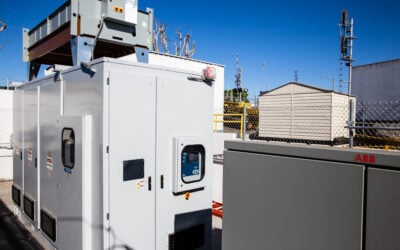
A programme to modernise New York’s energy system will lead to the state’s biggest ‘virtual power plant’, with PV system owners invited to join a pilot of aggregated solar-plus-storage systems.
The power capacity of global installed in front of the meter energy storage is expected to reach 21.6GW in 2025, according to a new report by Navigant Research, with one of the firm’s analysts calling this exponential growth dramatic, but also realistic.
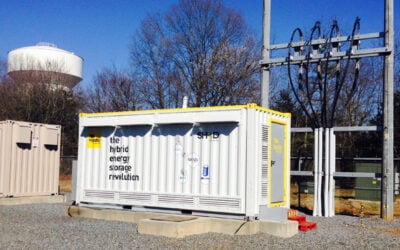
A large-scale system combining advanced batteries and ultracapacitor energy storage to provide utility grid services is up and running in North Carolina, according to one of the project’s partners.
Lockheed Martin has told Energy-Storage.News that while the company wants its energy storage systems to support the adoption of renewable energy, its recently launched lithium-ion devices will focus on “commercial applications”.
While parallels are often drawn between the solar and storage industries, financing energy storage projects is a lot more complex than simply “transposing” learnings from solar to batteries.
Energy storage developers have an opportunity to prove the benefits of storage systems compared to fossil fuel technologies in what will be one of the fastest energy storage procurements in history pending in California, according to industry commentators and analysts.
Another period of growth in US energy storage was enjoyed in the first quarter of 2016, up by 127% year-over-year compared to the equivalent period in 2015, GTM Research has found.
The California Public Utilities Commission (CPUC) has issued a landmark resolution that requires a major utility to procure energy storage capacity as quickly as possible.
The rapid march of energy storage batteries into the energy system is one element of a wider market transformation that is “terrifying some players as much as it is thrilling others,” according to the new chair of the Australian Renewable Energy Agency (ARENA) Martijn Wilder.
A bill introduced in Congress last week that could apply an energy investment credit for storage systems in the US, has been welcomed by the US Energy Storage Association (ESA).