LG Energy Solution saw its revenues fall 30% in the second quarter of the year amidst a global EV market slowdown, and the company says its energy storage system (ESS) segment could help offset this.
The South Korea-headquartered lithium-ion OEM saw KRW 6.2 trillion (US$4.45 billion) revenues in Q2, a 0.5% increase quarter-on-quarter but a 29.8% decrease year-on-year, while operating profit fell 57.6% year-on-year to KRW 195.3 billion.
LG Energy Solution primarily attributed the fall to slower-than-expected growth in the market for electric vehicles (EV), a market that most of its lithium-ion batteries are sold into. The slowdown, noted by our sister site Current, is primarily because of concerns amongst buyers about driving range and access to charging infrastructure.
For the European market specifically, some have attributed it to high prices and the removal of certain government subsidies.
Try Premium for just $1
- Full premium access for the first month at only $1
- Converts to an annual rate after 30 days unless cancelled
- Cancel anytime during the trial period
Premium Benefits
- Expert industry analysis and interviews
- Digital access to PV Tech Power journal
- Exclusive event discounts
Or get the full Premium subscription right away
Or continue reading this article for free
The company has subsequently revised its full-year guidance to a 20% year-on-year decrease.
ESS offsets fall, company may convert production lines
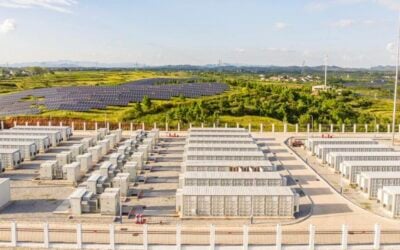
LG Energy Solution also sells batteries into the energy storage system (ESS) market, including via its own ESS integrator arm LG Energy Solution Vertech, and it said that the ESS business will continue to benefit from increased demand. Furthermore, it may pivot existing capacity towards ESS to make up for lower EV sales, as the company said in a statement provided to Energy-Storage.news.
“To maximise the utilisation rate at each production site, LG Energy Solution is exploring the possibility of converting existing battery production lines for different applications such as ESS and new products. Discussions on the possibility of investing in energy storage batteries in Europe including our facility in Poland are ongoing.”
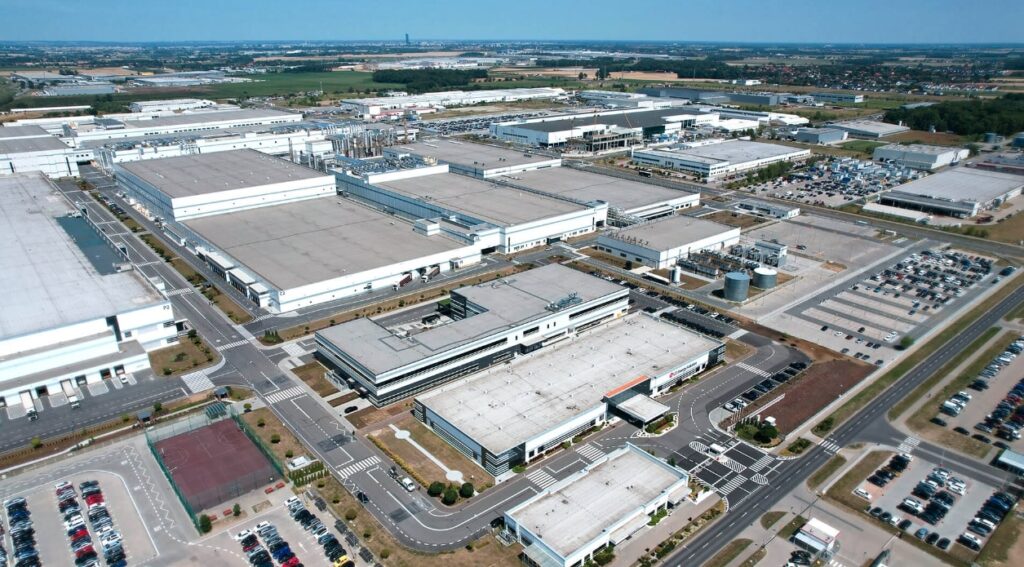
The Poland facility they are referring to is its Wrocław lithium-ion gigafactory, the largest in Europe with an annual production capacity of 86GWh, and the impact of the slowdown on the facility has been a big talking point in Polish press. The company’s reporting of the gigafactory to-date implies it manufactures primarily, maybe even exclusively, for the EV market.
In its earnings release, LG Energy Solution attributed its nominal quarterly growth to a combination of a new EV model launch by some of its customers and revenue growth from the ESS division. One highlight in the quarter was a 4.8GWh supply agreement for ESS in Arizona via Vertech.
In a section of its earnings report titled ‘Key action plans to counter slower EV market growth’, it said it would prioritise optimising operation and improving profitability and expanding ESS production.
“Also, the company will secure competitive edges in both products and future technologies. It will first establish differentiated product portfolio by launching 4680 cells and expanding the production of ESS LFP (lithium iron phosphate) batteries,” it said.
It also said it would expand it scope of service within the ESS segment and “seek opportunities for software-based new businesses, including battery-as-a-service (BaaS) and battery management system (BMS)”.
Meanwhile in the US, LG Energy Solution hit ‘pause’ recently on its production line in Arizona dedicated to cells for stationary BESS applications. LG Energy Solution Vertech CEO Jaehong Park explained to Energy-Storage.news Premium that this was due to a strategy to try and get ESS products to market faster.