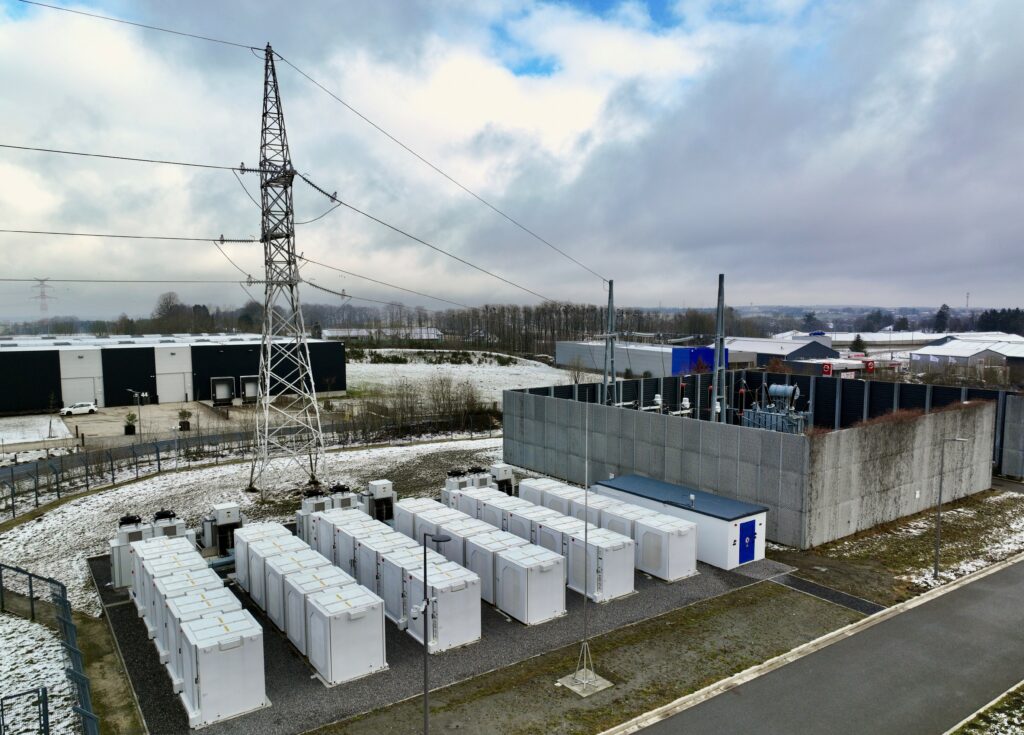
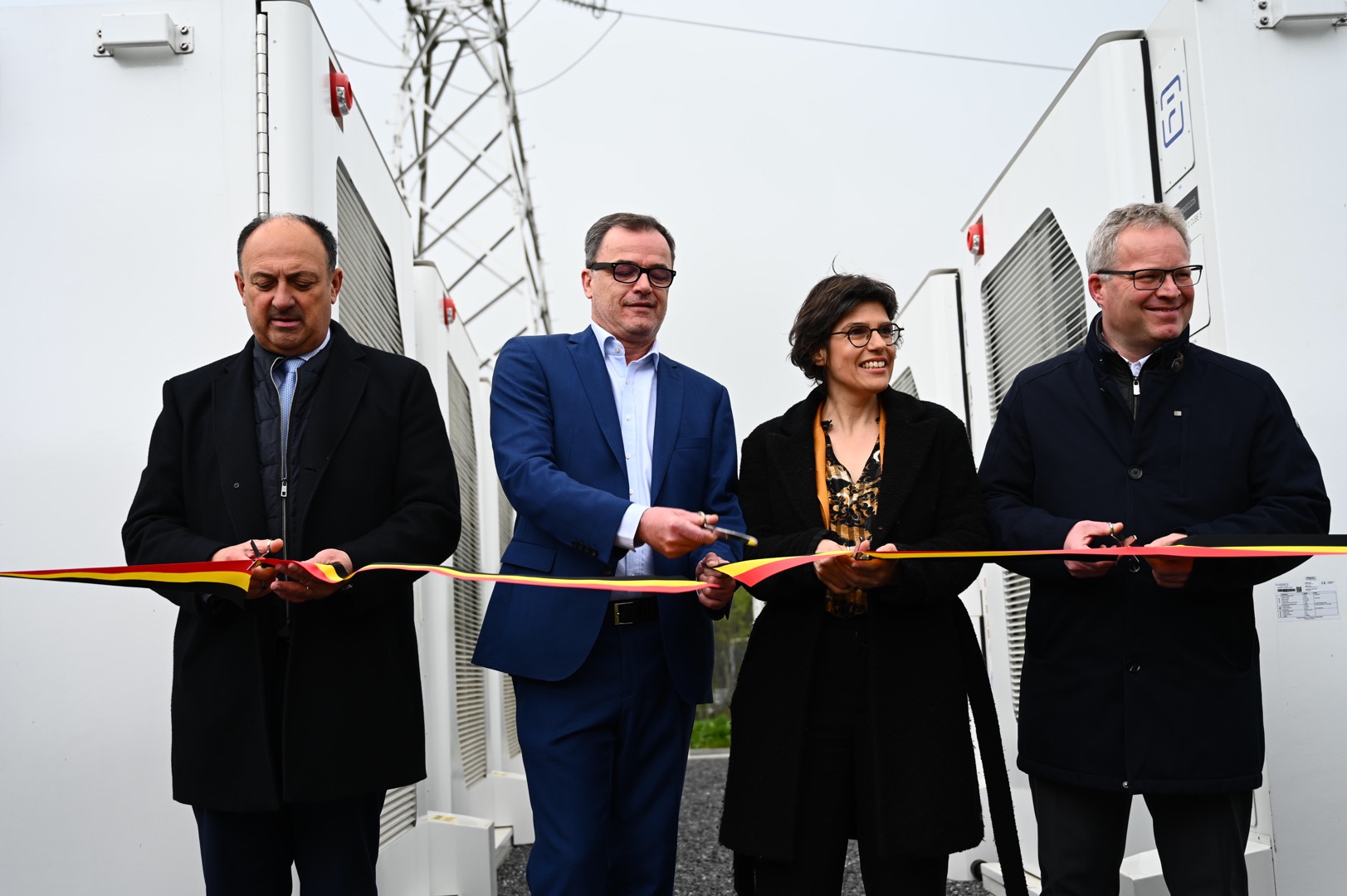
EStor-Lux, Belgium’s battery energy storage system (BESS) at 10MW/20MWh, was officially inaugurated on Tuesday (26 April).
The inauguration ceremony for the BESS was attended by around 100 Belgian energy sector stakeholders including Tinne Van der Straeten, Federal Minister of Energy.
The 480-module lithium-ion BESS, which is in Bastogne in the Wallonia region, has been participating in grid frequency auctions issued by grid operator Elia since December 2021 as reported by Energy-storage.news. It uses system integrator’s Fluence‘s Gridstack products.
This has mainly been in automatic Frequency Restoration Reserve (aFRR), a recently-launched soon-to-be pan-European grid service. Since its launch, the BESS has provided over 30GWh of balancing capacity. Centrica Business Solutions is in charge of the optimisation.
Try Premium for just $1
- Full premium access for the first month at only $1
- Converts to an annual rate after 30 days unless cancelled
- Cancel anytime during the trial period
Premium Benefits
- Expert industry analysis and interviews
- Digital access to PV Tech Power journal
- Exclusive event discounts
Or get the full Premium subscription right away
Or continue reading this article for free
Clean Horizon’s head of market analysis Corentin Baschet told Energy-storage.news in February that BESS projects could capture one-third of the aFFR market in the coming years.
The project was launched by a consortium comprising investment groups SRIW, Ackermans & van Haaren, BEWATT, SOCOFE and SOFILUX, engineering and construction firm CFE and Belgian government development organisation IDELUX. The project was not subsidised, the companies said, with up to 50% of financing provided by a non-recourse bank loan.
Other attendees at the inauguration included Willy Borsus, Vice-President and Walloon Minister of Economy, Philippe Henry, Vice-President and Walloon Minister of Climate and Energy, and Benoît Lutgen, Mayor of Bastogne.
The EStor-Lux consortium chairman Bruno Vanderschueren cited four reasons for the project’s success. These were the increased developed of renewable energies and resulting need for flexible resources, the evolution of BESS technology, favourable federal and regional regulatory frameworks and the quality of the consortium’s partners.