US independent power producer (IPP) Jupiter Power has turned its second 200MWh BESS online in Texas, bringing its total capacity in the state’s market to 450MWh.
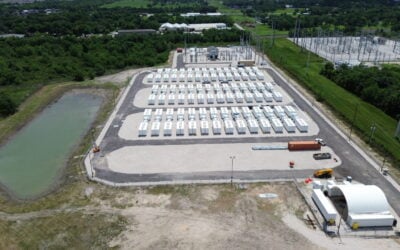
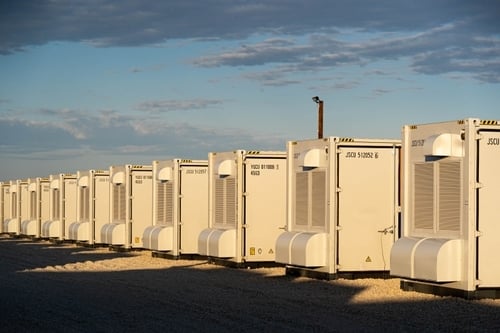
Called ‘Crossett’, the 200MW/200MWh facility in Crane County has entered commercial operations and is one of the largest BESS projects in the gird market operated by ERCOT.
It comes three months after Jupiter Power turned its 100MW/200MWh Flower Valley II project online which, together with three smaller projects, brings the company’s total operational portfolio in ERCOT to 350MW of power and 450MWh of energy.
This makes it the largest developer and operator of battery BESS on the ERCOT grid by total duration. In April, it obtained a Term Loan and LC Facility from KeyBank National Association worth US$175 million to finance the portfolio which will total 650MWh by the end of summer.
Try Premium for just $1
- Full premium access for the first month at only $1
- Converts to an annual rate after 30 days unless cancelled
- Cancel anytime during the trial period
Premium Benefits
- Expert industry analysis and interviews
- Digital access to PV Tech Power journal
- Exclusive event discounts
Or get the full Premium subscription right away
Or continue reading this article for free
The company has one more large-scale project in late-stage commissioning in ERCOT, the 100MW/200MWh Swoose II site, and another 500MWh of projects in ‘late stages of development’.
Mike Geier, Chief Technology Officer, Jupiter Power, said: “We have witnessed the strain that the Texas climate can put on the grid during unseasonably warm days. Jupiter Power’s projects like Crossett and Flower Valley II are optimally sited where the grid needs support to enhance resiliency both cost-effectively and reliably.”
On June 12, a heatwave led to the highest ever power demand recorded on the ERCOT grid at 75GW, although the operator was able to deliver electricity to consumers without any outages or issues. The month before, it had to ask Texans to conserve power during another heatwave that coincided with power plant outages (no such request was needed in June).
The company said its fleet of BESS projects will improve reliability on the ERCOT grid as Texas approaches peak summer demand. BESS units in the state are increasingly relying on wholesale energy trading, particularly around the most congested nodes, which now makes up half of revenues according to one investor.
Alongside this, BESS assets provide grid ancillary support services mainly through regulation reserve service (RRS) and a sub-set within that group called fast frequency response (RRS-FFR). RRS provides 10-minute energy deployments in response to significant generation losses on the system while RRS-FFR requires assets to be automatically deployed and provide a full response within 15 cycles after the frequency meets or drops below 59.85 Hz.