NYSE-listed iron flow battery group ESS Inc is expanding into Europe with its first deployments on the continent later this year and local manufacturing capability expected by 2024/25.
The company is scheduled to book its first revenues in the US in the current quarter and will begin European deployment of its long-duration batteries during the second half of 2022.
Its iron flow batteries provide 4-12 hours of duration and claim unlimited cycles with no capacity loss, versus Li-ion’s average of 6,000.
It says its product is made using earth-abundant materials like iron, salt and water making it safe, low-cost and sustainable. It concedes that lithium-ion has a lower capital cost per kWh but claims parity at 4 hours with iron flow winning thereafter.
Try Premium for just $1
- Full premium access for the first month at only $1
- Converts to an annual rate after 30 days unless cancelled
- Cancel anytime during the trial period
Premium Benefits
- Expert industry analysis and interviews
- Digital access to PV Tech Power journal
- Exclusive event discounts
Or get the full Premium subscription right away
Or continue reading this article for free
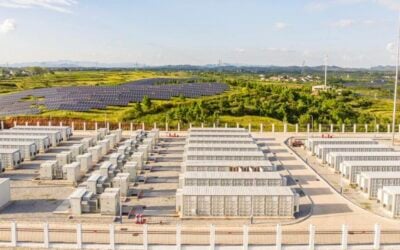
Its has two main products: the 400kWh Energy Warehouse for commercial and industrial (C&I) customers and the Energy Center for utility-scale applications which provides 6MW/74MWh per acre footprint. It expects to ship 40-50 Energy Warehouses this year but has not guided on Energy Center orders.
ESS Inc expects to start manufacturing its Warehouse and Center products on the European continent in 2024, according to a company presentation, with Power Module manufacturing arriving on the continent the following year.
Long-term customers include Softbank’s clean energy arm SB Energy, Enel Green Power España and Chilean utility Edalaysen.
The company says the European region will need a whopping 30 TWh of long-duration energy storage to make its grid net-zero by 2040, citing the Long Duration Energy Storage (LDES) Council which published a report finding that 85-130GWh will be needed globally. The LDES Council has some 30 technology members providing a range of technologies for long duration including iron flow, gravity-based and green hydrogen solutions.
As part of ESS Inc’s expansion into Europe it recently appointed Alan Greenshields as Director of Europe to oversee adoption and deployment of its solutions. Energy-storage.news recently interviewed him along with the CEO and CCO of competing long-duration battery storage group Invinity Energy Systems.
In it, Greenshields highlighted the commercial & industrial (C&I) sector and colocation with solar or wind as ideal use cases for its product, though claimed it was getting interest from all corners of the market.