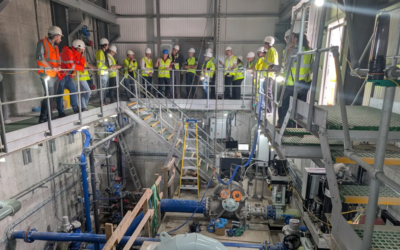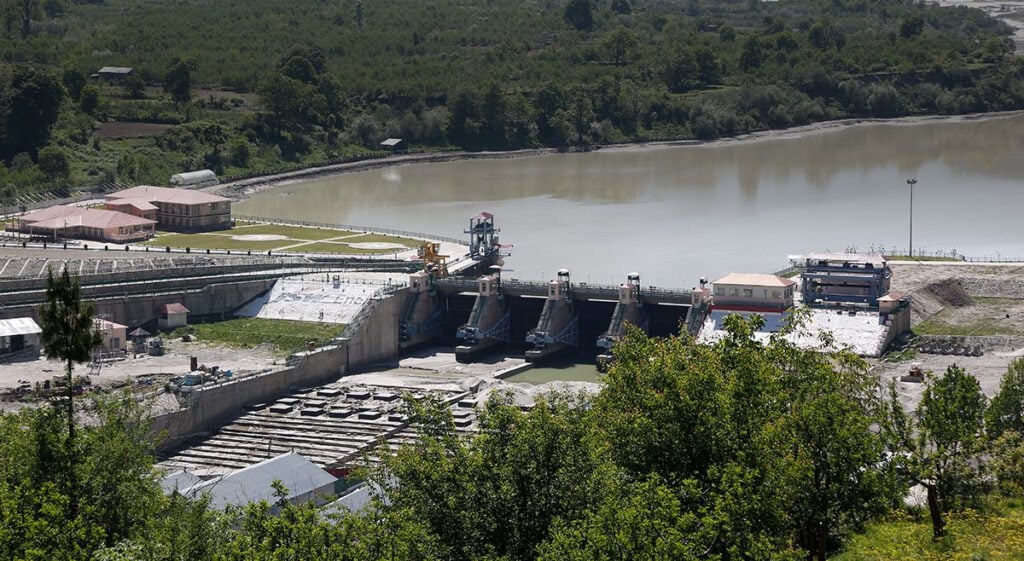
JSW Energy has signed a power purchase agreement (PPA) with India’s Maharashtra State Electricity Distribution Company for a 12,000MWh pumped hydro energy storage (PHES) plant.
Last week (11 October), Maharashtra State Electricity Distribution Company confirmed that it will procure 1,500MW/12,000MWh of PHES capacity from JSW Energy, part of the Indian conglomerate JSW Group.
Under the agreement, the Maharashtra State Electricity Distribution Company will receive a supply of energy storage capacity for 40 years at a fixed capacity charge of IR84.66 lakhs per MW per annum (US$100,709). For reference, a previous 1GW PHES tender released by the Power Company of Karnataka was set at IR14.75 lakhs per MW per annum (US$17,546).
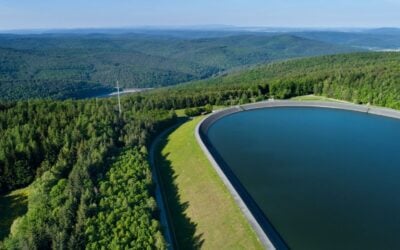
The Bhavali PHES project, which was recently fast-tracked for development by the Central Electricity Authority of India (CEA), will provide the energy under the PPA. JSW’s 11,017MWh Bhavali PHES project will have 7.34 hours of storage capacity. It will be located in District Nashik and Thane, in northwest Maharashtra, and features upper and lower reservoirs to generate electricity. The project is expected to be commissioned within the next 48 months.
Try Premium for just $1
- Full premium access for the first month at only $1
- Converts to an annual rate after 30 days unless cancelled
- Cancel anytime during the trial period
Premium Benefits
- Expert industry analysis and interviews
- Digital access to PV Tech Power journal
- Exclusive event discounts
Or get the full Premium subscription right away
Or continue reading this article for free
It is worth noting that JSW Energy aims to have 40GWh of energy storage capacity operational by 2030. Currently, the company has around 16.2GWh of locked-in energy storage consisting of battery energy storage systems (BESS) and PHES.
Sharad Mahendra, joint managing director and CEO of JSW Energy said the project will provide grid stability and support the region’s decarbonisation.
“By integrating advanced energy storage solutions, this project will not only enhance grid stability but also reinforce our commitment to provide sustainable and reliable power. Additionally, it will contribute to local area development by generating employment opportunities and fostering community resilience,” Mahendra said.
India continues to attract PHES developments
India continues to attract substantial PHES projects as it seeks to provide grid stability for its energy transition.
In late September, infrastructure company Megha Engineering and Infrastructures Limited (MEIL) signed a deal to develop two PHES projects in Nandurbar District and the Chhatrapati Sambhajinagar District of Marahastra. These projects, which encompass the Ghosla and Kamod PHES projects, respectively, would provide 4,000MW of PHES.
Although the size of each PHES project was not unveiled, MEIL said that each will be capable of providing a minimum of six hours of energy storage daily. MEIL added that it plans to complete the Ghosla Pumped Storage Project within three and a half years, while the Kamod Pumped Storage Project is expected to be completed in five years.
Alongside JSW’s Bhavali PHES project, the CEA also fast-tracked Tata Power’s 1,000MW/6,000MWh Bhivpuri PHES, which will last six hours and be located near Bhivpuri town, Karjat Taluka.
The Bhivpuri site proposal aims to generate power for peak usage by recycling water between the existing Thokarwadi reservoir (the upper receiver) and the proposed new lower reservoir within Tata Power’s land. The Thokarwadi reservoir was created due to the construction of the Thokarwadi dam.