Technology group Honeywell and utility Duke Energy’s Sustainable Solutions arm will jointly develop and deliver microgrid solutions to US cities and communities to increase energy resilience in the event of grid-level outages.
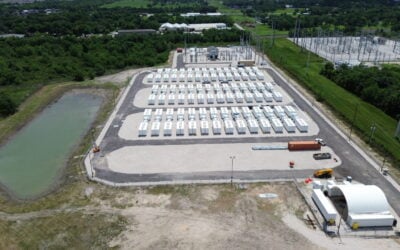
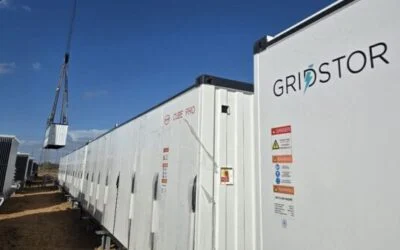
The strategic alliance will combine distributed energy resources (DER) from Duke Energy Sustainable Solutions with Honeywell’s battery energy storage systems (BESS) and Smart Cities Software solution, to create municipal microgrids alongside city-owned assets.
Those microgrids will help cities to continue providing essential services like water distribution, wastewater treatment or community centers during power outages, the companies say. In 2020, there were just over eight hours of electric power interruptions in the US.
“A smart city starts with resilient and sustainable energy resources,” said Matthew Britt, general manager, Smart Cities and Communities, Honeywell Building Technologies. “Our collaboration with DESS will create energy resiliency programmes that help cities and communities better prepare for unexpected events as well as help manage and measure progress of their long-term environmental, social and governance goals.”
Try Premium for just $1
- Full premium access for the first month at only $1
- Converts to an annual rate after 30 days unless cancelled
- Cancel anytime during the trial period
Premium Benefits
- Expert industry analysis and interviews
- Digital access to PV Tech Power journal
- Exclusive event discounts
Or get the full Premium subscription right away
Or continue reading this article for free
Honeywell says its Smart City Suite, an AI-enabled internet of things (IoT) platform, will help communities make faster, more informed decisions to serve citizens. A corporate brochure says the Suite includes safe city solutions, mobility solutions, citizen engagement e-governance and – most relevant for this area – utilities and services.
The latter covers street light management and waste management through a web portal dashboard, map-based visualisation, scheduler for street lighting, faulty systems alert and comprehensive analytics.
The companies have not said how many potential customers there are for its new microgrid solution. Honeywell says that the Smart City Software Suite is deployed in 75 cities worldwide totalling a population of over 100 million people, though this could be for any of its four different solutions.
The move with Duke is part of Honeywell’s Energy Equity Resiliency (HEER) initiative which works to create energy equity and community resiliency.
Microgrids are a growing trend for local communities as well as for mining and large industrial users of electricity.
As energy policymakers look to wean their grids off large fossil fuel-generating power plants, this can increase grid instability to due intermittent renewables but also involves some decentralisation of power supply and management by virtue of increasing the complexity of the system. And in places like California, growing wildfire risk has reduced the reliability of the centralised power grid irrespective of moves to renewables, making microgrids an important part of communities’ energy resiliency.
Honeywell is a Fortune 100 technology group which is active in four main segments: aerospace, building technologies, performance materials and technologies, and safety and productivity solutions. Energy storage is fast-growing business line for the group but, for now, a negligible part of its top line of US$34.3 billion last year.
Duke Energy Sustainable Solutions provides wind, solar, resilient backup power and managed energy services to over 1,000 projects across the US with a total electric capacity of more than 5.1GW of nonregulated renewable energy. It is part of utility Duke Energy, a Fortune 150 company.