Hitachi Energy was ‘looking for a long time’ to add power conversion architecture to its offerings before its acquisition of Eks Energy (EKS), ESN Premium has heard.
According to Alberto Prieto, the CEO of EKS appointed by Hitachi Energy to lead its new subsidiary, the acquisition of the Spanish energy storage power conversion (PCS) system, solar inverter and power plant controller (PPC) manufacturer “closed a gap” in Hitachi Energy’s industry ecosystem.
Hitachi Energy, headquartered in Switzerland, was originally formed as Hitachi ABB Power Grids, a joint venture (JV) between Hitachi and the power grid division of European electrical engineering company ABB.
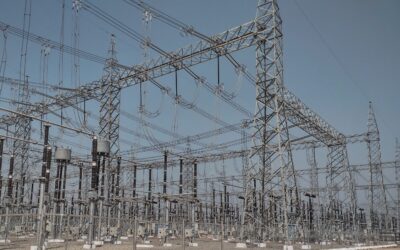
It is a major manufacturer and supplier of “almost all” of the high-voltage equipment customers might need, Prieto said, including switchgear and breakers, transformers and substations.
Try Premium for just $1
- Full premium access for the first month at only $1
- Converts to an annual rate after 30 days unless cancelled
- Cancel anytime during the trial period
Premium Benefits
- Expert industry analysis and interviews
- Digital access to PV Tech Power journal
- Exclusive event discounts
Or get the full Premium subscription right away
Or continue reading this article for free
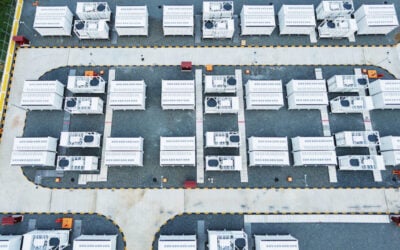
It also manufactures battery energy storage systems (BESS) and offers renewable energy services through its Grid Edge Solutions portfolio. After Hitachi renamed the subsidiary—shortly before it bought out its JV partner ABB’s remaining stake—Hitachi Energy said that energy storage would be a major focus of its business going forward.
EKS, spun out of the University of Seville in 2002 and widely regarded as having deep expertise gleaned from years of working on renewables, hybrid and battery projects on challenging island and microgrid projects, offered it a chance to add another piece of the puzzle.
“They [EKS] were specialised from the beginning in the control system for power conversion. They were solving problems for wind at that time. They weren’t really focused on building hardware but on the control systems. They went through wind and solar, and since 2016 they really started to focus on battery storage,” Prieto said.
“There was a lot of knowledge coming from the university in the control system for power conversion,” which the CEO said was a major differentiator and “made EKS the perfect acquisition for Hitachi Energy.”
PCS specialist acquired from Powin
As regular readers of Energy-Storage.news might know, Hitachi Energy bought EKS from US battery energy storage system (BESS) integrator and manufacturer Powin in a deal that closed in late 2023.
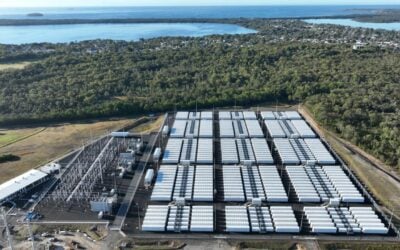
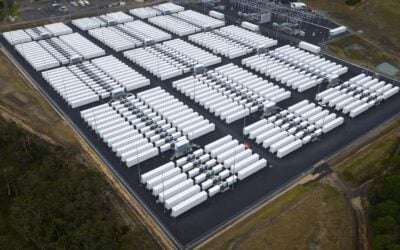
Powin, which retained a stake in the PCS manufacturer after being its majority owner for little over a year, had selected EKS for similar reasons, putting its software platforms and hardware to work on the 850MW/1,680MWh Waratah Super Battery project in New South Wales (NSW), Australia.
In the second part of this look at EKS, we will explore further the role of the PCS and PPC, aka energy management system (EMS), specifically at Waratah Super Battery.
However, the key takeaway to that decision, according to previous comments from Powin senior VP Danny Lu and, more recently, EKS CEO Alberto Prieto and Nick Carter, CEO of Waratah’s developer Akaysha Energy, is that the project demanded that level of differentiated expertise.
Australia’s grid connection code, the Generator Performance Standard (GPS), is likely the most stringent and difficult to comply with anywhere in the world, Akaysha’s Nick Carter told Energy-Storage.news.
In addition, the Waratah Super Battery is an example of a grid-forming battery storage system which is used as a major backup power source for the NSW transmission network, with a System Integrity Protection Scheme (SIPS) in place with transmission system operator (TSO) Transgrid.
Alberto Prieto, who moved over from Hitachi Energy to lead EKS in February 2024, said that SIPS and other grid-forming applications will more frequently be required of very large-scale BESS projects, not just in Australia but in various global territories.
The battery storage system integration business of Hitachi Energy was also well-experienced with island microgrids, which have been a proving ground for grid-forming applications, the CEO said, making the combination of areas of expertise a suitable one.
“I see that happening also in countries like Spain. In the draft of the grid connection [regime] for the coming years, grid-forming is going to be part of that, because with the [high penetration of] distributed generation and other renewables, we do believe that grid-forming will be the normal standard in the near future,” he said.
“At Hitachi Energy, we had been looking to close this gap in the portfolio; we have transformers, we have high-voltage equipment. We were looking for power conversion architecture for a long time.”