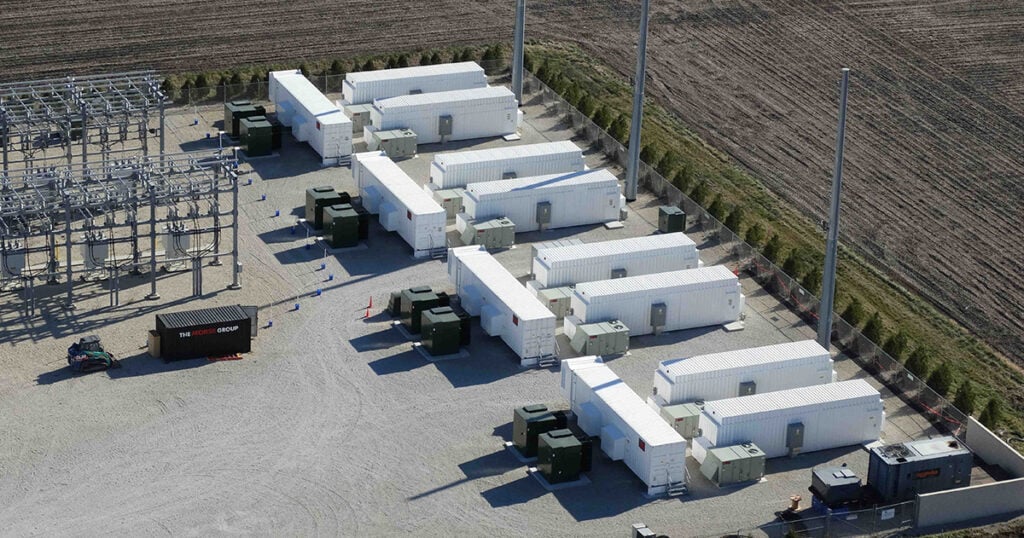
At the end of 2024, Australian renewable energy developer ZEN Energy, in partnership with Taiwan’s HD Renewable Energy (HDRE), announced plans to establish a joint venture in Australia that will target 1GW of energy storage capacity.
As confirmed on 23 December, the two companies will look to jointly launch a green energy investment and asset management platform called ZEBRE, with a total target investment capacity of 1.4GW.
ZEBRE will be established through HDRE II Trust, a trusted company wholly owned by HDRE, and Zen Future, a subsidiary of ZEN Energy. Under the current planned structure, HDRE Trust II will secure an equity ratio of 70%, with Zen Future obtaining the remaining 30%.
In a statement made public on 8 November, the two organisations mutually agreed to pursue energy storage and green hydrogen projects in Australia, Taiwan, and potentially Japan. Under the terms of the partnership, HDRE said it would subscribe for 9.7% of shares in ZEN Energy for AU$43 million (US$27.7 million).
Try Premium for just $1
- Full premium access for the first month at only $1
- Converts to an annual rate after 30 days unless cancelled
- Cancel anytime during the trial period
Premium Benefits
- Expert industry analysis and interviews
- Digital access to PV Tech Power journal
- Exclusive event discounts
Or get the full Premium subscription right away
Or continue reading this article for free
Building on this initial agreement, ZEBRE will broaden the scope of the focus technologies by including solar PV. HDRE said the platform will look to develop 400MW of PV and 1GW of energy storage.
Commenting on the new partnership, ZEN Energy CEO Anthony Garnaut hailed the use of energy storage assets, referencing the potential of long-duration and pumped hydro in Australia’s energy transition.
“Long-duration battery storage, as well as the significant benefits of deep storage that pumped hydro provides, is the critical ingredient to ensuring a reliable, firmed supply of power as Australia transitions away from fossil fuels,” Garnaut said.
“Securing Australia’s place at the head of the rapid worldwide shift to clean energy and realising the economic opportunities of becoming a renewable energy superpower depend on having global partnerships.”
The two companies confirmed that the new entity had also secured its first renewable energy site, the 210MW Solar River solar-plus-storage site in South Australia.
You can read the full article on PV Tech.