The European Commission has approved a €1 billion (US$1.1 billion) state aid measure for Greece to support two solar-plus-storage projects.
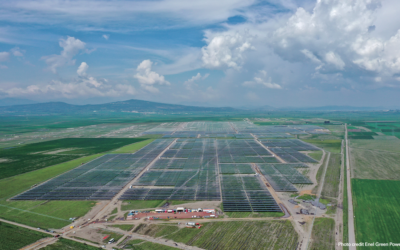
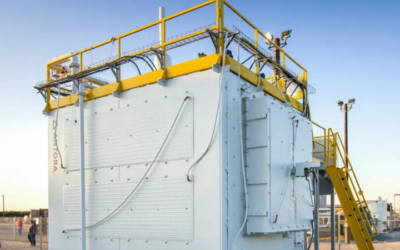
Consisting of two solar PV projects co-located with storage, the first one is the Faethon Project, comprising two solar plants of 252MW of capacity each and will be integrated with molten-salt thermal storage units, along with an extra-high voltage substation. This project aims to enable electricity generation during the day with the surplus to be stored and then discharged during times of peak consumption in the evenings or at night.
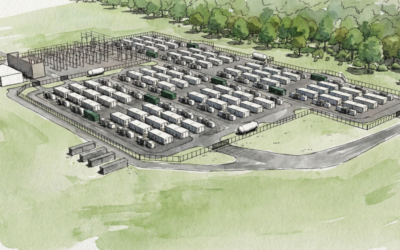
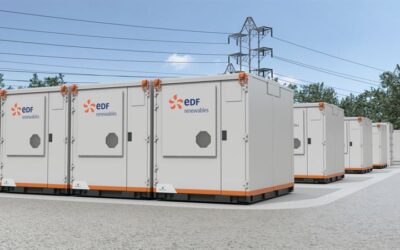
The other project, the Seli Project, will have 309MW of solar PV capacity and an integrated lithium-ion battery energy storage system (BESS). This project aims to optimise electricity generation and grid stability.
The EC did not disclose the storage capacity, nor output, on either project. Construction of both projects is targeted to be completed by mid-2025.
Try Premium for just $1
- Full premium access for the first month at only $1
- Converts to an annual rate after 30 days unless cancelled
- Cancel anytime during the trial period
Premium Benefits
- Expert industry analysis and interviews
- Digital access to PV Tech Power journal
- Exclusive event discounts
Or get the full Premium subscription right away
Or continue reading this article for free
The financial aid will be carried out via a two-way contract for difference (CfD) over a 20-year period. The strike price will be determined by a technical committee on the basis of, inter alia, a cost-benefit analysis and a risk assessment. Whereas the reference price is expected to be determined as a monthly output-weighted average of the market price of electricity in the day-ahead markets.
In case of the reference price being lower than the strike price, the beneficiaries will be entitled to receive payments equal to the difference between the two; however if the opposite happens – reference price higher than strike price – the beneficiaries will have to pay the difference to Greek authorities.
The Regulatory Authority for Energy (RAE) of Greece is currently running a separate European Union-backed solicitation for energy storage, funded by the EU Recovery and Resilience mechanism. According to reports, in February the RAE narrowed down a shortlist of 1.5GW of bids down to around 300MW from 11 projects.
A previous auction round held in August 2023 selected 411MW of winning bids across 12 projects. In a deep dive article for Energy-Storage.news, analysis group LCP Delta noted that the first round had seen more than 27GW of unsuccessful bids. Greece is targeting 8GW of storage by 2030 through its most recent National Energy and Climate Plan (NECP). Meanwhile, sources have told this site that many of the winning bids in both rounds so far came in at very low prices which made it open to question whether those developers will be able to hit good IRRs.
To read the full version of this story, visit PV Tech.
Additional reporting for Energy-Storage.news by Andy Colthorpe.