Georgia Power has requested certification from the Georgia Public Service Commission (PSC) for 9,900MW of new generation resources, including more than 3GW of battery storage that the utility would own.
Approximately 8,000MW of the requested resources were chosen from an “all-source” request for proposals (RFP) approved in Georgia Power’s 2022 Integrated Resource Plan (IRP).
The All-Source RFP took place over the past year, during which the company collaborated with Georgia PSC staff and an independent evaluator. The goal was to assess and choose the most cost-effective and efficient proposals for dispatchable generation and storage resources, ensuring construction timelines align with the projected winter capacity needs from 2029 to 2031.
Included in the request are power purchase agreements (PPAs) from existing resources, as well as new, company-owned natural gas generation, battery energy storage system (BESS) and solar-plus-storage projects identified through the competitive RFP process.
Try Premium for just $1
- Full premium access for the first month at only $1
- Converts to an annual rate after 30 days unless cancelled
- Cancel anytime during the trial period
Premium Benefits
- Expert industry analysis and interviews
- Digital access to PV Tech Power journal
- Exclusive event discounts
Or get the full Premium subscription right away
Or continue reading this article for free
Filings include a request to certify new combined cycle natural gas units totalling 3,692MW. These projects are detailed in the table below:
| Name | Location | Capacity |
| Bowen | Bartow County | 1,482MW |
| McIntosh | Effingham County | 757MW |
| Wansley | Heard County | 1,453MW |
Bowen is located on the site of a coal-fired power plant, while Wansley is located on the site of a former coal-fired power plant, retired in 2022 as part of the 2022 IRP.
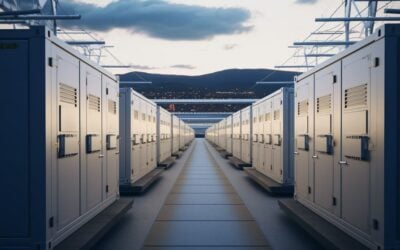
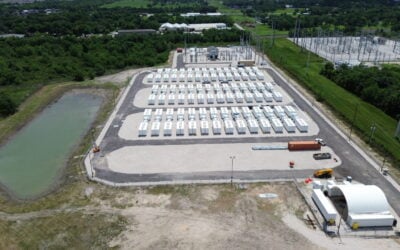
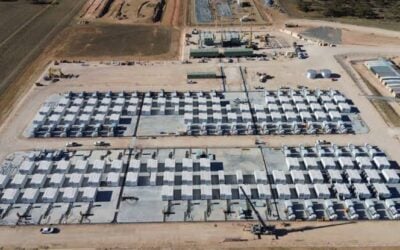
Georgia Power is seeking approval for 10 new BESS facilities across the state, with a combined capacity of 3,022.5MW. These projects are detailed in the table below:
| Name | Location | Capacity |
| Bowen Phases 1&2 | Bartow County | 500MW |
| Hammond Phase 2 | Floyd County | 192.5 |
| McIntosh | Effingham County | 250MW |
| South Hall | Hall County | 250MW |
| Thomson | McDuffie County | 500MW |
| Wadley | Jefferson County | 260MW – paired with solar |
| Wansley | Heard County | 500MW |
| Yates | Coweta County | 570MW – across two BESS |
The utility is also seeking approval for two solar-plus-storage facilities totalling 350MW of solar capacity and 350MW of energy storage capacity. These projects are detailed in the table below:
| Name | Location | Capacity |
| Laurens County | Laurens County | 200MW solar, 200MW BESS |
| Mitchell | Dougherty County | 150MW solar, 150MW BESS |
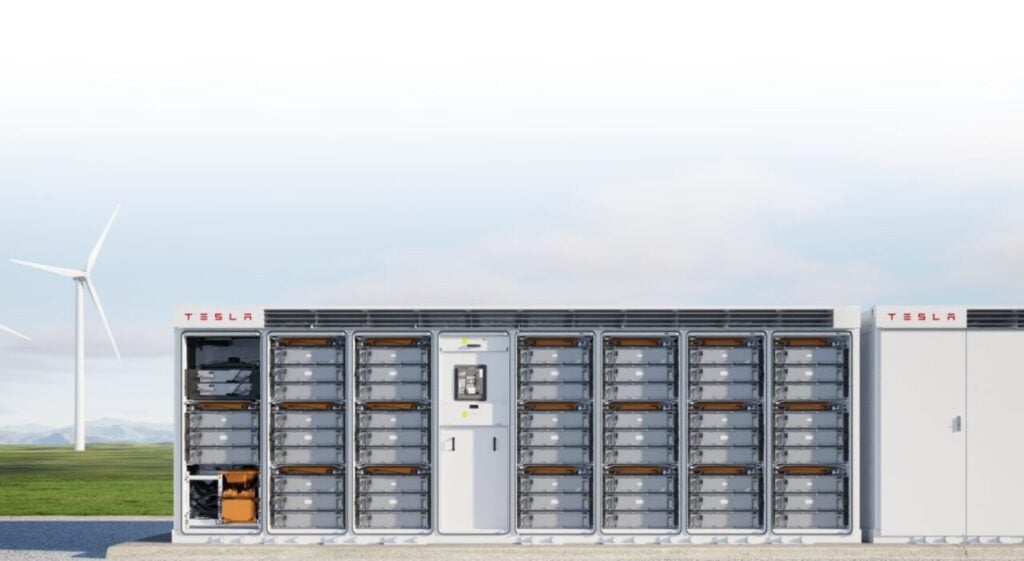
Georgia Power will own all of the projects. All of the Company-Owned Proposal (COP) BESS will use Tesla Megapacks, which use lithium iron phosphate (LFP) battery chemistry. The projects also have a 20-year lifespan and a 4-hour duration.
The public version of the filing has redacted the costs for the proposed projects. However, the document does cite the COP BESS projects as “cost-effective” and “providing positive economic impacts on the state’s economy that will benefit all Georgia Power customers”.
In May, Georgia Power began construction on 765MW of BESS, this followed the December 2024 news that the utility had received unanimous approval on what was originally 500MW of BESS projects, from the Georgia PSC.
The news also comes shortly after the PSC’s approval of the utility’s 2025 Integrated Resource Plan. As reported by our colleagues at PV Tech a couple of weeks ago, the most recent IRP sees Georgia Power aim to add a further 4GW of renewables by 2035, along with 1.5GW of new BESS.
Georgia Power has forecast more than 8GW of load growth in its service area by 2030, revising assumptions made in 2023 as it proposed the first draft of the plan. At that time, it predicted around 6GW of load growth by the end of this decade.
In a recent guest blog for Energy-Storage.news, Allan Oduor, of Enertis Applus+, highlighted that present and projected load growth is among the drivers for Georgia’s growing number of utility-scale storage projects. At the same time, the state is emerging as a hub within the domestic battery supply chain, Oduor said.
“Georgia’s emerging domestic battery manufacturing facilities incorporate production flexibility to serve both automotive and grid-scale storage markets,” Oduor wrote.
“This dual-manufacturing capability enhances supply chain reliability for utility-scale BESS projects, reduces dependence on international suppliers, and minimises procurement delays typically associated with overseas shipping and coordination.”
Odour continued, “Georgia isn’t merely adding megawatts, it is filling a genuine capacity gap with ready‑to‑build projects, an anchored supply chain, and a clear procurement schedule. Despite the challenges of site selection and regulatory issues common in such a fast-moving market, BESS projects that secure sites and equipment early position themselves to benefit from a unique and reduced-risk growth opportunity in the Southeast’s emerging storage hotspot.”