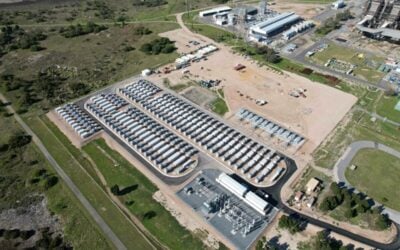
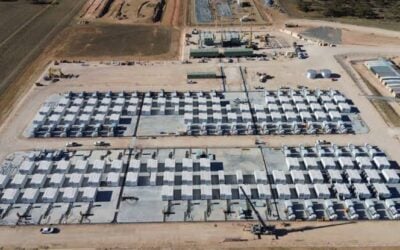
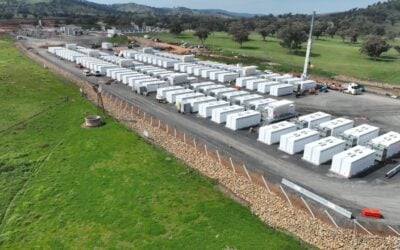
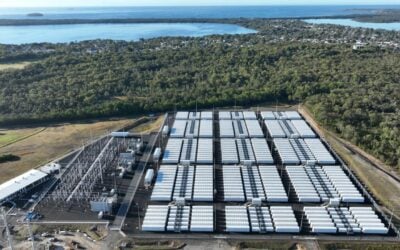
Combining the hydro facility with the solar farm means the project has the potential to power the grid “around the clock”. Credit: Genex
Australian power firm Genex has completed a study showing it is technically feasible to connect a pumped hydro storage facility with its 50MW(ac) Kidston Solar Project in North Queensland, Australia.
Combining the hydro facility with the solar farm means the project has the potential to power the grid “around the clock”, according to Australian Renewable Energy Agency (ARENA) chief executive Ivor Frischknecht. ARENA recently committed up to AU$8.9 million (US$6.6 million) of funding towards Genex’s AU$126 million PV project as part of its major programme to fund 12 large-scale solar projects.
The storage system, if implemented, would have 250MW generation capacity, using two 125MW turbines, with six hours of continuous generation, helping to mitigate the variable nature of the solar energy produced. The storage system would have an annual generation of 547,500MWh.
There are also plans to expand the solar plant, which uses trackers, by a further 270MW under a second phase, earmarked to start producing energy in 2020.
Try Premium for just $1
- Full premium access for the first month at only $1
- Converts to an annual rate after 30 days unless cancelled
- Cancel anytime during the trial period
Premium Benefits
- Expert industry analysis and interviews
- Digital access to PV Tech Power journal
- Exclusive event discounts
Or get the full Premium subscription right away
Or continue reading this article for free
The site has been substantially rehabilitated since a mine closure in 2001.
The pumped hydro facility would involve two large adjacent pits and an elevated waste rock dump. Stored water in the upper reservoir can be released through turbines and a generator system on demand. Genex found that this technology would have significantly lower capital and operating costs compared to the other energy storage technologies available.
The hydro system would be expected to start producing energy in 2021, but the company is now focusing on finding project finance.
EPC contractor UGL is expected to soon begin construction of the solar plant to be completed before the end of 2017. Genex has also received credit approval from its debt syndicate for a debt facility of up to AU$110 million towards construction.
Credit: Genex
Scotland approves 400MW pumped hydro storage plans
In related news, the Scottish Government recently approved a 400MW pumped hydro storage system at the former Glenmuckloch open cast coal mine in Dumfries and Galloway. The project will create over 250 jobs during its five-year construction and more than 15 long-term local jobs when complete. The project, which will require major financial investment from other partners to proceed, is part of a joint venture between Buccleuch and 2020 Renewables.
This article has been revised to say that the storage system would have an annual generation of 547,500MWh.