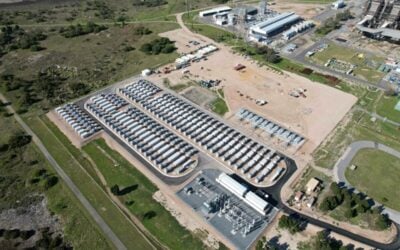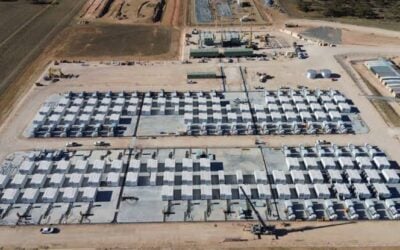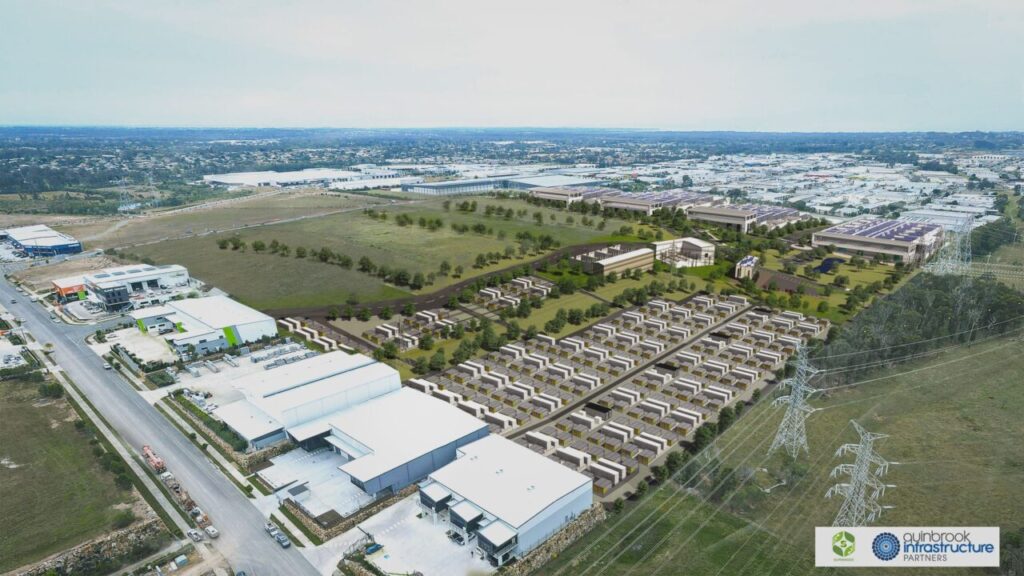
Battery energy storage system (BESS) solutions provider GE Vernova has been selected to deliver the BESS for Quinbrook Infrastructure Partners’ 250MW/1,000MWh energy storage project in Queensland, Australia.
Under the terms of the agreement revealed yesterday (16 September), GE Vernova will deliver the BESS for stage two of Quinbrook’s ‘Supernode’ BESS project, an AU$2.5 billion (US$1.63 billion) data centre complex powered by locally generated renewable energy.
Once completed, the project is anticipated to be one of the largest BESS connected to the National Electricity Market (NEM).
Quinbrook had previously selected GE Vernova to provide the BESS for stage one of the project, which saw a 250MW/500MWh system contracted. Construction of this phase is currently underway.
Try Premium for just $1
- Full premium access for the first month at only $1
- Converts to an annual rate after 30 days unless cancelled
- Cancel anytime during the trial period
Premium Benefits
- Expert industry analysis and interviews
- Digital access to PV Tech Power journal
- Exclusive event discounts
Or get the full Premium subscription right away
Or continue reading this article for free
In the final stage of the project, of which there are three, the battery storage system’s output will be increased to 2,000MW. Local planning permissions were secured in 2022 for four multi-tenant data centre campuses. Privately owned electricity generator-retailer Origin Energy has contracted the full capacity of stage one.
Ed Torres, business leader of GE Vernova’s solar and storage solutions business, said the project is a testament to the strength of its value proposition in the BESS space.
“We believe GE Vernova’s product portfolio, engineering expertise, and project delivery capabilities align perfectly with the needs of the Supernode project. This project is a testament to the strength of our value proposition and capabilities in this space,” Torres said.
“We expect to continue to be a valued and trusted collaborator for large grid-scale integrated BESS projects in the region and worldwide. We thank Quinbrook for their continued trust in GE Vernova as a technology partner for the Supernode project.’
Energy-Storage.news previously reported that the portfolio company behind the new project in Queensland is also called Supernode, and specialises in developing so-called “hyperscale” sustainable data centre campuses on the East Coast of Australia.
Supernode claimed to be identifying sites which have ‘hard-to-replicate’ advantages for placing such campuses, including land, local renewable resources, and fibre internet access as well as water and other utilities and existing infrastructure.
GE Vernova launches 5MWh containerised BESS solution
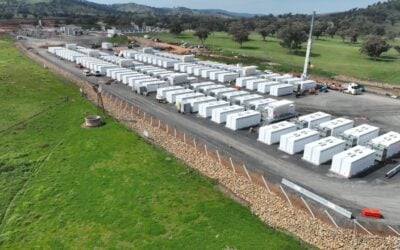
Readers of Energy-Storage.news will be aware that GE Vervona recently unveiled its latest product in the form of a 20-foot containerised system with 5MWh storage capacity, at RE+, formerly Solar Power International and Energy Storage International, last week.
Named RESTORE DC Block, this product is specifically designed for utility-scale projects and is geared towards applications 2 to 8 hours in duration. It is a key component of GE Vernova’s comprehensive BESS solution, FLEXRESERVOIR, which comprises a power conversion system (PCS) and advanced control technologies.
The company claimed the liquid-cooled lithium iron phosphate (LFP) DC block has a round trip efficiency of over 93%, can execute multiple back-to-back cycles, and has an expected lifetime of 25 years. It also features both AC and DC augmentation options.