Battery energy storage system (BESS) integrators Fluence and Saft have launched US domestic manufacturing, of modules and BESS containers respectively.
Fluence has started building manufacturing battery modules for energy storage from a facility in Utah, which will incorporate battery cells manufactured from a supplier based in Tennessee, as previously announced by the firm.
Fluence claimed this gives it a first mover advantage in offering an energy storage solution that qualifies for the domestic content investment tax credit (ITC) adder under the Inflation Reduction Act (IRA). It will also mean those BESS will avoid 25% tariffs on battery imports from China.
John Zahurancik, Fluence president, Americas: “We are moving quickly to deliver domestically manufactured energy storage solutions that meet our customers’ needs, reduce supply chain risks for projects, and support the nation’s energy independence.”
Try Premium for just $1
- Full premium access for the first month at only $1
- Converts to an annual rate after 30 days unless cancelled
- Cancel anytime during the trial period
Premium Benefits
- Expert industry analysis and interviews
- Digital access to PV Tech Power journal
- Exclusive event discounts
Or get the full Premium subscription right away
Or continue reading this article for free
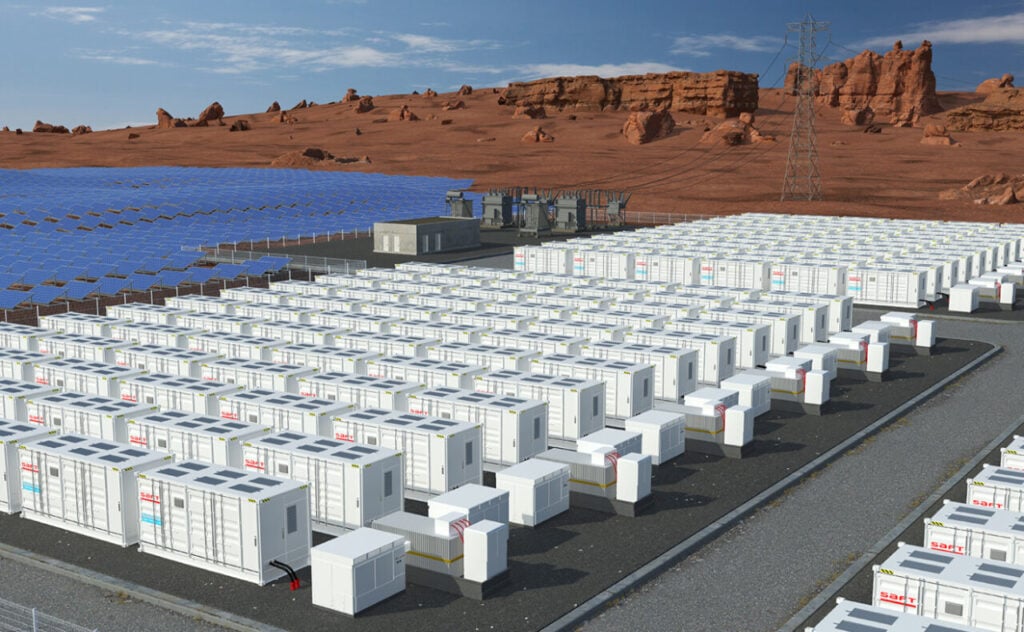
In concurrent news, France-headquartered Saft has commissioned a new production line at its Jacksonville, Florida facility to produce the lithium-ion battery containers for its BESS solution.
The firm said this will enable it to “address the booming US demand for ESS projects by offering a solution with domestic content,” though did not go as far as saying it means those BESS will qualify for the domestic content incentives under the IRA.
Rather, manufacturing the containers marks the start of building up its US supply chain to eventually qualify for the domestic content ITC by 2026, with 5GWh of production capacity expected to be in place by 2027. Saft is part of oil and gas major TotalEnergies.
The announcements come at the start of RE+, the clean energy technology expo and conference in Anaheim, California, which runs all of this week (9-13 September).