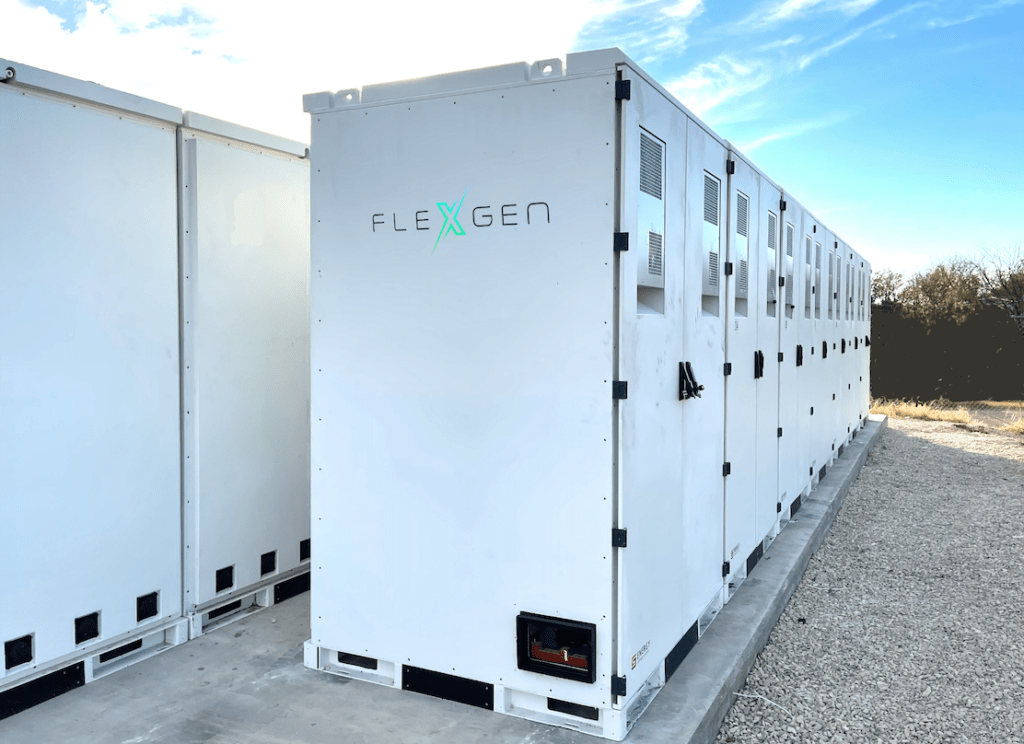
System integrator FlexGen will provide energy storage systems and optimisation software for a 100MW portfolio in Texas recently acquired by investment fund manager SUSI Partners from SMT Energy.
The 10 projects will come online from spring through fall of 2023 and will have 10MW of power and 9.95MWh of energy storage capacity each.
FlexGen said the units, which have a duration of just under an hour, will be certified to all four ERCOT checklists to provide the full range of ancillary services to Texas’ ERCOT market.
A press release announcing FlexGen’s involvement described the projects as belonging to developer SMT Energy. As Energy-Storage.news reported last week, SMT Energy entered into a partnership with infrastructure investment fund manager SUSI Partners to work on a 100MW ERCOT portfolio, marking Switzerland-headquartered SUSI’s first front-of-meter large-scale battery storage acquisition in the US.
Try Premium for just $1
- Full premium access for the first month at only $1
- Converts to an annual rate after 30 days unless cancelled
- Cancel anytime during the trial period
Premium Benefits
- Expert industry analysis and interviews
- Digital access to PV Tech Power journal
- Exclusive event discounts
Or get the full Premium subscription right away
Or continue reading this article for free
A FlexGen spokesperson confirmed to Energy-Storage.news that it is the same portfolio, which SMT and SUSI will jointly own and operate, with the pair intending the carry the relationship into other projects.
FlexGen said the projects will improve the resilience of the ERCOT grid, enable integration of renewable energies and improve the ability of the grid to balance load and supply. Combined with its short duration, this indicates the projects may be largely focused on providing ancillary services. Most recently announced projects in the state have been between one and two hours.
A recent flurry of project development sales in ERCOT by Black Mountain Energy Storage have mostly been for two-hour system while gravity-based storage solution company Energy Vault’s first conventional battery project is a 100MW/200MWh system in Texas. In June, projects brought online by Jupiter Power, acquired by Canadian Solar subsidiary Recurrent Energy, and funded by US development bank NADBank were all two-hour systems.
Alongside being one of the world’s largest battery storage system integrators by MW deployed and in the pipeline, FlexGen is known for its HybridOS energy management system platform, which delivers the full stack of energy storage value, including ancillary services, capacity, and energy market.
Law firm Squire Patton Boggs advised the system integrator on its deal to deliver the ten projects.