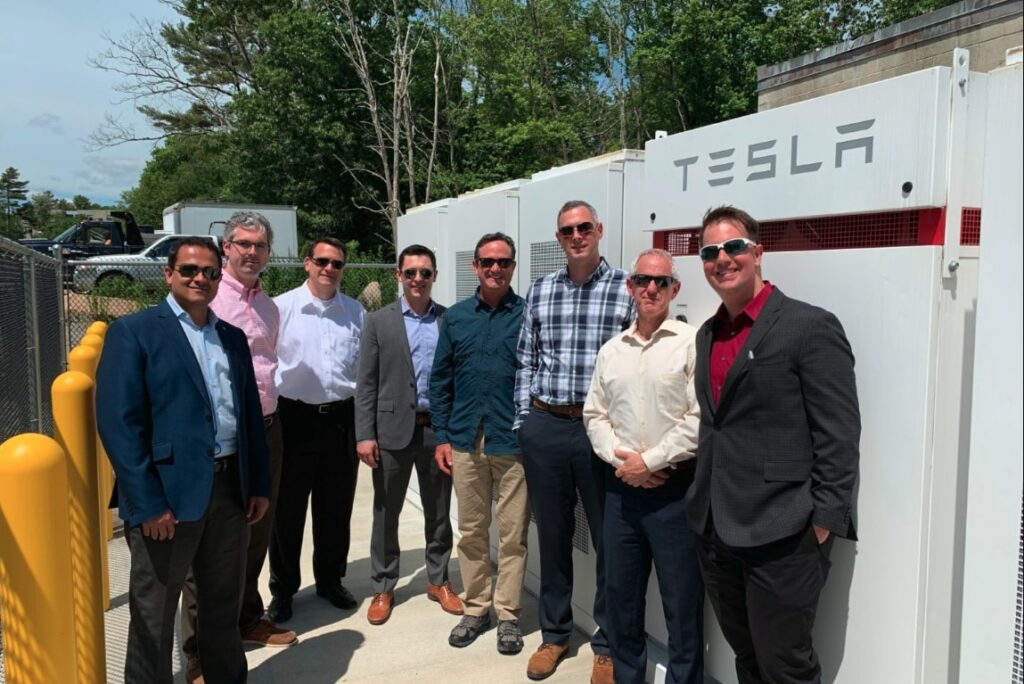
Independent Power Producer (IPP) FirstLight Power will replace its Tunnel Jet peaking facility in Connecticut, US with a battery energy storage system by 2024/25.
The Tunnel Jet facility in Preston, southeast Connecticut, is the company’s last fossil fuel generating unit and will be decommissioned in 2023. Construction will begin following procurement and the securing of interconnection and permits, with a target operational date of late 2024 or early 2025.
It will work with renewable energy developer New Leaf Energy to design, manage, and procure the 17MW battery energy storage system (BESS). The BESS will be co-located at the same site as FirstLight’s Tunnel Hyro facility, a 2.1MW run-of-river hydoelectric power facility on the Quinebaug river.
FirstLight and New Leaf will also provide US$60,000 in seed funding to a renewable energy industry training programme for local workers organised by Operation Fuel. Operation Fuel is an emergency energy assistance programme which provides help with utility bills to residents across Connecticut.
Try Premium for just $1
- Full premium access for the first month at only $1
- Converts to an annual rate after 30 days unless cancelled
- Cancel anytime during the trial period
Premium Benefits
- Expert industry analysis and interviews
- Digital access to PV Tech Power journal
- Exclusive event discounts
Or get the full Premium subscription right away
Or continue reading this article for free
Alicia Barton, president and CEO of FirstLight, said: “We are excited to be working with New Leaf Energy to develop a new emissions-free battery energy storage system that will deliver clean, safe, and reliable electricity to meet Connecticut’s growing clean energy needs.”
Dan Berwick, CEO of New Leaf Energy, added: “New Leaf Energy is excited to advance this important project at FirstLight’s Tunnel Jet facility, part of an innovative collaboration that will help create hybrid renewables solutions across New England by combining solar and energy storage resources with existing generation.”
Fossil fuel plants make great locations for renewable energy resources and energy storage thanks to existing grid connections and infrastructure. Other fossil fuel plants in Connecticut may follow in Tunnel Jet’s footsteps after ArcLight, which owns 5GW of thermal plants across the New England state, New York and California, said it sees its portfolio as ideal locations for battery storage projects.
FirstLight entered the battery energy storage market in 2019 when it acquired Advanced Microgrid Solutions (AMS) portfolio of energy storage units, at Brandeis University and the University of Massachusetts at Dartmouth, totalling 1.3MW. AMS was then acquired by Fluence, the largest battery energy storage system in the world, a year later.