California governor Gavin Newsom has outlined how the state will reach 100% decarbonisation by 2045, in a policy update which put energy storage front-and-centre in enabling 24/7 clean power.
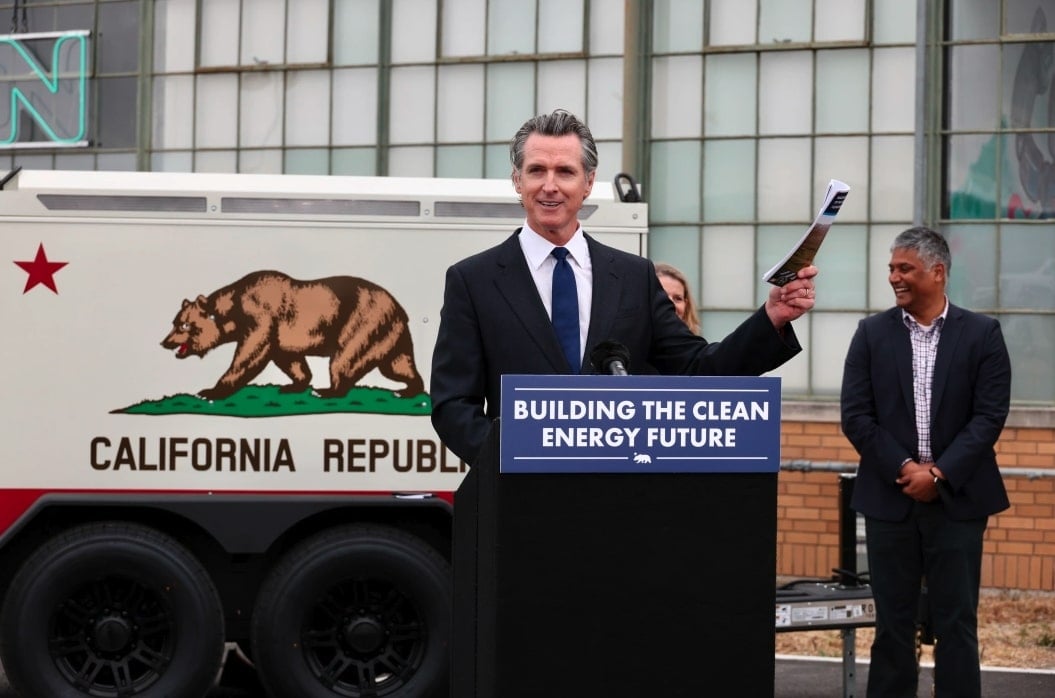
Newsom announced the ‘Building the Electricity Grid of the Future: California’s Clean Energy Transition Plan” last week while helping to launch a new mobile battery energy storage manufacturing plant, covered yesterday by Energy-Storage.news.
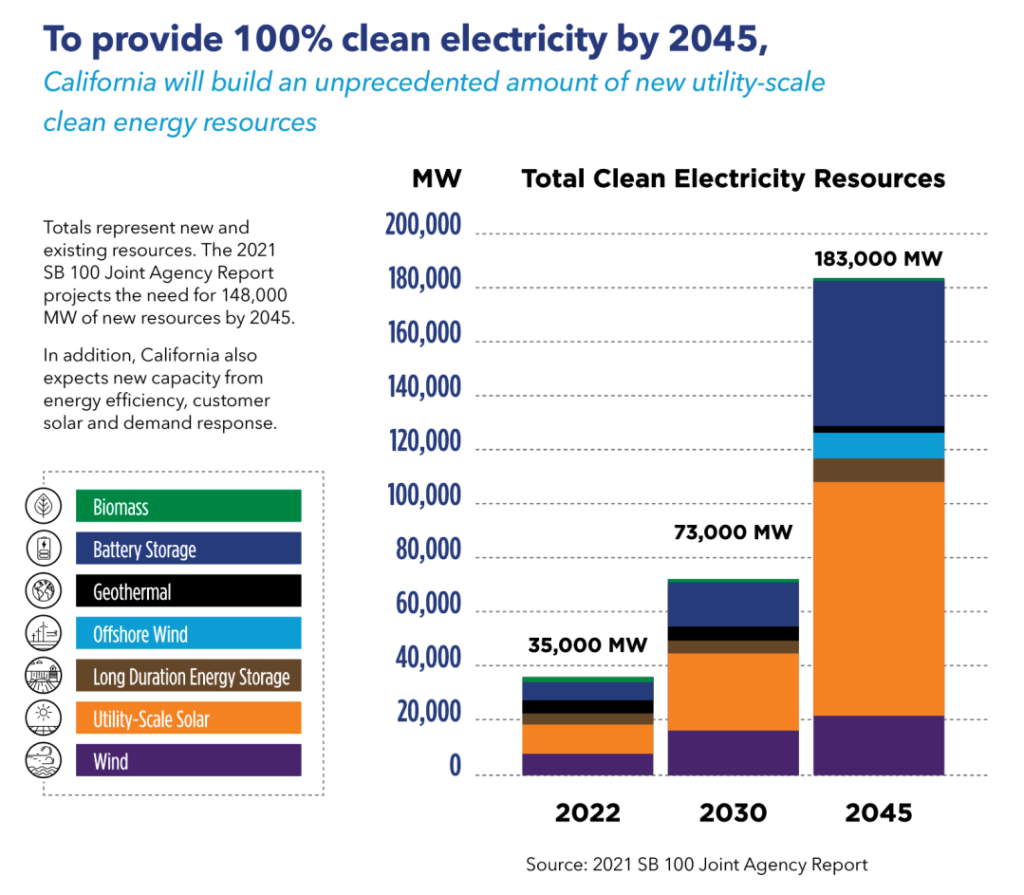
Energy storage was front-and-centre of the updated report, receiving more mentions than solar and wind put together, which outlines how the state will achieve 100% renewable energy by 2045. Namely, it will need 183GW of clean energy capacity, including generation and storage.
“We will not be able to build a reliable, clean electric grid using solar and wind energy alone,” it reads.
Try Premium for just $1
- Full premium access for the first month at only $1
- Converts to an annual rate after 30 days unless cancelled
- Cancel anytime during the trial period
Premium Benefits
- Expert industry analysis and interviews
- Digital access to PV Tech Power journal
- Exclusive event discounts
Or get the full Premium subscription right away
Or continue reading this article for free
“California needs more diverse clean energy resources – including batteries, clean hydrogen, and long-duration storage – and a wide range of technologies and resources to meet the unprecedented growth in demand for electricity at all hours of the day and different times of year.”
It went on to say that energy storage, covering all three technologies outlined above, will enable the provision of clean energy 24 hours a day, 365 days a year.
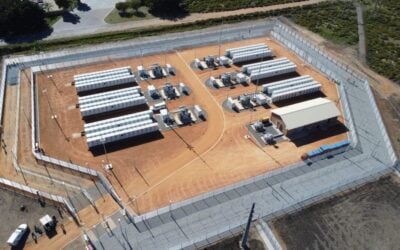
The update estimates that California will have 5,000MW of battery storage online by June 1 this year, increasing to 19,500MW by 2035 and 52,000MW by 2045. However, it may have already hit the 5,000MW mark according to figures from S&P released this week, covered by Energy-Storage.news.
Newsom commented: “California has shown we have a vision, and that vision is achievable. This update highlights how we have hit our early targets, some even ahead of schedule, but we are in a race against climate change. We must build more, faster, to ensure California has the clean, reliable and affordable electricity it needs to power our future.”
The update added that the California Public Utilities Commission (CPUC) has ordered the procurement by the state’s utilities of 2,000MW of new long-duration energy storage (LDES) projects and another 2,000MW of clean firm electric resources (like geothermal) by 2028.
Those orders were included in an update to its Mid-Term Reliability Procurement – the framework which has seen utilities procure gigawatts of four-hour battery storage – in February, and defined LDES as eight hours of discharge duration or more.
Some utilities, specifically community choice aggregators (CCAs), have already been procuring eight-hour systems already, like one from Clean Power Alliance recently.
The update also highlighted that new, voluntary environmental review permitting process was brought in last year for clean energy projects including energy storage, and facilities that can manufacture or assemble clean energy technologies, including energy storage.
The California ISO (CAISO), which runs the bulk of the state’s grid, is also making changes which will make it easier for energy storage resources to participate in the electricity market.
The CAISO market is expected to account for half of the roughly 3.2GW of battery storage expected to come online in the US during the current quarter, according to S&P.
See a full breakdown of how the state plans to fully decarbonise its electricity grid by 2045, with the proportion of resources split between different kinds of generation and energy storage.