EDP Renewables Australia, a regional subsidiary of EDP, has secured AU$3 million (US$2.15 million) in funding from the Australian Renewable Energy Agency (ARENA) to develop the Braidwood Renewable Microgrid Project.
The community-focused pilot is designed to strengthen energy resilience in regional New South Wales during extreme weather events.
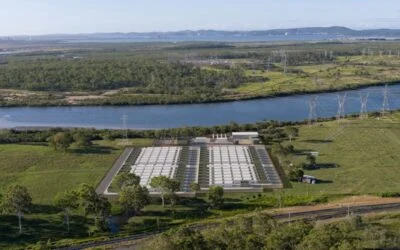
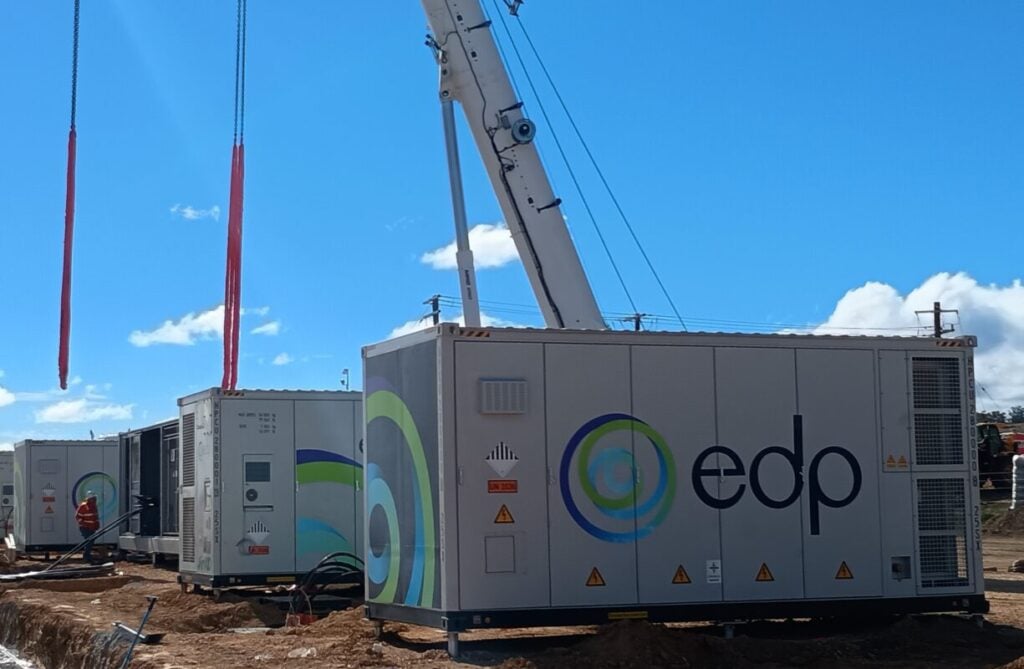
The development features a 7MWp (5MWac) solar PV power plant co-located with a 5MW/10MWh battery energy storage system (BESS).
With a total project cost of AU$15.57 million, the facility is designed to provide autonomous power to the Braidwood community and nearby Majors Creek township when the grid is “compromised”.
Try Premium for just $1
- Full premium access for the first month at only $1
- Converts to an annual rate after 30 days unless cancelled
- Cancel anytime during the trial period
Premium Benefits
- Expert industry analysis and interviews
- Digital access to PV Tech Power journal
- Exclusive event discounts
Or get the full Premium subscription right away
Or continue reading this article for free
Initiated in response to the 2019-20 “Black Summer” bushfire crisis, the project addresses critical energy resilience challenges exposed during extreme weather events.
Braidwood is located at the end of a single distribution line in a high fire zone, making it particularly susceptible to major outages. During the Black Summer bushfires, the community was nearly isolated from the National Electricity Market (NEM) due to its vulnerable location.
Central to the project’s design is an “island-mode” capability, which allows the system to safely disconnect from a compromised national grid and operate autonomously as a self-sustaining local microgrid.
This operational flexibility ensures a secure, continuous energy supply for essential services such as fuel and water pumping during unplanned power outages.
Under normal operating conditions, the system’s energy will be exported to the NEM. During extreme weather events, the system will pivot to supply the local community with autonomous power until grid connection can be restored.
The grant funding for the Braidwood project will support reducing technical, commercial, and regulatory barriers to future microgrid deployments.
This includes investigating and resolving operational protocols, commercial agreements, and regulatory approvals necessary for third-party, non-Distribution Network Service Provider (DNSP)-owned temporary stand-alone power systems (SAPS).
“Projects like Braidwood show how renewable energy and storage can be configured to keep communities powered during grid disruptions,” said Darren Miller, CEO of ARENA.
“Through ARENA’s Regional Microgrids Program, we’re supporting solutions that not only improve resilience locally, but also provide a model that can be applied in other communities across Australia facing similar risks.”
Braidwood’s operational control arrangement
A key feature of the Braidwood project is the operational control arrangement between EDP Renewables Australia and Essential Energy, the local DNSP.
Under normal conditions, the microgrid will operate as a grid-connected solar and battery system participating in the NEM, with EDPR maintaining operational control.
During upstream supply disruptions requiring islanded operation, Essential Energy will assume operational control, in accordance with applicable regulations, as a non-market generation unit to maintain the electricity supply until the microgrid reconnects to the NEM.
To enable this switching of operational control, the project must address a range of regulatory, technical, and commercial considerations.
This includes regulatory treatment of temporary SAPS under NEM rules, asset ownership, settlement and tariff arrangements, responsibility for supply reliability and power quality, retailer reliability obligations, customer protections and the valuation of network services through the Service Target Performance Incentive Scheme (STPIS).
The Development Application was lodged in March 2026 and is currently under review. If approved, construction is scheduled to commence in the first quarter of 2027, with commissioning targeted for February 2028.
ARENA’s support of microgrid projects across Australia
The Braidwood project is among the first initiatives funded under Stream A (Regional Australia Microgrid Pilots) of ARENA’s Regional Microgrids Program, which was launched in August 2023 with up to AU$125 million allocated to develop and deploy microgrids across regional Australia.
ARENA’s programme has been actively supporting diverse microgrid deployments nationwide.
In April, ARENA invested AU$11 million in First Nations-led microgrids in Australia’s Northern Territory, funding projects in remote communities, including Wurrumiyanga on the Tiwi Islands and Kalkarindji.
These projects, funded under Stream B of the Regional Microgrids Program, aim to reduce energy costs, improve reliability, and empower First Nations communities to participate in their electricity supply arrangements.
The agency has also been supporting innovation in energy storage technologies for microgrid applications. In March 2024, ARENA funded microgrid trials of sodium-sulfur and zinc-bromine long-duration energy storage technologies in Western Australia.
In total, the agency allocated AU$6.9 million to test alternative battery chemistries that could provide cost-effective, long-duration storage solutions for remote and regional communities facing grid reliability challenges.
Interested in Australia? Read Energy-Storage.news’ Energy Storage Summit Australia coverage and related content.