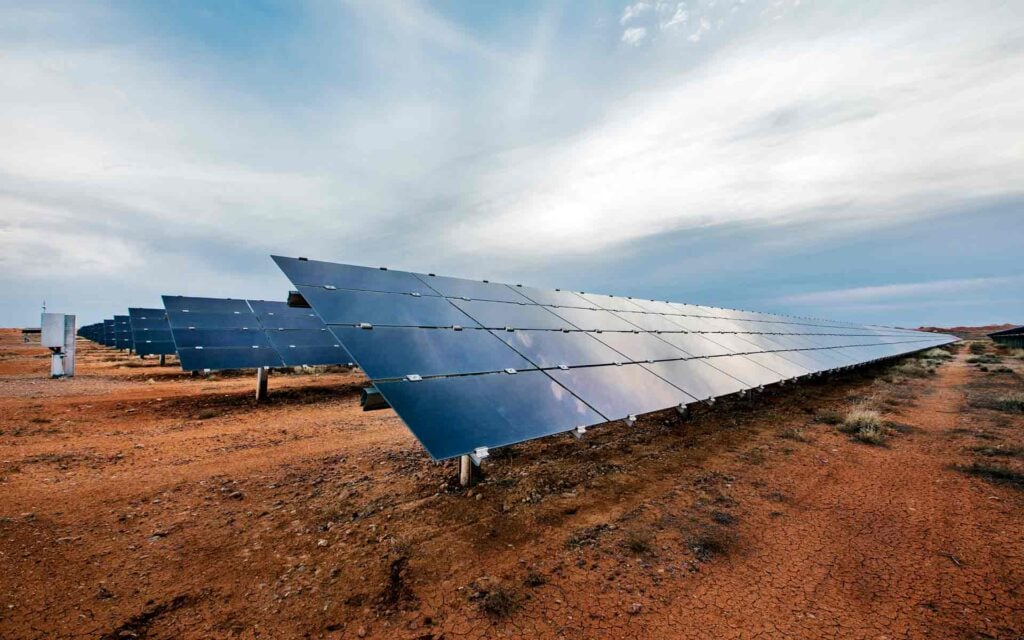
The Australian Renewable Energy Agency (ARENA) is supporting two First Nations-led microgrid projects in the Northern Territory (NT) with AU$11 million (US$7.91 million) in funding.
The funding aims to help remote communities design, develop and lead their own local energy solutions to improve power reliability, affordability and energy security.
The projects, located in Borroloola and Ltyentye Apurte, are expected to demonstrate how distributed energy resources (DERs) such as solar PV and battery storage systems can deliver cleaner, more reliable electricity in parts of regional and remote Australia where the main grid does not reach or is currently unreliable.
ARENA confirmed that the first project it is supporting is the Ngardara Project in Borroloola in the NT Gulf region, co-led by Original Power and the Ngardara Cooperative, a First Nations community-owned and led cooperative.
Try Premium for just $1
- Full premium access for the first month at only $1
- Converts to an annual rate after 30 days unless cancelled
- Cancel anytime during the trial period
Premium Benefits
- Expert industry analysis and interviews
- Digital access to PV Tech Power journal
- Exclusive event discounts
Or get the full Premium subscription right away
Or continue reading this article for free
This project aims to be Australia’s first utility-scale solar microgrid led by a First Nations cooperative and involves the design and development of a solar and battery storage microgrid to reduce diesel consumption, improve reliability and lower energy costs.
Madison Sturgess, clean energy projects co-director at Original Power, said the Ngardara Community Microgrid Project directly challenges legacy energy systems to innovate and evolve to the emerging reality that First Nations communities are seeking to drive renewable energy solutions that can overcome challenges to energy access and affordability.
In the second project, ARENA is supporting the design and development of a proposed First Nations-led microgrid in Ltyentye Apurte, near Alice Springs in the NT, being developed with Atyenhenge-Atherre Aboriginal Corporation (AAAC).
If constructed, the project could improve reliability, supply renewable energy to around half of the community’s electricity demand, and create economic opportunities for the community.
Ellie Kamara, CEO of Atyenhenge Atherre Aboriginal Corporation, said the Ltyentye Apurte community prides itself on meeting challenges and being innovative.
She highlighted that electricity reliability has been a challenge, with blackouts lasting for extended periods in recent years, leaving the community without alternatives when power is down.
“In the extreme hot or cold, our old people suffer from either no heat or air-con, and the store cannot open, impacting food security for the community. The microgrid aims to alleviate this challenge, enabling a constant source of electricity in the event of a blackout,” Kamara said.
Both projects are subject to conditions before they can progress to construction.
Northern Territory’s expanding energy storage deployment
The funding comes through ARENA’s Regional Microgrid Program, established in response to changes to the National Agreement on Closing the Gap that introduced new standards for the delivery of essential services.
The programme includes AU$125 million in funding to develop and deploy microgrid projects in regional and remote communities, with AU$75 million allocated to support microgrid projects in First Nations communities. The program closed to new applications in December 2025.
ARENA CEO Darren Miller said the projects reflect ARENA’s commitment to supporting First Nations participation and leadership in Australia’s clean energy transition.
“These projects show the opportunities for First Nations-led design and co-development of local energy solutions, improving reliability, lowering costs and reducing reliance on diesel,” Miller said.
“Just as importantly, they help de-risk future community microgrid projects by generating practical learnings that other communities can draw on as they plan their own energy solutions.”
The Northern Territory has been expanding its battery storage deployment across both grid-connected and remote systems.
In April 2026, Territory Generation awarded Pacific Energy a contract to deliver 33.5MW/81MWh of utility-scale battery energy storage systems across the Alice Springs and Darwin-Katherine power systems, building on the company’s previous work on the first Darwin-Katherine BESS, a 35MW/35MWh system equipped with grid-forming inverters.
The agency has also been supporting broader energy storage manufacturing and technology development in Australia, including funding for PowerPlus Energy to triple battery module production capacity to 150MWh and AU$3.25 million for MGA Thermal to advance thermal energy storage FEED studies.
Interested in Australia? Read Energy-Storage.news’ Energy Storage Summit Australia coverage and related content.