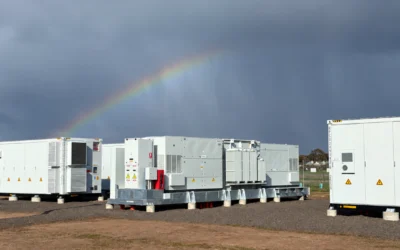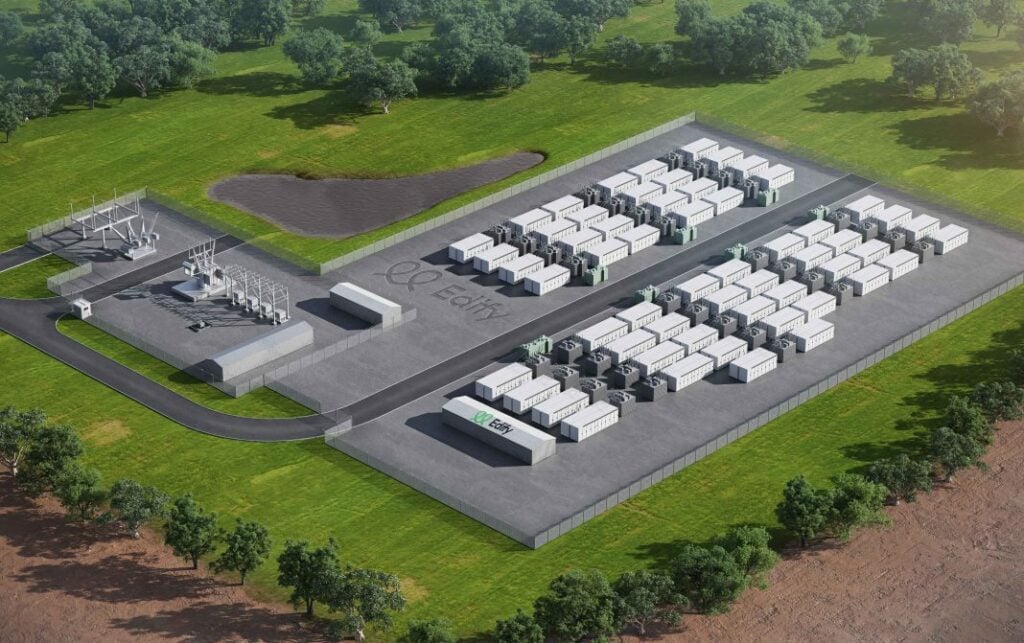
Australian renewable energy developer Edify Energy has secured project financing for three battery energy storage system (BESS) projects in New South Wales, Australia, totalling 150MW/300MWh.
A long-term syndicated loan facility is being provided by banks Commonwealth Bank of Australia (CBA), Westpac and DNB for Edify Energy and technology supplier Tesla to complete the projects in stages during the first half of 2023.
The three projects are partitions of one site co-located with the 333MWp Darlington Point Solar Farm, also developed by Edify and operational since late 2020. They are the:
- 60MW/120MWh Riverina Energy Storage System 1
- 65MW/130MWh Riverina Energy Storage System 2
- 25MW/50MWh Darlington Point Energy Storage System
The financial close comes a month after Federation Asset Management took a majority stake in the three projects and three months after Edify chose automative giant Tesla’s utility-scale product Megapack as the underlying battery technology of the sites. They will all connect to the nearby Darlington Point substation.
Try Premium for just $1
- Full premium access for the first month at only $1
- Converts to an annual rate after 30 days unless cancelled
- Cancel anytime during the trial period
Premium Benefits
- Expert industry analysis and interviews
- Digital access to PV Tech Power journal
- Exclusive event discounts
Or get the full Premium subscription right away
Or continue reading this article for free
Edify has retained a minority interest and remains project developer. The company has already secured offtake agreements for all three projects: oil and gas giant Shell for Riverina Energy Storage System 1 and utility EnergyAustralia for Riverina Energy Storage System 2 and Darlington Point Energy Storage System.
The BESS projects have grid forming inverters that will allow them to support the local grid by providing synchronous inertia, something relatively new for batteries, as Edify CEO John Cole explained:
“In this instance, we’re using the combination of the dispatchable properties of batteries with a new vintage of grid forming inverter control systems to create a generator that can provide power system support services, which have traditionally been provided by thermal synchronous generators.”
The press release doesn’t give any financial details about the loan or project. But a State Significant Development Modification Assessment in late 2021 said that Edify was seeking to modify development consent to increase the system specs from 50MW/100MWh to 200MW/400MWh, which would “increase the project’s capital investment value by A$174.6 million” ($120 million). The project’s planned size has changed several times in the last few years before its final power and capacity were settled on.
The BESS will play into Australia’s National Electricity Market (NEM) and the Modification Assessment gives an idea of the role it will play: “Further, increasing the capacity of the BESS would provide an additional and substantial investment towards improving the reliability of the network at Darlington Point (substation), provide storage and firming capacity to the NEM, and provide ancillary services which contribute to the stability and functionality of the electrical grid.”
New South Wales is quickly becoming a hotbed of huge BESS projects as it closes various coal plants. The regional government recently announced financial support for a 1,400MWh BESS project currently being tendered while renewable energy company Maoneng recently proposed a 1,600MWh BESS unit co-located with a solar farm.