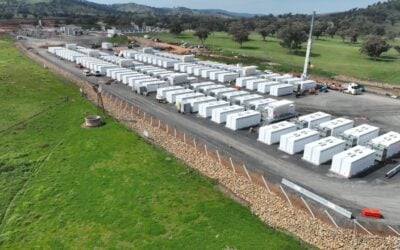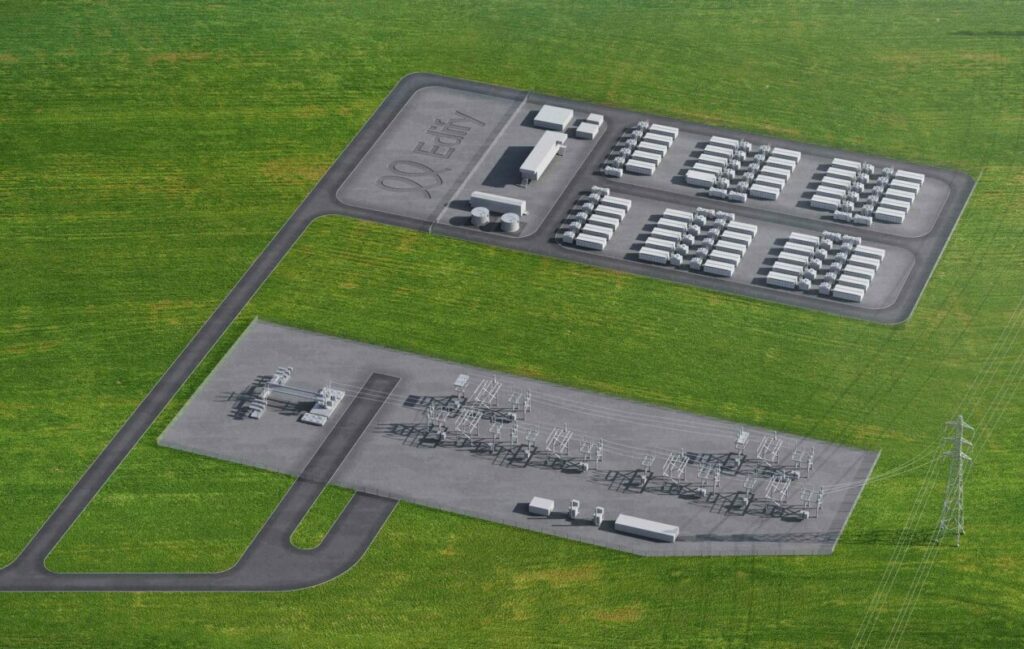
Edify Energy has closed financing on a battery storage project which will support the hosting of solar and wind at a government-designated Renewable Energy Zone (REZ) in Victoria, Australia.
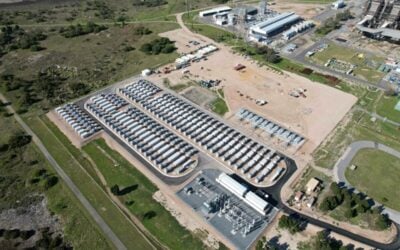
The renewable energy developer announced today that it has raised project financing for the 185MW/370MWh Koorangie Energy Storage System (KESS) in Kerang, a town in the Murray River region of the Australian state.
The financing was closed following the formation of a partnership with Sosteneo, an asset manager focused on energy transition infrastructure on greenfield sites, and part of the portfolio of global asset management group Generali Investments.
Sosteneo was launched earlier this year, with hires including former Australian Renewable Energy Agency (ARENA) CEO Ivor Frischknecht, a managing partner at the firm, and the transaction marks its first Australian investment. Financial terms were not disclosed, although according to Edify Sosteneo “acquires 100% ownership on behalf of its clients” and total value of the project was given as AU$400 million (US$254.2 million).
Try Premium for just $1
- Full premium access for the first month at only $1
- Converts to an annual rate after 30 days unless cancelled
- Cancel anytime during the trial period
Premium Benefits
- Expert industry analysis and interviews
- Digital access to PV Tech Power journal
- Exclusive event discounts
Or get the full Premium subscription right away
Or continue reading this article for free
Long-term syndicated debt facility was provided by lenders DNB, Commonwealth Bank and BNP Paribas.
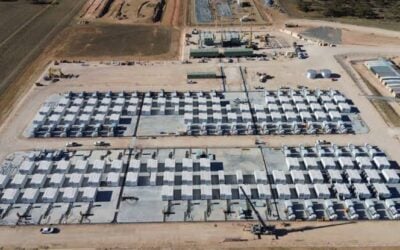
It marks Edify Energy’s third grid-scale battery storage project to date, with the company having brought online its most recent, Riverina and Darlington Point, comprising three separate co-located systems totalling 150MW/300MWh, a few months ago.
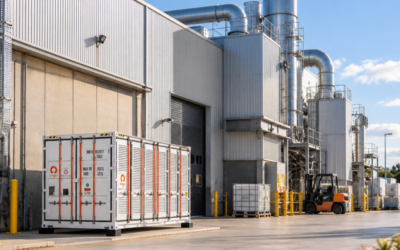
The new project will utilise Tesla’s Megapack battery storage units, as did the Riverina and Darlington Point project. A few weeks ago, Edify got federal government approval to put a 200MW/800MWh battery storage facility at a 600MW solar PV plant in Queensland.
Battery system will play ‘advanced role’
Back in September last year, Energy-Storage.news reported that the state government of Victoria would be supporting the project with AU$119 million of funding.
That was based on the KESS enabling the government’s Murray REZ to host up to 300MW of renewable energy generation, participating in energy and ancillary services markets. The REZ is one of dozens planned and in development by various state governments across Australia, with interest from developers likely to be oversubscribed in many cases.
The KESS will also provide inertia to the grid, through being equipped with advanced inverters. One of the roles played by large-scale thermal power plants like coal generators is that the large rotating mass of the machinery provides inertia to the grid, helping maintain grid frequency and stability.
With more and more conventional generators being taken offline and growing shares of inverter-based renewables, the amount of inertia on the grid decreases.
One answer to that loss of inertia is the deployment of synchronous condensers – as readers will have seen from news of a project recently completed in Ireland by Siemens – but another is using advanced inverters at battery energy storage system (BESS) plants.
The latter has been the case in Australia, with ARENA supporting the integration of advanced inverters at numerous retrofit and new-build BESS projects – including Tesla’s famous Hornsdale Power Reserve project in South Australia, which got its retrofit last year.
KESS in Murray River will supply those system-strengthening services to the Australian Energy Market Operator (AEMO) under a 20-year contract, also signed last year. Tesla’s ‘Virtual Machine Mode’ setting on its Megapacks allows the BESS to provide ‘synthetic’ or ‘virtual’ inertia, as it is sometimes called.
Meanwhile, Shell Energy has signed up as off-taker for the full 185MW and 370MWh of the battery system’s output and capacity over a 15-year deal. According to previous announcements, it is expected to come online in 2025.
The underlying drivers for battery storage in the region appear strong – the project will contribute to Victoria’s target of 2.6GW of energy storage by 2030 and 6.3GW by 2035, with the state aiming for net zero emissions by 2045.
Meanwhile, new analysis by Rystad Energy found that the National Electricity Market (NEM), which Victoria’s grid is connected to, had the highest amount of electricity price volatility of almost 40 global markets analysed. Rystad drew attention to an urgent need for energy storage across the NEM, which the likes of AEMO and Australia’s national science agency CSIRO have previously also highlighted.