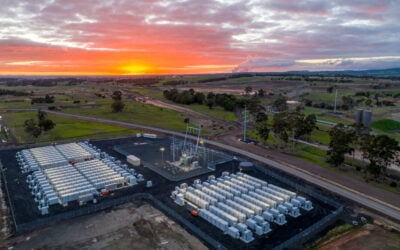
A “farmer-led” utility-scale solar PV and battery storage agrivoltaics project in New South Wales, Australia, has been granted development consent.
The state’s government has decided to grant consent to the development application for Blind Creek Solar Farm. The project was originated by a group of farmers and is now being developed by Octopus Australia and the national Clean Energy Finance Corporation (CEFC) together with its founders.
The office of the Minister for Planning and Public Spaces, Paul Scully, signed off on the decision by the New South Wales director of energy assessments last week on 28 July.
The power plant would be built near Bungendore, a town in the Queanbeyan region of New South Wales (NSW), and has a planned solar generation capacity of up to 350MWac, with 300MW/600MWh of battery energy storage.
Try Premium for just $1
- Full premium access for the first month at only $1
- Converts to an annual rate after 30 days unless cancelled
- Cancel anytime during the trial period
Premium Benefits
- Expert industry analysis and interviews
- Digital access to PV Tech Power journal
- Exclusive event discounts
Or get the full Premium subscription right away
Or continue reading this article for free
It will be placed at an important strategic location, connecting to the transmission network via an existing 330kV line between the important load centres of Sydney, Canberra and the Snowy Mountains Hydro-electric scheme (Snowy Hydro), according to the website of Octopus Australia’s parent company Octopus Investments.
Blind Creek Solar Farm has been determined as a state significant development (SSD), designed to streamline the process of developing major projects over a certain size, capital cost, or sited in an environmentally sensitive area.
The development was approved after it was found that the project would provide a range of benefits for the local region, from adding low carbon generation capacity to the grid, to reducing reliance on and aiding the retirement of fossil fuel-based coal an gas generation, to creating jobs and adding diversity to the local economy, and creating an expected AU$554 million (US$370.9 million) in investment.
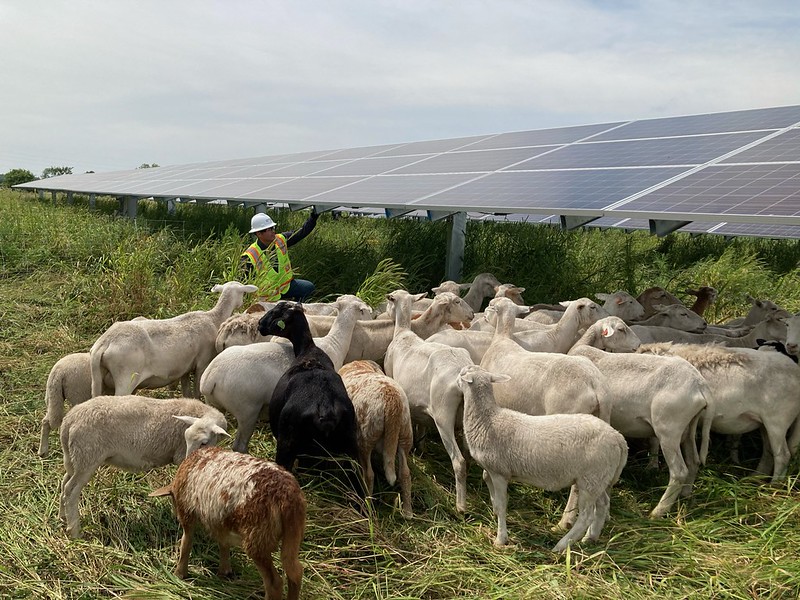
The farmers that launched Blind Creek want to maintain the region’s agricultural traditions, and plan to co-locate sheep farming with the power plant. Short periods of intensive grazing of grass-fed lambs will be rotated, while spacing apart of PV panels will allow access to tractors.
The site will also support a carbon sequestration project, as well as biodiversity and landscape restoration initiatives, according to Octopus. Project partners will also create a Community Benefit Sharing Scheme (CBSS) worth AU$330 per MW each year, for the local community.
CEFC and Octopus Australia announced their partnership on the project in March 2022, as reported by Energy-Storage.news. It came soon after the pair announced it would be working together on a project to replace the Yallourn coal power plant in Victoria with a 1.5GW renewable energy hub.
“…from the outset our goal was to co-locate renewable energy with regenerative agriculture and carbon sequestration while maintaining sheep production,” project founder and landowner Dominic Osborne said.
Read further coverage of agrivoltaics technologies and projects on our sister site PV Tech.
Agrivoltaics was the subject of the cover story in Volume 34 of our quarterly journal, PV Tech Power, published in Q1 2023. Subscribers to Energy-Storage.news Premium get full access to all editions of PV Tech Power.