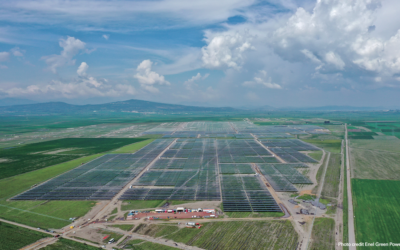
Development banks IFC and AfDB have financed co-located projects in Malawi and Eritrea which collectively total 25MW of energy storage.
The International Finance Corporate (IFC) and independent power producer (IPP) Voltalia have signed a mandate to arrange the financing for the Dwangwa project in Malawi, which totals 55MW of solar PV and 10MW of energy storage.
Washington-based IFC, which is the private sector arm of the World Bank, will now carry out due diligence and explore the possibility of funding the project which Voltalia would deliver. A media statement from the companies did not give a timeline for the project.
The energy from the Dwangwa project will be sold through a 20-year long-term sales contract with the Electricity Supply Corporation of Malawi, the state-owned power transmission and distribution company.
Try Premium for just $1
- Full premium access for the first month at only $1
- Converts to an annual rate after 30 days unless cancelled
- Cancel anytime during the trial period
Premium Benefits
- Expert industry analysis and interviews
- Digital access to PV Tech Power journal
- Exclusive event discounts
Or get the full Premium subscription right away
Or continue reading this article for free
The announcement comes a week after the African Development Bank (AfDB) agreed to provide US$50 million to Eritrea to fund the installation of a 30MW PV, 15MW battery energy storage project near Dekemhare. The project, covered by sister site PV Tech, would also require the construction of a new substation and transmission line.
This announcement did not reveal a timeline either but an earlier request for expressions of interest (EOIs) on the AfDB’s website for the project said the overall project management consultancy service for the project would last 38 months (just over three years), implying a potential commissioning before 2026.
Development banks have been active in financing energy storage projects across emerging markets globally in recent months. Just yesterday, Energy-Storage.news reported on the Asian Development Bank (ADB) and non-profit Global Energy Alliance for People and Planet (GEAPP) providing US$35 million for energy access and transition, with energy storage a priority.
In October 2022 the AfDB funded feasibility studies into solar and storage in Mozambique while the month prior the US’ International Development Corporation (DFC) provided a US$25 million loan for a solar-plus-storage project in Malawi.
In June, the Inter-American Development Bank (IDB) and Norwegian Agency for Development Cooperation agreed to invest over US$83 million in co-located projects in Guyana, South America, totalling 34MWh of storage. The IDB also helped fund Bolivia’s first utility-scale battery storage project which was very close to completion as of January this year.