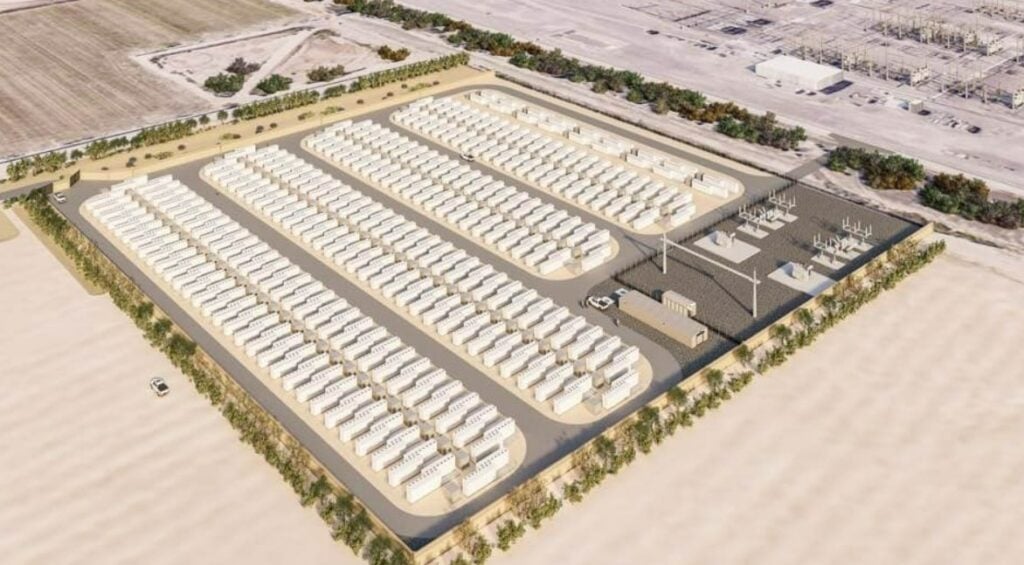
Two large-scale battery energy storage system (BESS) projects in Massachusetts have been granted key approvals, ending a situation described as a regulatory “black hole” by one local news outlet.
The Massachusetts Department of Public Utilities (DPU), which oversees investor-owned utilities (IOUs) in the US Commonwealth state, decided on 30 June to grant local Zoning Law exemptions that could have prohibited their construction.
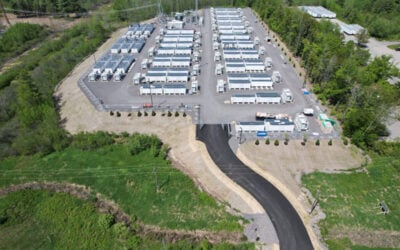
The two projects are Medway Grid Battery Storage, a 250MW/500MWh BESS in development by infrastructure investor and developer Eolian, and Cranberry Point, a 150MW/300MWh facility from developer Plus Power, in the Town of Carver, about 80km from the other project in another town, Medway.
As reported by Energy-Storage.news almost a year ago, the two projects had gone before the Massachusetts Energy Facilities Siting Board (EFSB), requesting special conditions to enable their development despite local authority restrictions.
Try Premium for just $1
- Full premium access for the first month at only $1
- Converts to an annual rate after 30 days unless cancelled
- Cancel anytime during the trial period
Premium Benefits
- Expert industry analysis and interviews
- Digital access to PV Tech Power journal
- Exclusive event discounts
Or get the full Premium subscription right away
Or continue reading this article for free
The projects had fallen victim to a state of regulatory limbo however. The two towns of Medway and Carver had some time before enacted a moratorium on new utility-scale BESS until zoning laws could be updated to adequately encompass the technology set. In Carver’s case, a moratorium on new utility-scale solar PV plants was also put in place in 2022 and drew criticism from the Massachusetts Attorney General’s office, while Medway’s moratorium on energy storage facilities in the town’s Energy Resource zoning district, in place from late 2021, appears to have ended on 30 June this year.
Seeking a ruling that they were in the public interest and could therefore be exempted from moratorium and zoning ordinances, the developers were rebuffed by the EFSB, at which it had to appear since their facilities could be classed as generation assets of 100MW or greater.
The plot thickened as the EFSB ruled, after lengthy deliberation and a period for public comment, that it lacked jurisdiction to make the decisions involved, since energy storage facilities do not generate energy, they store and dispatch it.
The EFSB made its ruling in May, with local news outlet Commonwealth Magazine describing it at the time as a “regulatory black hole,” with the definitional problem leaving them in jeopardy. EFSB members noted that state siting statutes were last updated in 1997, well before the advent of large-scale battery storage on the grid.
As Medway Grid has a contract in place to supply capacity to electric system operator ISO New England that requires the 250MW BESS to be in operation by June 2024, its development team had been concerned about the delay’s impact on its business case.
Projects out of limbo
With ESFB unable to take a further step, the developers’ petitions went up to the DPU. In its 154-page ruling on Medway Grid, and its 145-page ruling on Cranberry Point, the DPU found zoning exemptions would indeed be required for both to go ahead.
Those exemptions were granted, as well as permission to construct associated transmission line infrastructure. The regulator did place various conditions on each, pertaining to areas including construction noise monitoring and environmental assessments, and that both enroll in the Massachusetts Clean Peak Standard programme within 120 days of the start of commercial operation.
The projects still need to clear other necessary approvals, but it appears that they will at least not remain in the state of uncertain deadlock they had been in.
With many local authorities having jurisdiction (AHJs) across the US currently wrestling with questions of energy storage system siting, and many different types of regulator around the world wrestling with the question of how to define energy storage within the energy system, the case looks likely to be followed closely.