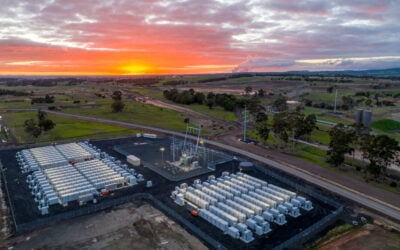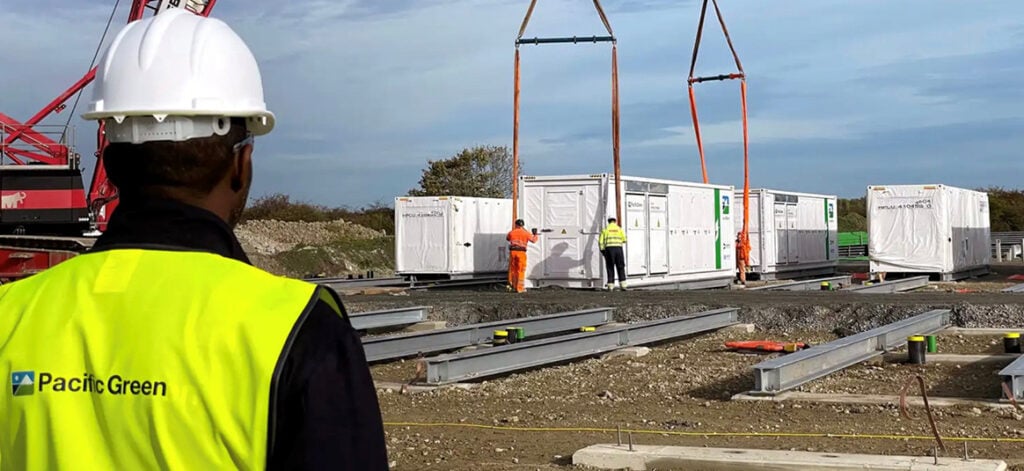
US-headquartered energy storage developer Pacific Green Technologies has scouted a potential site for another large-scale battery project in Australia, a month after its first.
The company said yesterday (9 November) that it had entered an exclusivity agreement giving it the option to secure land on which it could develop and construct a battery energy storage system (BESS) with 0.5GW output and 1GWh capacity.
The site is “strategically located,” Pacific Green said, in the Limestone Coast region in South Australia, in the southeastern part of the state close to its border with Victoria and with the availability of an existing 275kVA substation to connect directly to.
“Our Limestone Coast Battery Energy Park can act as a load during the day, increasing the viability of even more solar and wind generation, whilst shifting energy to the times it is most valuable in the evening peak,” Pacific Green’s managing director in Australia Joel Alexander said.
Try Premium for just $1
- Full premium access for the first month at only $1
- Converts to an annual rate after 30 days unless cancelled
- Cancel anytime during the trial period
Premium Benefits
- Expert industry analysis and interviews
- Digital access to PV Tech Power journal
- Exclusive event discounts
Or get the full Premium subscription right away
Or continue reading this article for free
Pacific Green is aiming to develop several large-scale ‘Energy Park’ sites around Australia. A few weeks ago on 6 October, the company announced its entry into the Australian market, making deals to secure sites around the city of Portland, Victoria, on which it could develop and construct 1GW/2.5GWh of Energy Park facilities.
At the time Pacific Green said it hoped to begin construction on the Victorian Energy Parks in 2024, for commercial operation of the plants to begin in 2026. The company gave the same timeline for its Energy Park in South Australia.
“Coupled with our energy parks in Portland, Victoria, this agreement cements Pacific Green’s multi-gigawatt platform that will be deployed across Australia in the coming months and years,” Pacific Green CEO Scott Poulter said.
The electricity grids in South Australia and Victoria are connected to the National Electricity Market (NEM), which has been the source of many of the merchant opportunities for energy storage that have seen the business case for batteries grow recently in Australia.
In recent analysis, Rystad Energy noted that the NEM is one of the most volatile electricity markets in the world in terms of fluctuations in prices in an average intraday spread, giving it an urgent need for energy storage resources to manage that volatility.
Meanwhile, despite Pacific Green’s incorporation in the US state of Delaware, its battery storage development activities to date prior to its Australia incursion have been in the UK where it has set itself a target of bringing 1.1GW of BESS online through a partnership with fellow developer Tupa Energy. The company just secured around US$150 million in financing a few days ago for a 249MW/373.5MWh project in southern England.
On 7 November, a day after Energy-Storage.news reported the developer’s securing of funds for the UK project, Sheaf Energy Park, Pacific Green said it had agreed to sell it to asset manager Sosteneo – with which it had worked on the 99.8MW/99.8MWh Richborough project now in operation – for £210 million (US$258 million).