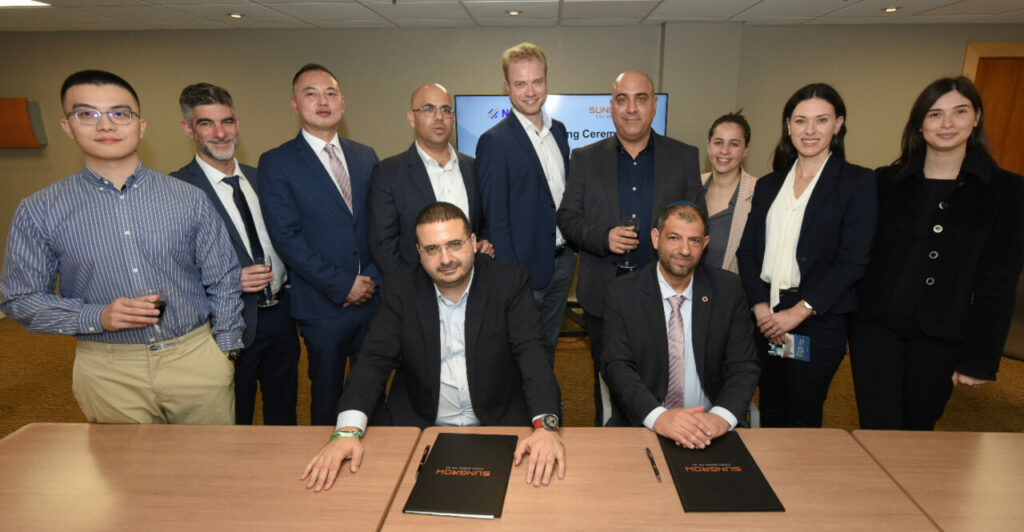
Inverter and BESS company Sungrow has signed a deal with developer Nofar Energy for a 230MWh project in Saxony-Anhalt, Germany.
China-headquartered Sungrow will provide its PowerTitan2.0 battery energy storage system (BESS) technology, which integrates 2.5MW power conversion system (PCS) and 5MWh of energy storage per unit, for the the project in Stendal.
The 116.5MW/230MWh system is being developed by Israel-based developer Nofar Energy. While a targeted commercial operation date (COD) was not given, the signing of a BESS supply deal between the two companies indicates construction is likely to begin soon.
It is similar in size to a 238MWh project on which BESS technology and developer-operator company Eco Stor started construction in Schleswig-Holstein recently, one of several which has recently been claimed as the largest in Germany.
Try Premium for just $1
- Full premium access for the first month at only $1
- Converts to an annual rate after 30 days unless cancelled
- Cancel anytime during the trial period
Premium Benefits
- Expert industry analysis and interviews
- Digital access to PV Tech Power journal
- Exclusive event discounts
Or get the full Premium subscription right away
Or continue reading this article for free
Germany has a huge solar PV deployment target of 215GW by 2030 which is prompting a concurrent upsurge in BESS deployments, with 62GW/109GWh of cumulative installs forecast by BloombergNEF.
Sungrow is among the largest BESS providers globally and is making a big push into continental Europe’s burgeoning grid-scale market, including Spain, as detailed by Energy-Storage.news recently.
Nofar Energy meanwhile has deployed BESS projects on home turf and, while it entered the UK market with a large-scale project in 2021, it has since formed a joint venture entity Atlantic Green for that country, which recently energised its first BESS.
Energy-Storage.news’ publisher Solar Media will host the 2nd Energy Storage Summit Asia, 9-10 July 2024 in Singapore. The event will help give clarity on this nascent, yet quickly growing market, bringing together a community of credible independent generators, policymakers, banks, funds, off-takers and technology providers. For more information, go to the website.