Large-scale energy storage reaching financial commitment increased 95% year-on-year in Australia in Q3 2024, reaching just under 4GWh.
According to the trade association Clean Energy Council (CEC) latest Renewables Projects Quarterly Report, large-scale energy storage projects saw 1,235MW/3,862MWh of energy output reach financial commitment during Q3 2024.
There was also a new record for a rolling 12-month quarterly average for new battery energy storage system (BESS) project energy generation with 3,282MWh. The previous quarter saw six large-scale energy storage projects totalling 573MW/2,047MWh reach financial commitment.
The third quarter of the year, which covers July, August, and September, saw several major developments in the energy storage space in Australia. Perhaps one of the biggest and largest contributors to the successful quarter was the Capacity Investment Scheme (CIS), which saw 3,626MWh of contracts awarded across Victoria and South Australia.
Try Premium for just $1
- Full premium access for the first month at only $1
- Converts to an annual rate after 30 days unless cancelled
- Cancel anytime during the trial period
Premium Benefits
- Expert industry analysis and interviews
- Digital access to PV Tech Power journal
- Exclusive event discounts
Or get the full Premium subscription right away
Or continue reading this article for free

Akaysha Energy’s Orana BESS is largest battery project to reach financial commitment
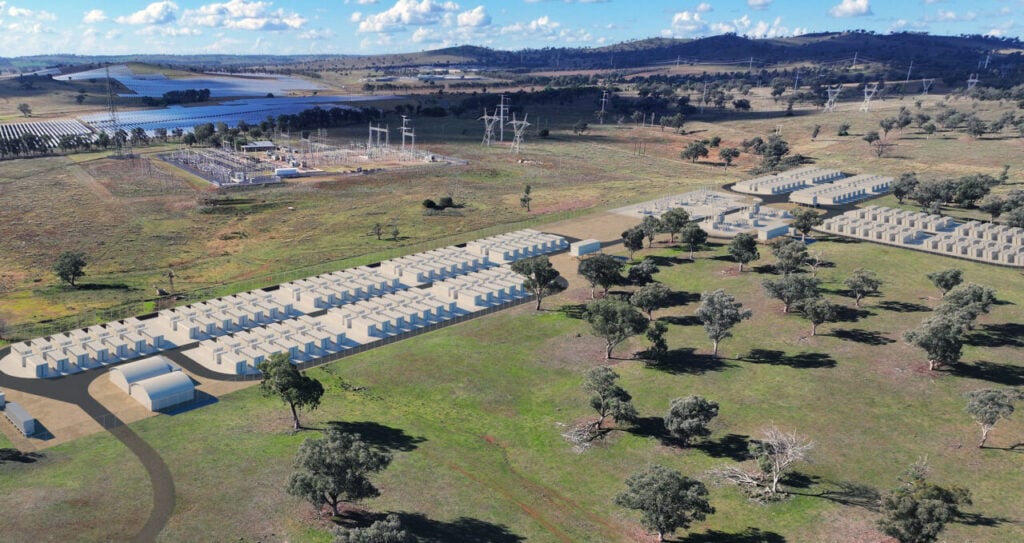
According to the CEC’s report, the largest battery to reach financial commitment was energy storage developer Akaysha Energy’s 415MW/1,660MWh Orana BESS in New South Wales in July.
The developer secured AU$650 million (US$440.58 million) from 11 banks to advance the project’s development. The deal also included AU$75 million in support for project security obligations with a Letter of Credit.
The banks are a mix of Australian and overseas lenders, including Australia’s ANZ, CBA and Westpac, and BNP, Canadian Imperial Bank of Commerce, DBS, ING, Mizhuo, Rabobank, Siemens Financial Services via Siemens Bank and SMBC from abroad.
It is worth noting that Akaysha claimed at the time that this was the “single biggest financing for a standalone BESS project in the world to date”; however, US developer Plus Power made the same claim when it raised US$707 million for its 250MW/1,000MWh Sierra Estrella BESS project in Arizona.
Elsewhere, Western Australia had the most projects reaching financial commitment with three, New South Wales and Queensland tied with two, while Victoria had one. These together represent at least AU$1.2 billion in investment.
The CEC’s report also said most of these projects commenced construction in the same quarter, and nine projects reached this stage, totalling 1,385MW/3,432 MWh. Meanwhile, one project, Queensland’s Chinchilla BESS, reached the commissioning stage with a size of 100MW/200MWh.
The Chinchilla BESS, owned by state-owned generation company CS Energy, is situated in the Western Downs Region, about 300km inland from Brisbane. It features 80 Tesla Megapack 2 systems and provides flexibility to the National Electricity Market (NEM).
Clean Energy Council chief executive, Kane Thornton hailed the role of energy storage in Australia, whilst signaling an easing of challenging economic conditions in the country.
“This quarter’s energy storage record against the 12-month quarterly average is very positive. More storage means a more reliable, stable and flexible electricity system,” Thornton said.
“The increasing activity indicates that the challenging economic conditions are beginning to ease and the hard work by government agencies and industry to address a wide range of legacy issues across our grid, planning and institutional settings, are starting to bear fruit. There is a lot more work still to be done, but the signs are encouraging.”