BYD and Skysense, a Mexico-based developer of solar, storage and green hydrogen projects, announced an alliance for the implementation of 300 MWh of energy storage in Mexico and Latin America.
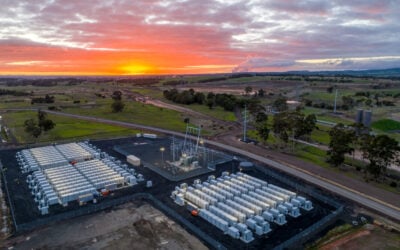
The 300MWh of battery energy storage systems (BESS) will be deployed during the remainder of 2025 and 2026. BYD’s MC Cube-T BESS will be the primary technology used in the partnership.
In 2024, the Chinese company introduced the MC Cube-T, a modular 500kWh unit that can be expanded into up to 6.4MWh enclosures. It incorporates a BESS version of BYD’s proprietary Blade lithium iron phosphate (LFP) battery.
Skysense has several BESS installations at hotel and airport locations, using systems from Contemporary Amperex Technology Ltd (CATL).
Try Premium for just $1
- Full premium access for the first month at only $1
- Converts to an annual rate after 30 days unless cancelled
- Cancel anytime during the trial period
Premium Benefits
- Expert industry analysis and interviews
- Digital access to PV Tech Power journal
- Exclusive event discounts
Or get the full Premium subscription right away
Or continue reading this article for free
In 2022, the company announced it would collaborate with On.Energy to install BESS at 11 airports across South America, totalling over 39MWh of capacity.
Skysense has also worked on solar PV installations. In a 2022 interview with Mexico Business News, Enrique Garduño stated that the company was shifting away from solar and focusing on BESS due to a lack of regulation, which allowed Skysense to meet a client’s needs more easily.
At the 2024 Energy Storage Summit Latin America, John Price, Energy Practice Co-Director at Americas Market Intelligence, explained that the lack of regulation in Latin America and the Caribbean could slow BESS development.
“Many of the governments don’t have the technical preparation to do,” Price explained about the regulatory gaps in many of the Latin American and Caribbean markets. “Either due to political inertia or lack of people, the regulatory situation is an obstacle for the industry,” added Price.
Mexico’s president, Claudia Sheinbaum, announced in October 2024 a target of at least 45% clean energy in the country by 2030.
This year, Jorge Islas, undersecretary for planning and energy transition, announced that future wind and solar projects in the country would be required to include BESS equivalent to 30% of the project’s capacity.