
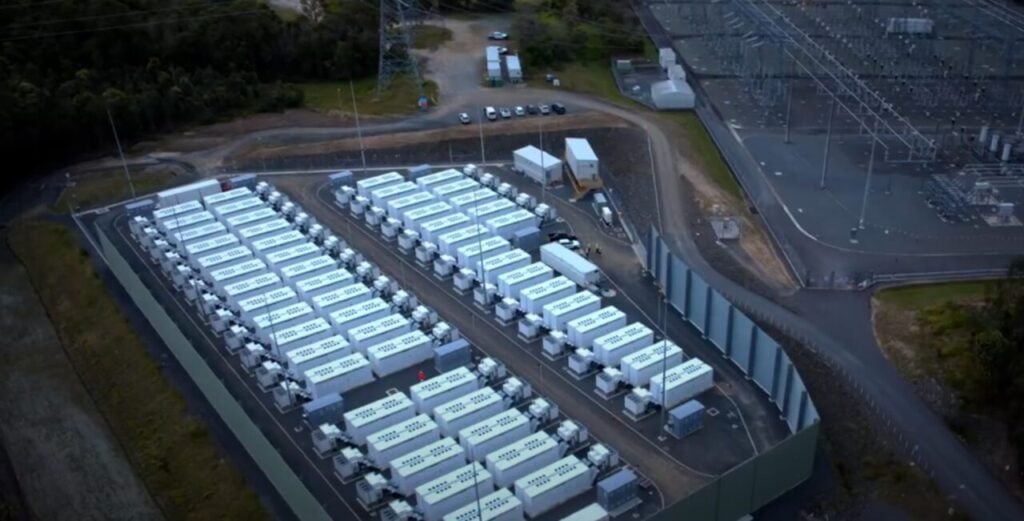
Arash Shojaie, partner at Queensland Investment Corporation (QIC) Infrastructure, outlines how the North West Energy Fund will approach cost reduction, technology selection and the relationship between near-term storage and generation projects and Queensland’s long-term CopperString transmission ambitions.
Queensland’s AU$200 million (US$143 million) North West Energy Fund (NWEF) is now accepting proposals from developers.
The investment manager tasked with deploying it sees battery storage and other firming technologies as central to how the region can reduce delivered energy costs, while the question of a National Electricity Market (NEM) connection remains unresolved.
In an interview with ESN Premium, QIC Infrastructure partner Arash Shojaie explains how the fund will assess proposals, what role storage is expected to play alongside existing gas infrastructure, and why, in QIC’s view, the two objectives of serving existing miners and unlocking new investment are one and the same.
Try Premium for just $1
- Full premium access for the first month at only $1
- Converts to an annual rate after 30 days unless cancelled
- Cancel anytime during the trial period
Premium Benefits
- Expert industry analysis and interviews
- Digital access to PV Tech Power journal
- Exclusive event discounts
Or get the full Premium subscription right away
Or continue reading this article for free
As Energy-Storage.news reported when the fund opened for proposals last month, the NWEF was established to support localised energy solutions in the North West Minerals Province ahead of any confirmed construction timeline for the Western Link section of CopperString, the transmission project that would eventually connect the region to the NEM.
The fund’s investment guidelines require proposals to demonstrate an improved cost of delivered power, with technology-neutrality and a pathway to commercial viability without requiring the Western Link to proceed first.
What ‘improved cost’ means in practice
For a region where delivered electricity costs are shaped by diesel and gas-fired generation operating on isolated networks, cost reduction is not a theoretical objective.
Shojaie outlines three principles QIC is applying to assess whether a proposal genuinely moves the dial.
“We are applying a few core principles to the NWEF strategy to help reduce the delivered cost of power: making better use of existing infrastructure in the region, encouraging greater sharing of infrastructure across users, and supporting increased load so the cost of shared infrastructure can be spread more efficiently,” he says.
Storage sits at the centre of that logic. A battery storage system that enables a shared renewable energy generation asset to dispatch reliably across multiple mining operations reduces the per-site infrastructure cost while absorbing the variability that has historically made renewables less competitive in isolated industrial settings.
The emphasis on infrastructure sharing reflects the practical reality of the North West Minerals Province, where adjacent mining operations often run separate energy systems.
A proposal that enables multiple users to access shared generation and storage capacity at a lower cost per site than each would pay independently is more attractive to QIC than a project sized to a single customer’s needs.
On whether there is a price threshold below which a project becomes investable, Shojaie declines to name one.
“Each proposal will be assessed on its merits, including its cost impact, deliverability, risk allocation and contribution to the broader objectives of the Fund,” he says.
Standing on their own without the Western Link
The absence of a confirmed construction timeline for the CopperString Western Link has raised questions about whether the fund’s near-term investments are contingent on that project proceeding. Shojaie is clear that they are not, but equally clear that they need to be consistent with it.
“Near-term investments can stand on their own where they deliver affordable, reliable and sustainable energy outcomes for local users,” he says.
“At the same time, they should be consistent with the longer-term development of the network and the sequencing of CopperString East. In that sense, the fund is intended to support practical projects now while remaining complementary to the region’s future transmission pathway.”
That sequencing logic is particularly relevant for storage assets. A battery system sized and sited for an islanded network configuration may need to operate differently once the Western Link connects the region to the NEM, where dispatch is driven by wholesale prices and ancillary services rather than local supply security.
QIC is therefore assessing whether storage proposals are structured in ways that remain valuable to the region across both the pre- and post-transmission scenarios.
Battery storage has dominated the outcomes of comparable Queensland procurements, with successive Capacity Investment Scheme (CIS) rounds selecting only lithium-ion (Li-ion) battery storage systems.
Earlier this year, ESN Premium sat down with ASL to explore how technology-neutral tender processes continue to lead to Li-ion battery storage projects being successful in bids.
Shojaie indicates the North West Minerals Province may produce a different technology mix but is direct about the commercial case for storage displacing gas rather than complementing it.
“One of the challenges is that an over-reliance on gas-fired generation can contribute to higher prices. The opportunity is to introduce new sources of generation and storage that lower costs while maintaining security of supply,” he says.
The fund’s technology-neutrality, Shojaie explains, reflects the complexity of the region’s energy needs rather than an absence of preference.
“Battery storage may have an important role to play, and we would also welcome other long-duration storage and firming solutions where they can improve reliability and reduce delivered energy costs,” he says.
That framing positions long-duration energy storage (LDES) as a priority alongside shorter-duration battery systems, particularly in a region where overnight and multi-day reliability requirements exceed what a 4-hour battery storage system can provide on its own.
On the fund’s ultimate purpose, Shojaie frames energy storage as the mechanism through which both of its objectives, serving existing miners and unlocking new investment, can be achieved simultaneously.
“Lower-cost, more reliable and more sustainable energy infrastructure can support current mining and industrial activity and improve the conditions for new projects that may not otherwise be viable because of energy costs or energy supply constraints,” he says.
In the North West Minerals Province, where energy has historically been both expensive and unreliable, storage-backed renewable energy generation may be the clearest route to changing both of those conditions at once.
Our publisher, Solar Media (part of Informa Group), will host the Battery Asset Management Summit Australia 2026 on 25-26 August at Amora Hotel Jamison in Sydney. You can find out more about the Summit on the official website.
