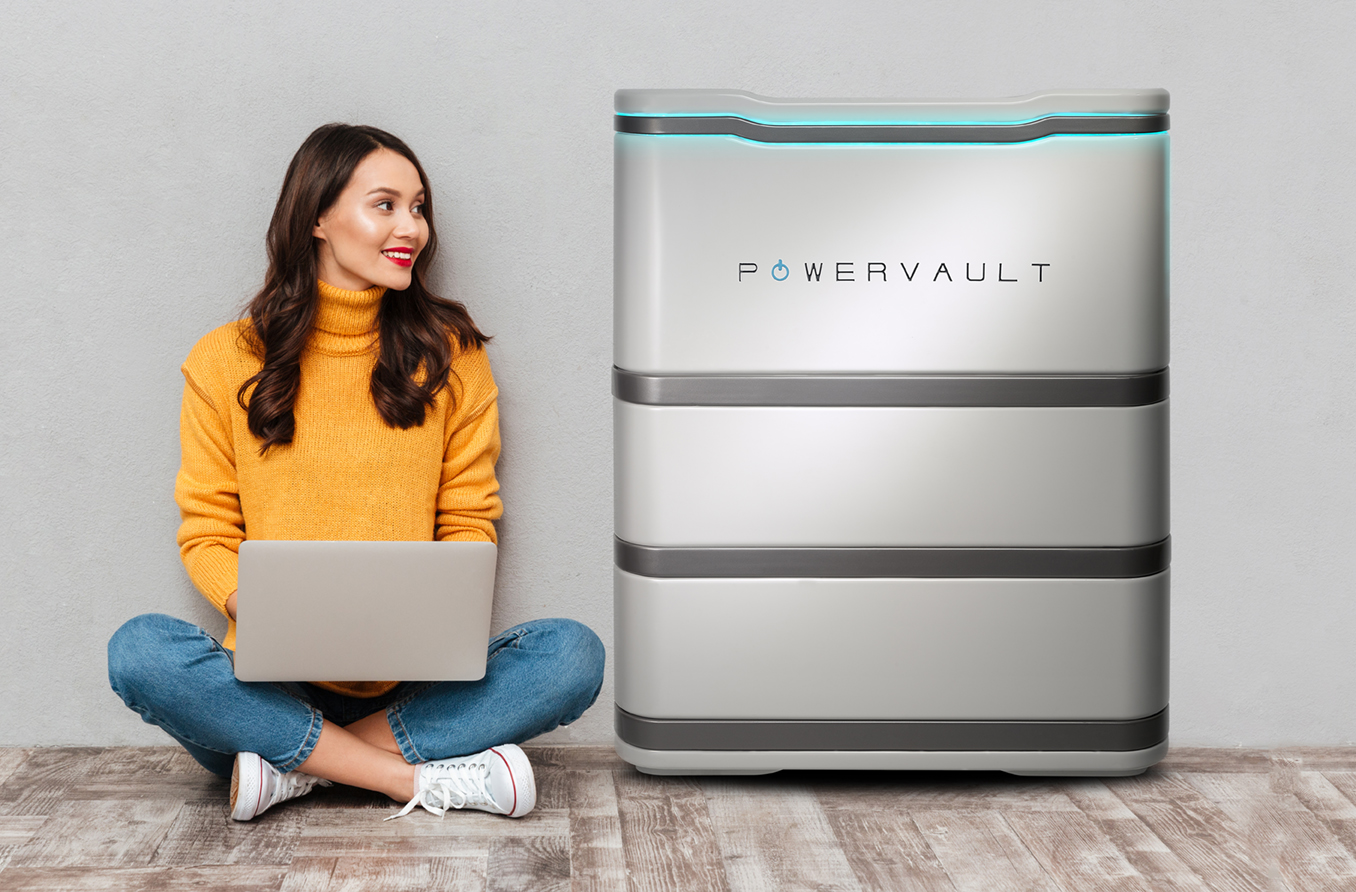
Battery company Powervault leverages Kaluza’s tech platform to reach UK consumers

By Liam Stoker
LinkedIn
Twitter
Reddit
Facebook
Email
Image: Powervault.

British battery storage system manufacturer Powervault is backing a recent agreement with energy tech platform Kaluza to help expand its reach in its home market.

Earlier this week Powervault announced that it had penned an integration agreement with Kaluza, which will see the former’s home battery units incorporated into latter’s flexibility provision platform.

The deal will enable the flexibility and capacity of installed Powervault 3 batteries to be aggregated by Kaluza and used to satisfy grid-level system balancing needs. Revenues generated from that flexibility provision can then be shared with Powervault owners, helping boost returns for consumers.

It echoes a similar deal between Kaluza and German battery storage manufacturer sonnen agreed earlier this year, and Joe Warren, chief executive at Powervault, said the arrangement presented a “huge opportunity” for the manufacturer to boost its profile.

This article requires Premium SubscriptionBasic (FREE) Subscription

Try Premium for just $1

  • Full premium access for the first month at only $1
  • Converts to an annual rate after 30 days unless cancelled
  • Cancel anytime during the trial period

Premium Benefits

  • Expert industry analysis and interviews
  • Digital access to PV Tech Power journal
  • Exclusive event discounts

Or get the full Premium subscription right away

Or continue reading this article for free

“Having access to those services can make a really big difference,” Warren said, stating the firm’s ambition to install “tens of thousands of devices” over the coming years.

“While we haven’t finalised exactly the consumer proposition as yet, it’s clear that if you can offer an additional benefit and get some reward for doing that, it’s going to make the return better.”

Tom Pakenham, director for electric vehicles at Kaluza, meanwhile said that the agreement would “widen the net for both parties”.
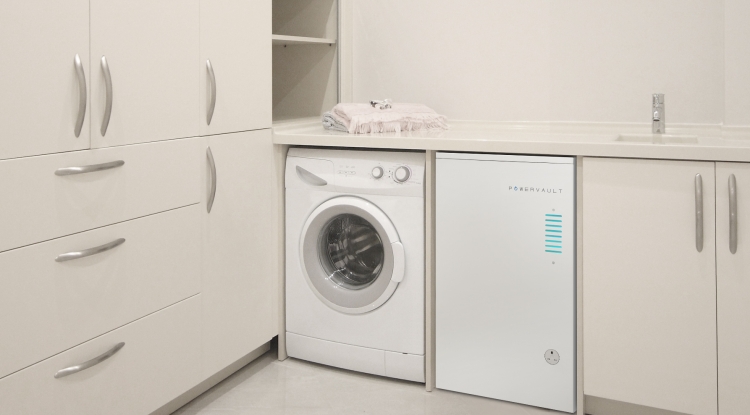

Early iteration of Powervault system from 2017. Image: Powervault.
13 October 2026
London, UK
Now in its second edition, the Summit provides a dedicated platform for UK & Ireland’s BESS community to share practical insights on performance, degradation, safety, market design and optimisation strategies. As storage deployment accelerates towards 2030 targets, attendees gain the tools needed to enhance returns and operate resilient, efficient assets.
3 November 2026
Málaga, Spain
Understanding technology and supplier selection for Europe’s utility-scale PV market in 2027. PV ModuleTech Europe 2026 is a two-day conference that tackles these challenges directly, with an agenda that addresses all aspects of PV module, inverter and battery supplier selection; product availability, technology offerings, supply chain traceability, quality assurance, factory auditing, system reliability, and supplier bankability.

Read Next

September 23, 2026
GridStor, a US-based developer and operator of grid-scale battery energy storage systems (BESS) has closed a US$220 million financing agreement for the 100MW/400MWh White Tank project in Arizona, US.
September 23, 2026
UK energy industry regulator Ofgem said it is minded to approve the introduction of a financial commitment for BESS in an attempt to reduce the oversupply of the projects awaiting a grid connection.
September 22, 2026
Residential battery energy storage systems (BESS) across California discharged more than 580MW of peak power to the state’s grid on the evening of 9 September 2026 via a Tesla-Sunrun VPP.
September 22, 2026
Utility PG&E has selected six new California microgrid projects for a US$30 million investment, while Massachusetts’ Department of Energy Resources is awarding US$40 million across 36 BESS projects.
September 21, 2026
A US battery storage pilot sponsored by tech giant Google has demonstrated how batteries can capture surplus renewable energy and deliver it during hours with greater fossil generation.