Australian redox flow energy storage maker Redflow says a Thai factory set to start producing its batteries could be producing 30MWh annually when it becomes fully operational.
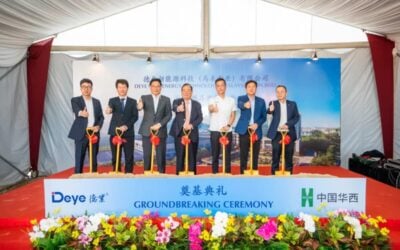
Redflow, which has made a name for itself by designing zinc-bromine flow batteries made with abundant and easily recyclable plastic parts, is in the process of setting up production facilities with manufacturing partner MPTS, a Malaysia-headquartered company, in Thailand.
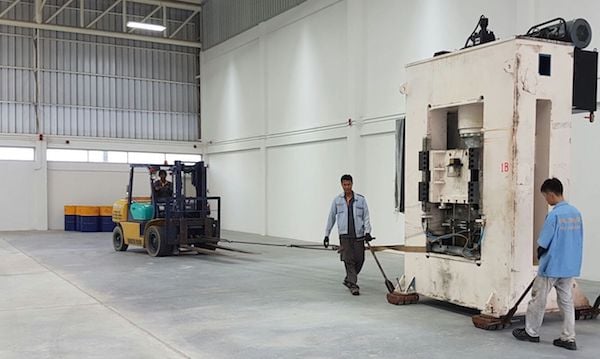
Redflow said last week that the installation of battery production equipment has begun at the plant, with commercial operation expected to begin by the end of this year. The Brisbane-headquartered tech company has signed a three-year lease on a 1,500 square-metre building, Hemaraj Chonburi Industrial Estate, part of a free trade zone 110km southeast of Bangkok.
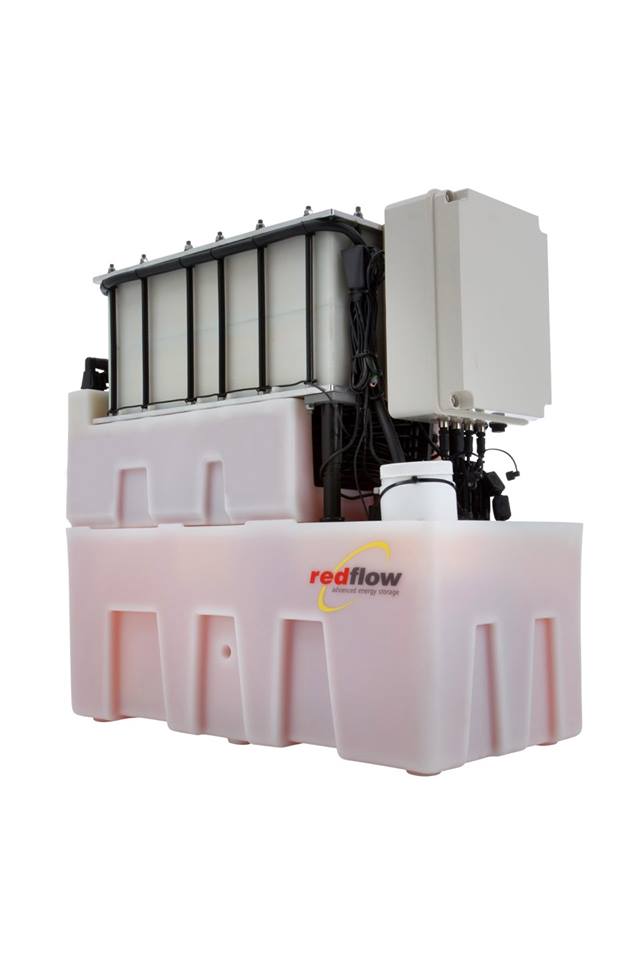
The flow battery maker is currently focusing on the commercial and industrial (C&I) sector, having sold into the telecoms industry, among others in recent months, although the machines can also be used in grid-scale utility applications. The Thai factory will produce Redflow’s 10kWh ZMB2 zinc-bromine flow battery, which the company claims is the most compact device of this type available today. ZBM2 units are warranted to deliver 100% depth of discharge daily for 10 years.
Try Premium for just $1
- Full premium access for the first month at only $1
- Converts to an annual rate after 30 days unless cancelled
- Cancel anytime during the trial period
Premium Benefits
- Expert industry analysis and interviews
- Digital access to PV Tech Power journal
- Exclusive event discounts
Or get the full Premium subscription right away
Or continue reading this article for free
10% per-unit cost reduction
Energy-Storage.News heard from recently appointed Redflow CEO Richard Aird that there are plans for the factory to produce 250 ZBM2 batteries per month “when it’s in full operation”, although he declined to give details of timelines for this expected ramping up. At a rate of 250 units a month, presuming each to be 10kWh capacity devices, full production capacity could reach 30,000kWh annually. Aird added that Redflow has a “range of options beyond that”.
To date, Redflow’s systems have been made in the US. Aird said the company is transitioning over to facilities in Thailand in order to be nearer to target markets, as well as to reduce production costs and make the supply chain more compact and delivery times quicker. Manufacturing partner MPTS already supplies some core components to Redflow’s battery stacks.
“MPTS will deliver a 10% reduction in per-unit manufacturing and delivery cost as soon as their production commences, ahead of further planned engineering cost-downs,” Redflow CEO Richard Aird claimed.
According to a timeline provided by Aird, the manufacturing deal has been brokered fairly quickly. Redflow announced its intent to move production to Southeast Asia in late May, then selected Thailand by August and equipment installation began this month.
Energy-Storage.News asked how the systems’ recyclability and durability aspects, two of Redflow’s selling points, would be affected.
“Redflow sources its raw materials internationally, so the factory location has minimal impact on these apart from improved logistics,” Richard Aird said, adding that the “easy reuse or recycling of its [battery] component remain standout benefits of our world-leading technology”.
Interestingly, a while ago Redflow attracted attention for marketing zinc-bromine storage units to the residential market in Australia. There had been reports that the residential ‘ZCell’ had been discontinued, with reasons including the comparative bulkiness of flow batteries over lithium-ion making them less popular with householders despite other advantages such as higher energy density.
Aird confirmed that Redflow is still making residential units, by packaging up ZBM2 devices in weather proof enclosures, still for marketing in Australia. In a recent interview with Energy-Storage.News, storage market analyst Julian Jansen of IHS Markit said that for various reasons, in general terms he foresaw lithium-ion continuing to dominate over redox flow in the residential markets globally.
It is still early days for flow battery, or flow machine energy storage companies to ramp up production to commercial scales. Two other flow energy storage providers, the US’ VIZN Energy and the UK’s RedT, have agreements in place with Jabil, one of the world’s biggest contract manufacturers.
This story has been amended from its original form, which incorrectly stated that Redflow was targeting 3GWh of production annually from the Thailand factory.