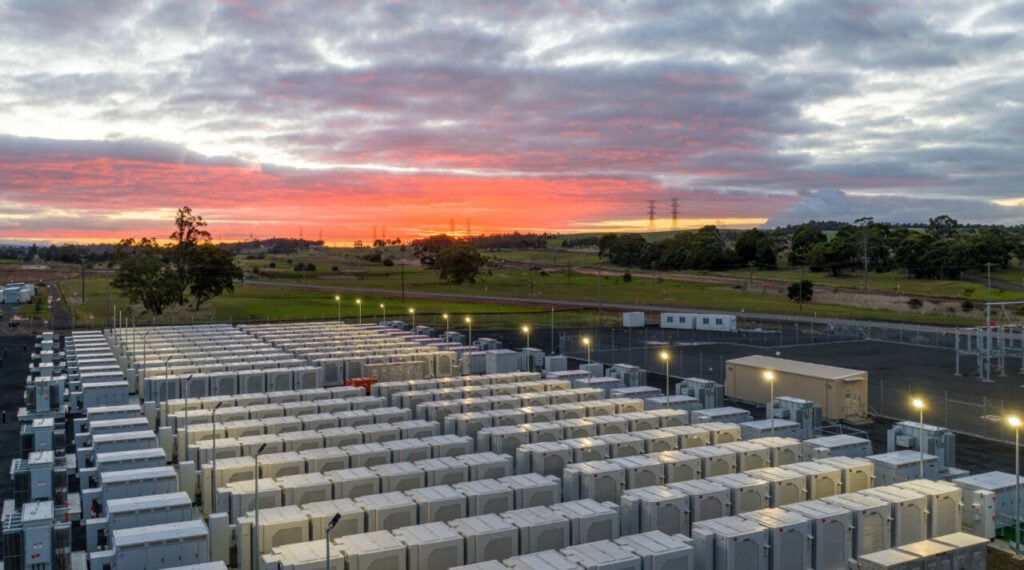
Victoria, Australia, has secured the largest allocation of dispatchable power in the upcoming Capacity Investment Scheme (CIS) tender, with 1.7GW/6.8GWh for energy storage.
The Australian government released the allocation earlier this week. It indicates how much will be available for bidders to seek in their respective states. The government is looking to secure 4GW of dispatchable power and 6GW of renewable energy generation, totalling 10GW. This is an increase on the previous cumulative 6GW sought.
Victoria has been given the highest dispatchable power allocation, with 1.7GW/6.8GWh. New South Wales has been granted 1.3GW/5.2GWh, and Western Australia has been allocated 1.1GW/4.4GWh. 0.9GW/3.6GWh has been earmarked for South Australia, while Tasmania, the Australian Capital Territory, and Queensland have not been given a specified amount.
The document released by the government states that where no allocation has been determined, eligible projects from that state or territory can still bid competitively into CIS NEM-wide tenders.
Try Premium for just $1
- Full premium access for the first month at only $1
- Converts to an annual rate after 30 days unless cancelled
- Cancel anytime during the trial period
Premium Benefits
- Expert industry analysis and interviews
- Digital access to PV Tech Power journal
- Exclusive event discounts
Or get the full Premium subscription right away
Or continue reading this article for free
The allocated dispatchable capacity for Victoria is 1.7GW of four-hour duration equivalent capacity and includes the two Victorian projects supported in the 2023 CIS pilot South Australia-Victoria tender, which totalled 0.465GW/1.63GWh.
These two successful projects are energy generator-retailer EnergyAustralia’s 350MW/1,400MWh Woreen battery energy storage system (BESS) and project developer Progress Power’s 115MW/230MWh Springvale Energy Hub.
Victoria requests solar-hybrid cap
Victoria’s government requested that the Federal government implement a maximum technology award to solar PV meaning that no more than 750MW of solar and solar-hybrid projects will be contracted in Victoria in the upcoming CIS tender.
In the 2025 CIS generation tenders, the Australian government will be able to contract solar PV and solar-hybrid projects in Victoria but the total capacity will be limited to the greater of either 0MW or the remaining balance of 1.5GW, minus the solar and solar-hybrid projects already underwritten in the first CIS tender.
There will be no cap on solar-hybrid projects in the 2026 CIS tenders. However, the Australian government will only contract solar projects in Victoria up to the value of any remaining balance under 1.5GW.
New South Wales secures highest allocation of energy generation
New South Wales secured the second-largest allocation of dispatchable power and has also seen the highest portion of energy generation in the upcoming CIS tender, standing at 7.1GW.
Victoria secured an allocation of 5GW, whilst Western Australia has been provided 2GW. Tasmania and South Australia have been granted 1.2GW each.
Australia’s energy minister, Chris Bowen, revealed last month (21 October) that the tender process will officially open in mid-November 2024.